
Edible mushrooms are fungi that are safe to eat once correctly identified and properly cooked. The most common ones include button mushrooms, oyster mushrooms, shiitake, chanterelles, morels, porcini, lion’s mane, hen of the woods, chicken of the woods and giant puffballs. Many of the best edible wild mushrooms have a toxic twin that looks surprisingly similar, and there is no simple test that tells a safe mushroom from a deadly one. This guide covers 12 types of edible mushrooms, their dangerous lookalikes, how experts tell a mushroom is edible, and what US poison center data reveal about who actually gets poisoned.
Safety first: this article is for learning, not for identifying a mushroom you plan to eat. Never eat a wild mushroom unless an experienced local expert has identified it in person. In the United States, call Poison Help at 1 800 222 1222 if you suspect mushroom poisoning, even if no one feels ill yet.
What Makes a Mushroom Edible?
A mushroom is only the fruiting body of a much larger fungus that lives hidden in soil, wood or roots as a network of threads called mycelium. Whether that fruiting body is edible depends on its chemistry. Some species are nutritious and delicious, some contain toxins that upset the stomach, and a small number contain toxins that destroy the liver or kidneys.
Fungi play a huge role in nature by recycling dead wood and leaves, as explained in our guide to decomposers. Many of the best edible species, such as chanterelles and porcini, also live in partnership with tree roots, which is why they cannot easily be farmed and are still gathered from the wild.
Which Mushrooms Are Edible? 12 Common Types
Here are 12 of the most common edible mushrooms, from supermarket staples to prized wild species. For each wild species, the key lookalike is listed, because that is where poisonings happen.
1. Button, cremini and portobello (Agaricus bisporus)
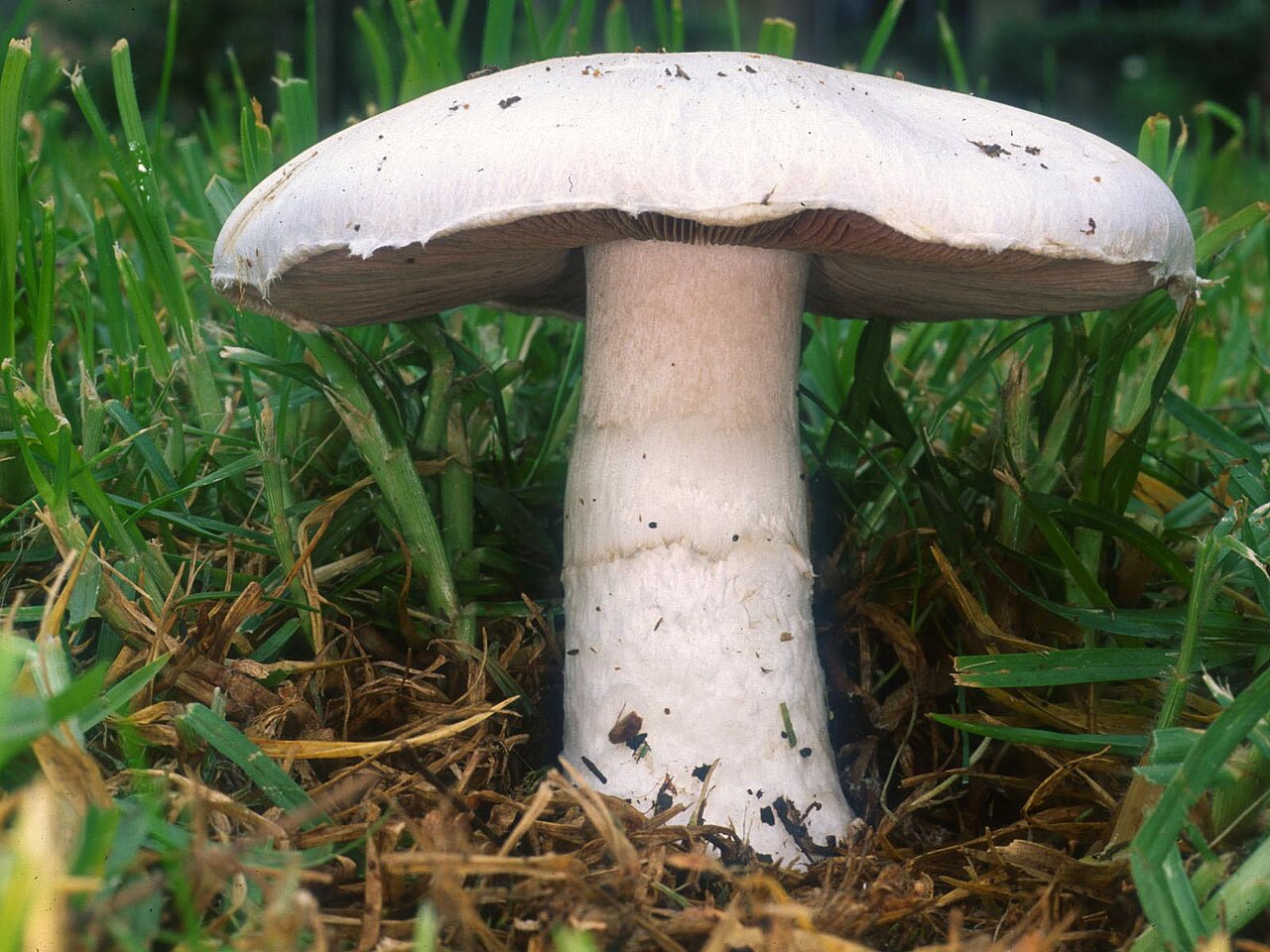
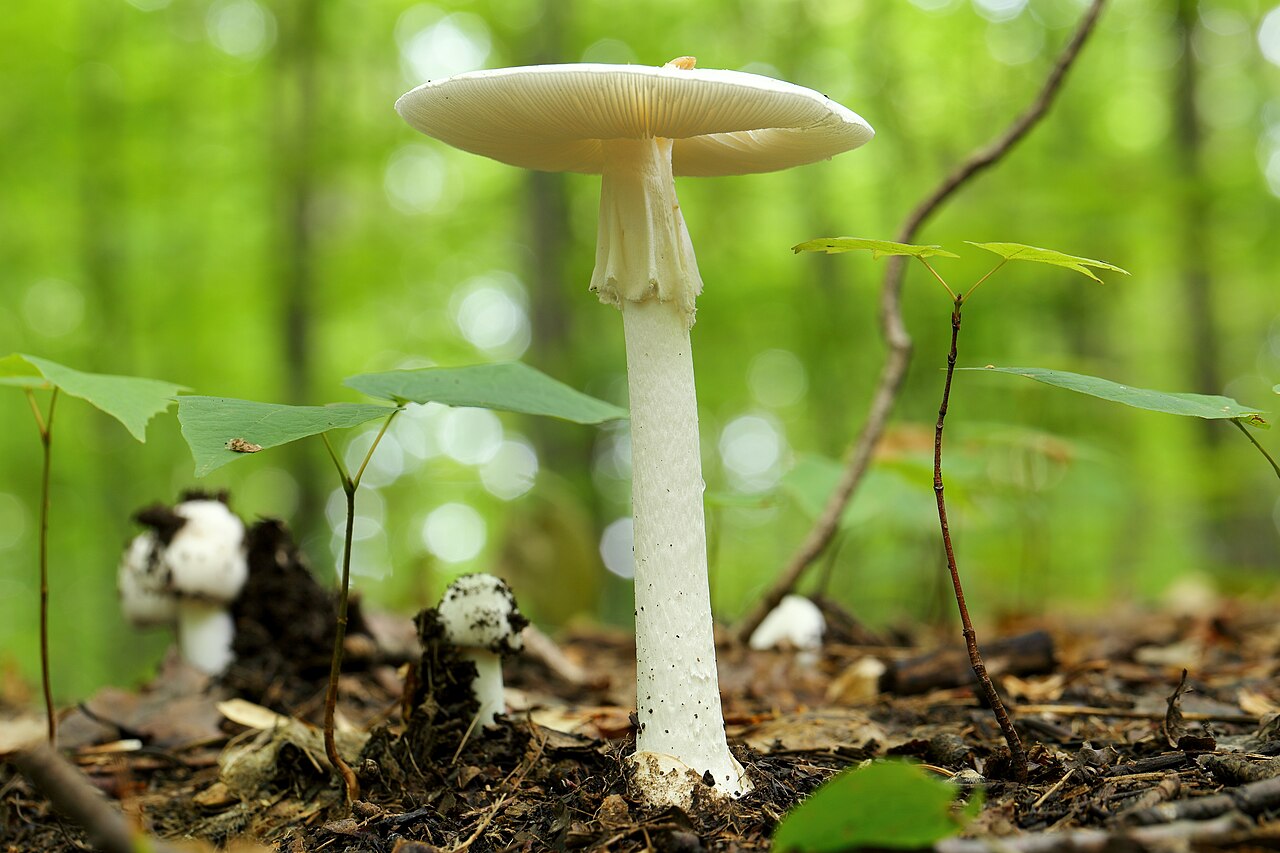
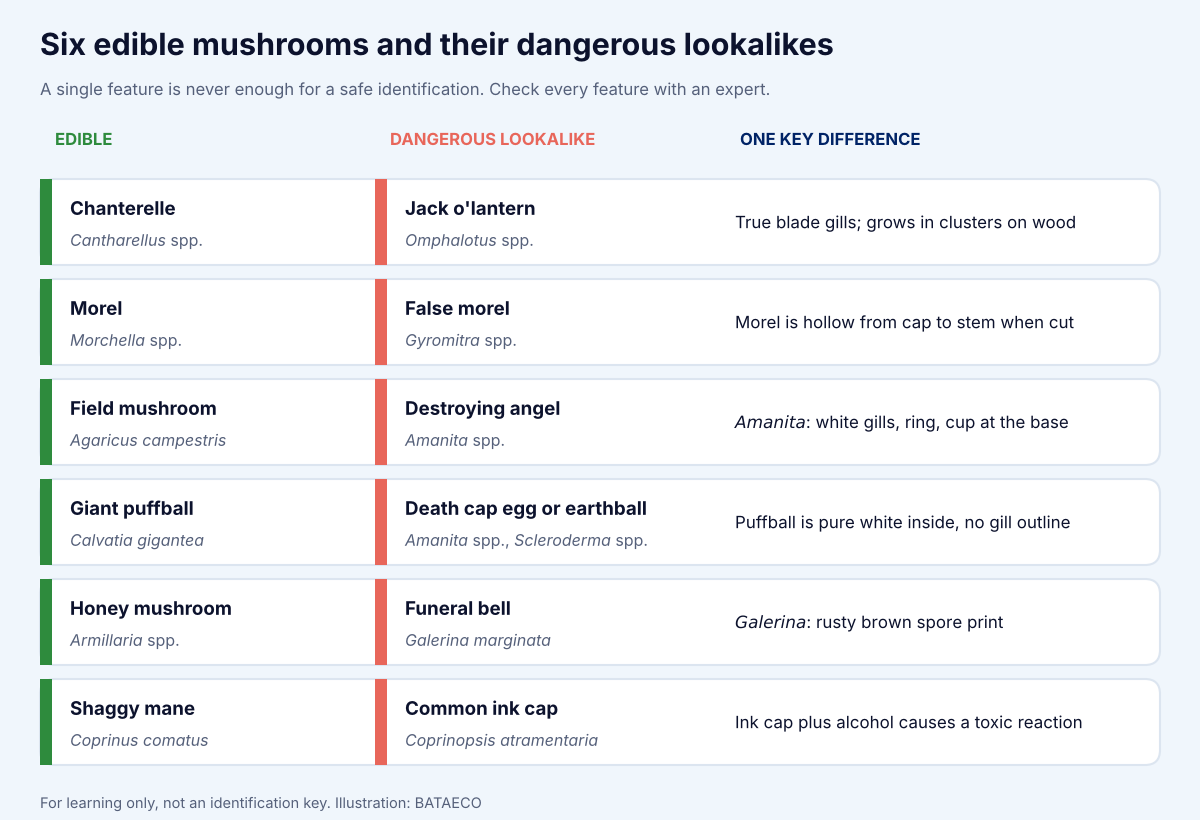
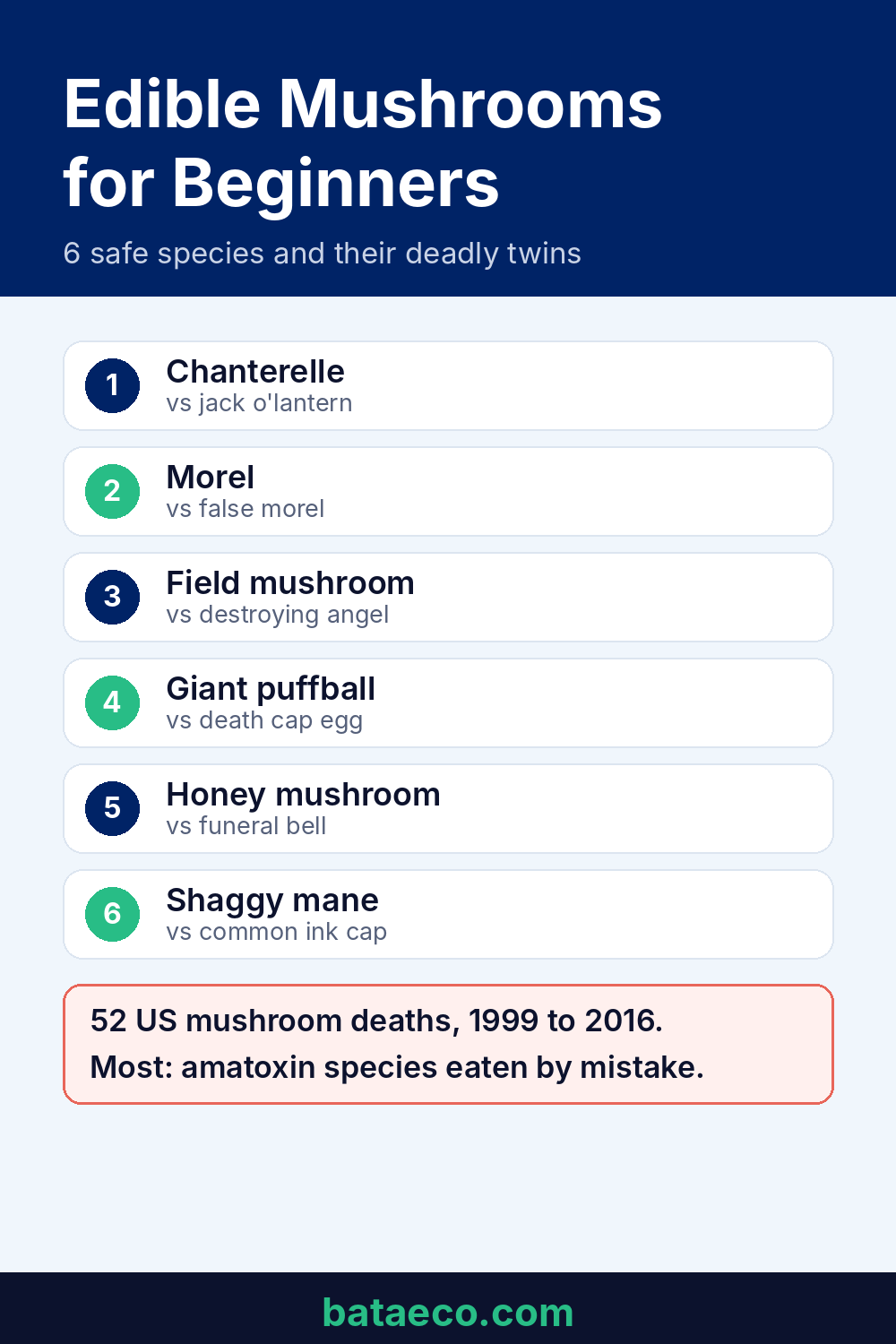
The most eaten mushroom in the world is one species sold at three ages: white button mushrooms, brown cremini and large, open portobellos. Cultivated ones are safe. Wild relatives of the genus Agaricus, such as the field mushroom (Agaricus campestris), are edible too, but white Amanita species, including the destroying angel, can look alarmingly similar when young. Mature Agaricus gills turn pink and then chocolate brown, while Amanita gills stay white.
2. Oyster mushroom (Pleurotus ostreatus)
Fan shaped, gray to cream colored caps that grow in shelves on dead hardwood, with gills running down a short, off center stem. Oyster mushrooms are easy to grow at home and one of the best choices for beginners who want to cook their own mushrooms without foraging.
3. Shiitake (Lentinula edodes)
A brown capped mushroom grown on logs and sawdust blocks, native to East Asia. Shiitake should always be cooked well: eating it raw or undercooked can cause shiitake dermatitis, an itchy rash of streaks across the skin that appears a day or two later.
4. Chanterelle (Cantharellus spp.)
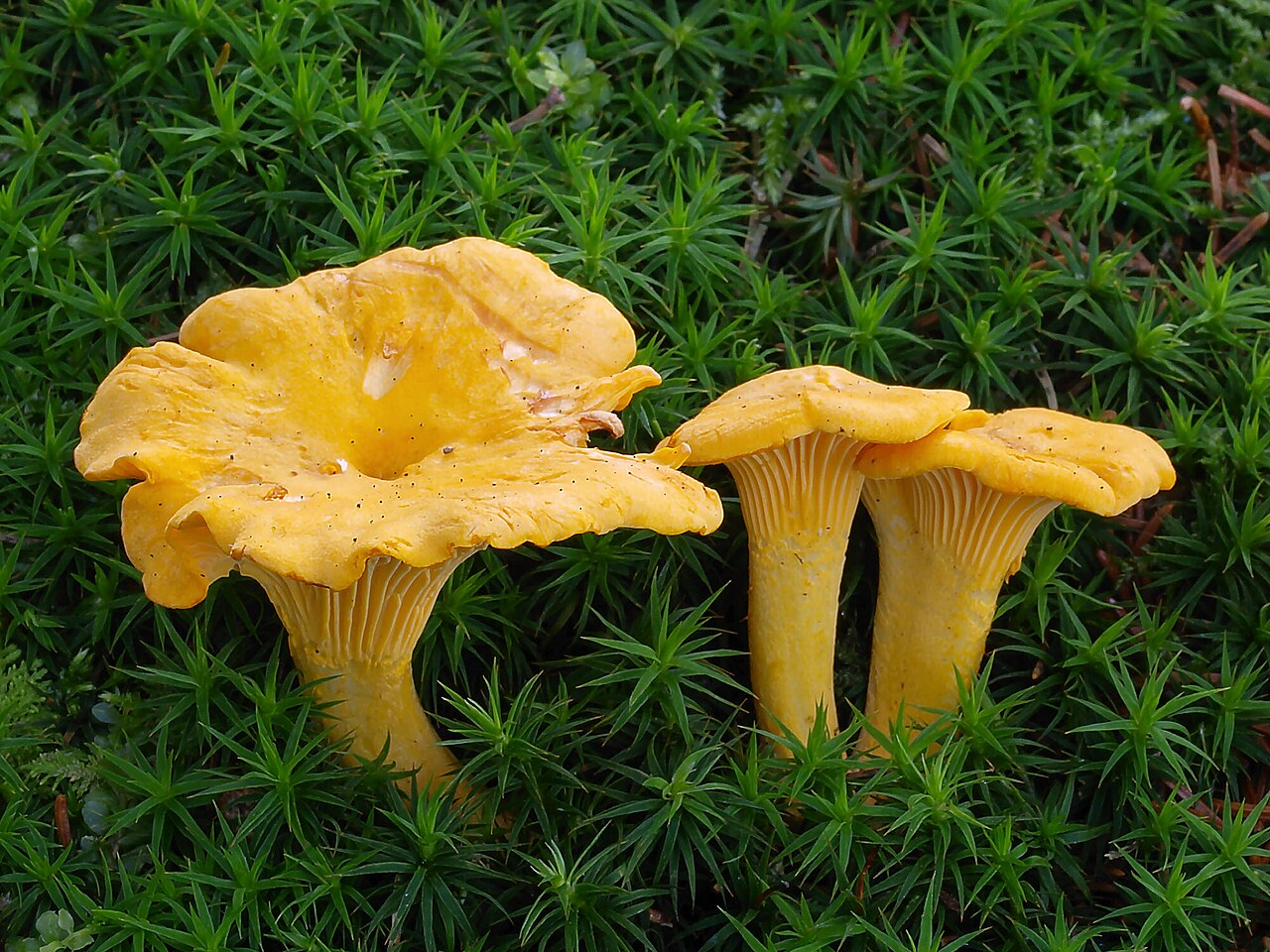
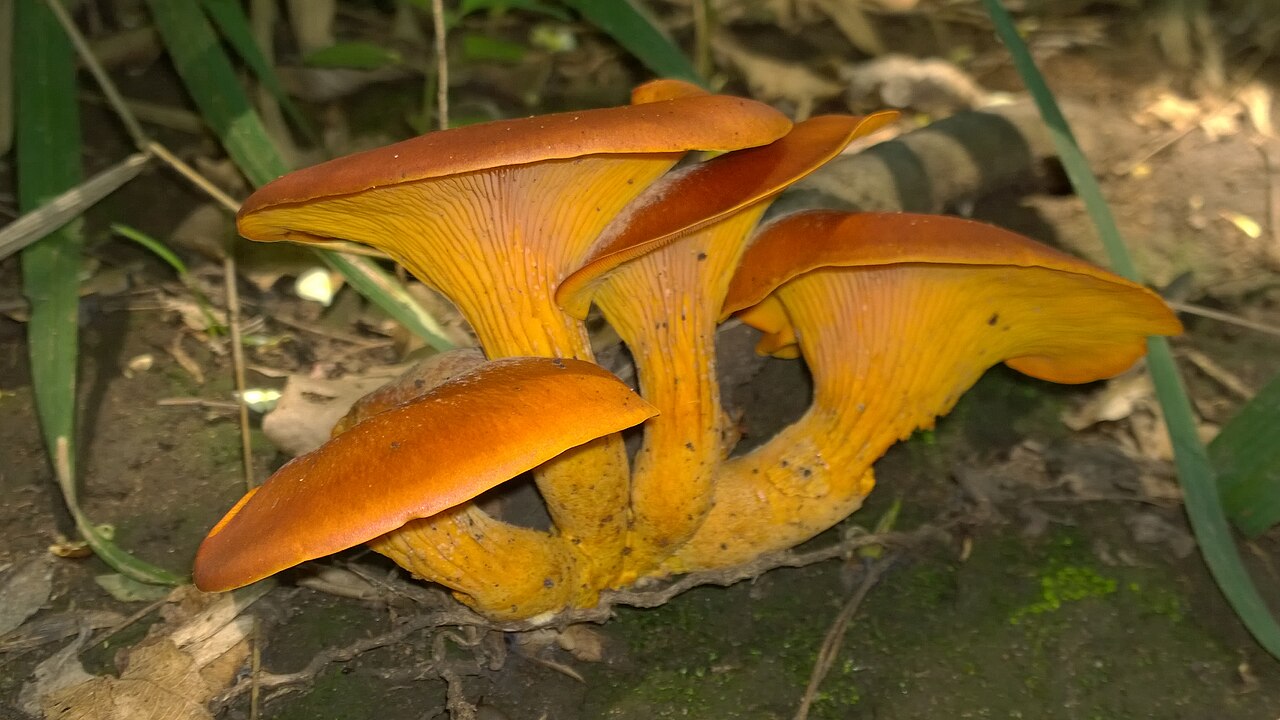
Golden to orange, trumpet shaped mushrooms with a fruity smell. Instead of true gills, chanterelles have blunt, forked ridges that run down the stem. Their main lookalike is the jack o’lantern mushroom (Omphalotus spp.), which has true, sharp, blade like gills and grows in dense clusters on wood or buried roots. It causes severe vomiting and diarrhea.
5. Morel (Morchella spp.)
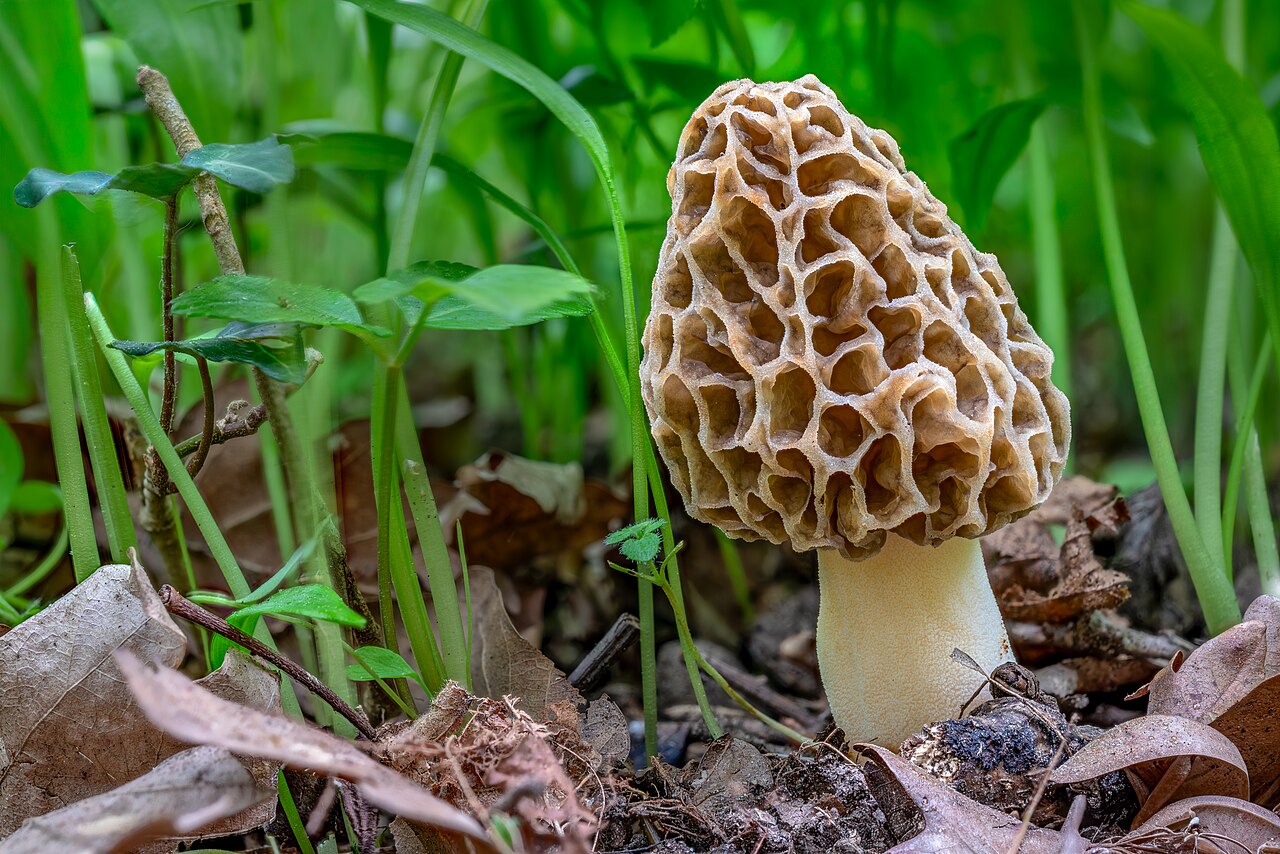
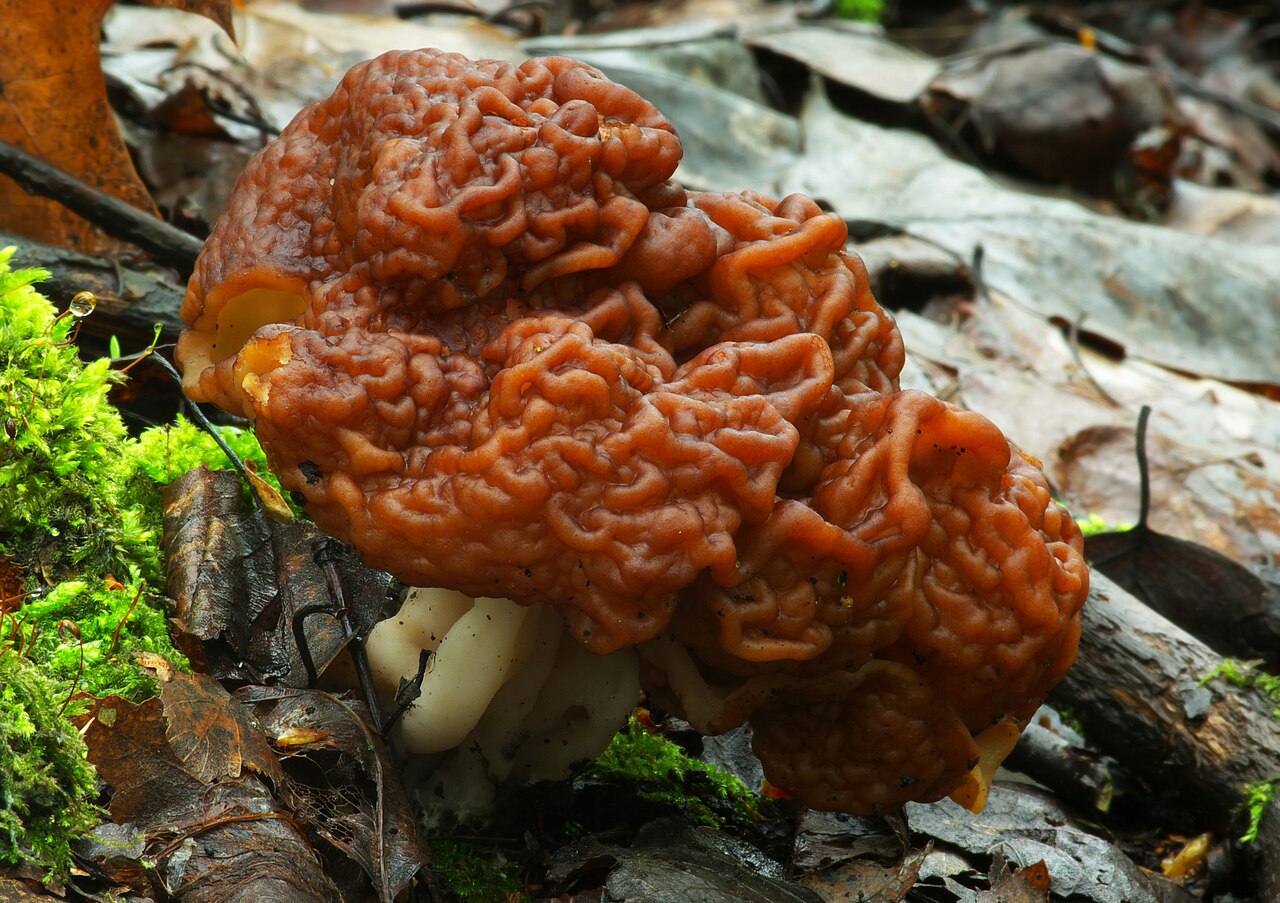
Spring mushrooms with a honeycomb cap of pits and ridges. The classic test: a true morel sliced lengthwise is completely hollow from the tip of the cap to the base of the stem. False morels (Gyromitra spp.) have brain like, wrinkled caps and are filled with cottony tissue. They contain gyromitrin, which forms a toxic compound in the body and has caused deaths.
6. Porcini or king bolete (Boletus edulis)
A chunky mushroom with a brown cap, a thick, netted stem and a sponge of pores instead of gills. Most poisonings among boletes come from species with red or orange pores that bruise blue, which beginners should avoid. The bitter bolete is not dangerous but tastes so bitter it ruins a whole dish.
7. Lion’s mane (Hericium erinaceus)
A white, shaggy ball of hanging spines that grows on wounded hardwood trees. It has no dangerous lookalikes, which makes it a good species to learn, and it is widely cultivated.
8. Hen of the woods or maitake (Grifola frondosa)
A large, gray brown rosette of overlapping caps at the base of oak trees in autumn. Similar polypores growing in the same spot are mostly tough rather than toxic, but an expert check is still essential.
9. Chicken of the woods (Laetiporus spp.)
Bright orange and yellow shelves on trunks and logs, with pores on the underside. It is distinctive, but some people react to it with stomach upset, and specimens growing on conifers, eucalyptus or yew are often avoided.
10. Giant puffball (Calvatia gigantea)
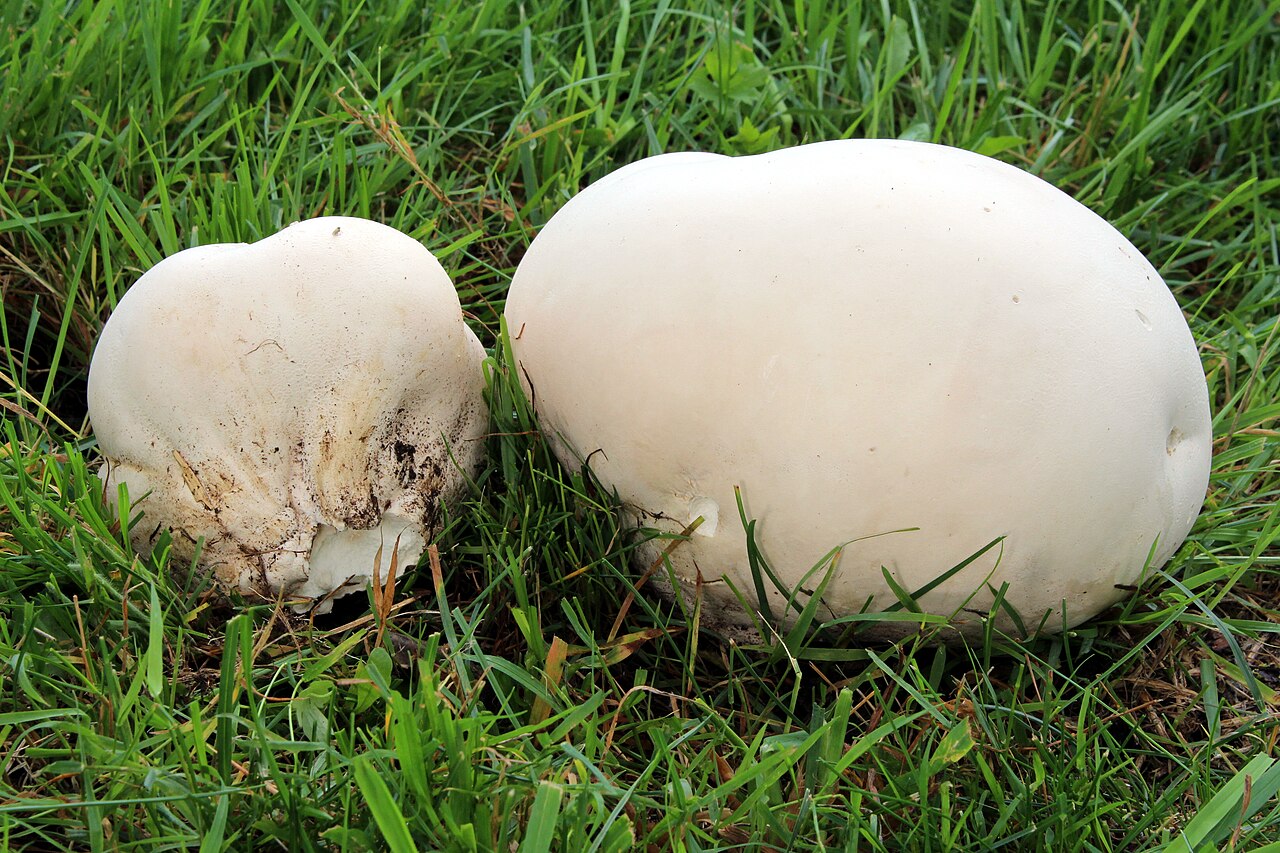
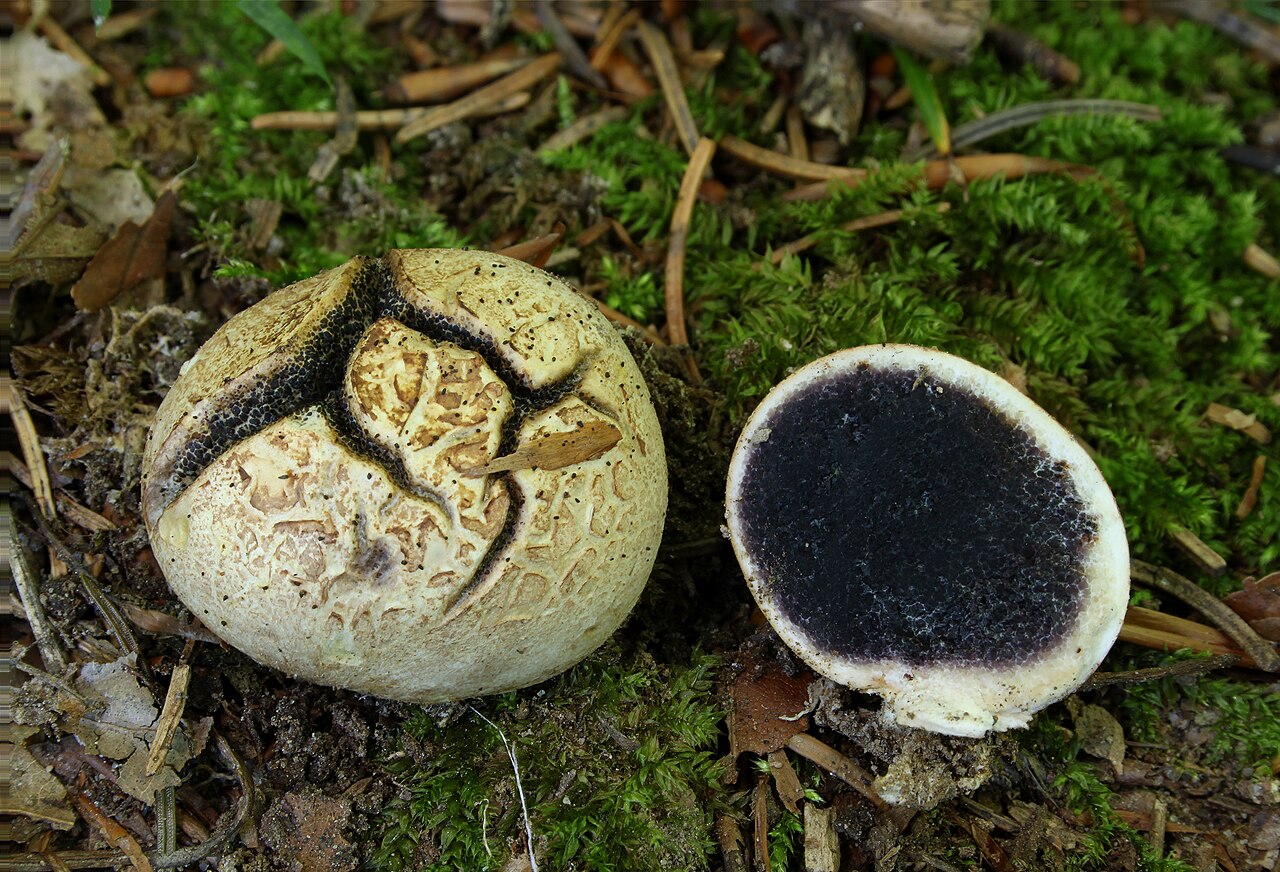
A white ball that can grow larger than a football. Every puffball must be cut in half from top to bottom before eating: it is only safe if the inside is pure, uniform white like marshmallow. An outline of a cap and gills means it is the egg stage of an Amanita, and a dark purple or black interior means an earthball (Scleroderma spp.), which is poisonous.
11. Honey mushroom (Armillaria spp.)
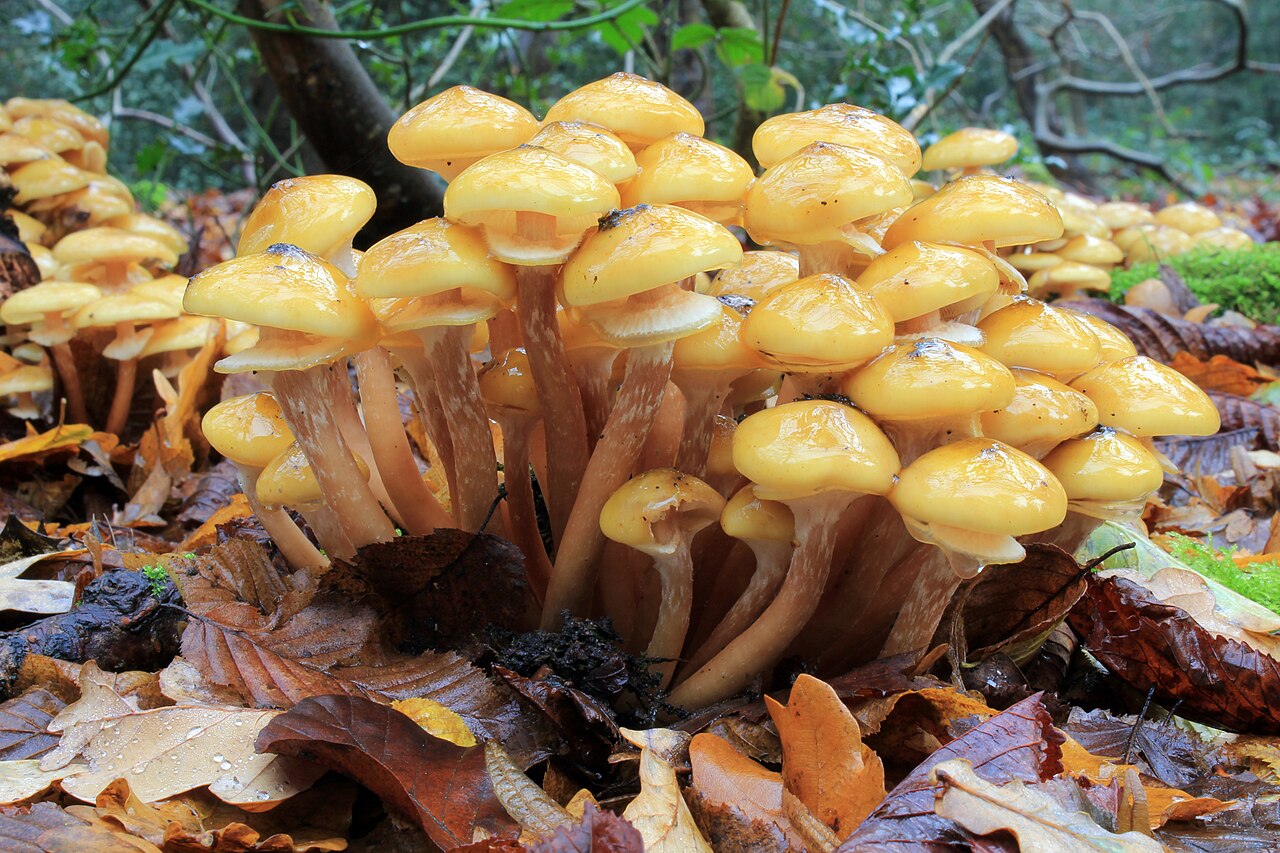
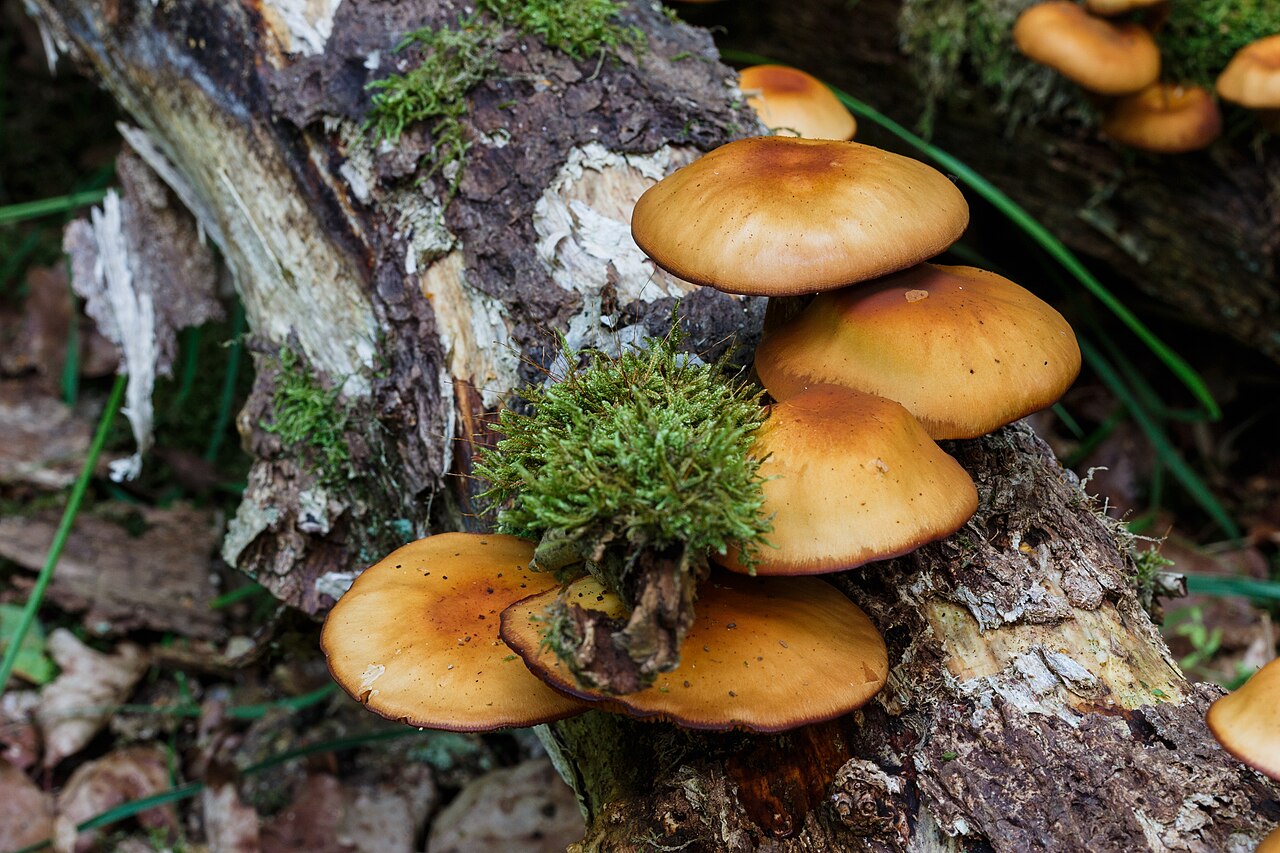
Honey colored caps in clusters on wood, with a ring on the stem. Honey mushrooms are eaten in much of Europe after thorough cooking, but they upset some people. Their deadly lookalike is the funeral bell (Galerina marginata), a small brown mushroom on wood that contains the same amatoxins as the death cap. Galerina leaves a rusty brown spore print, while honey mushrooms leave a white one.
12. Shaggy mane (Coprinus comatus)
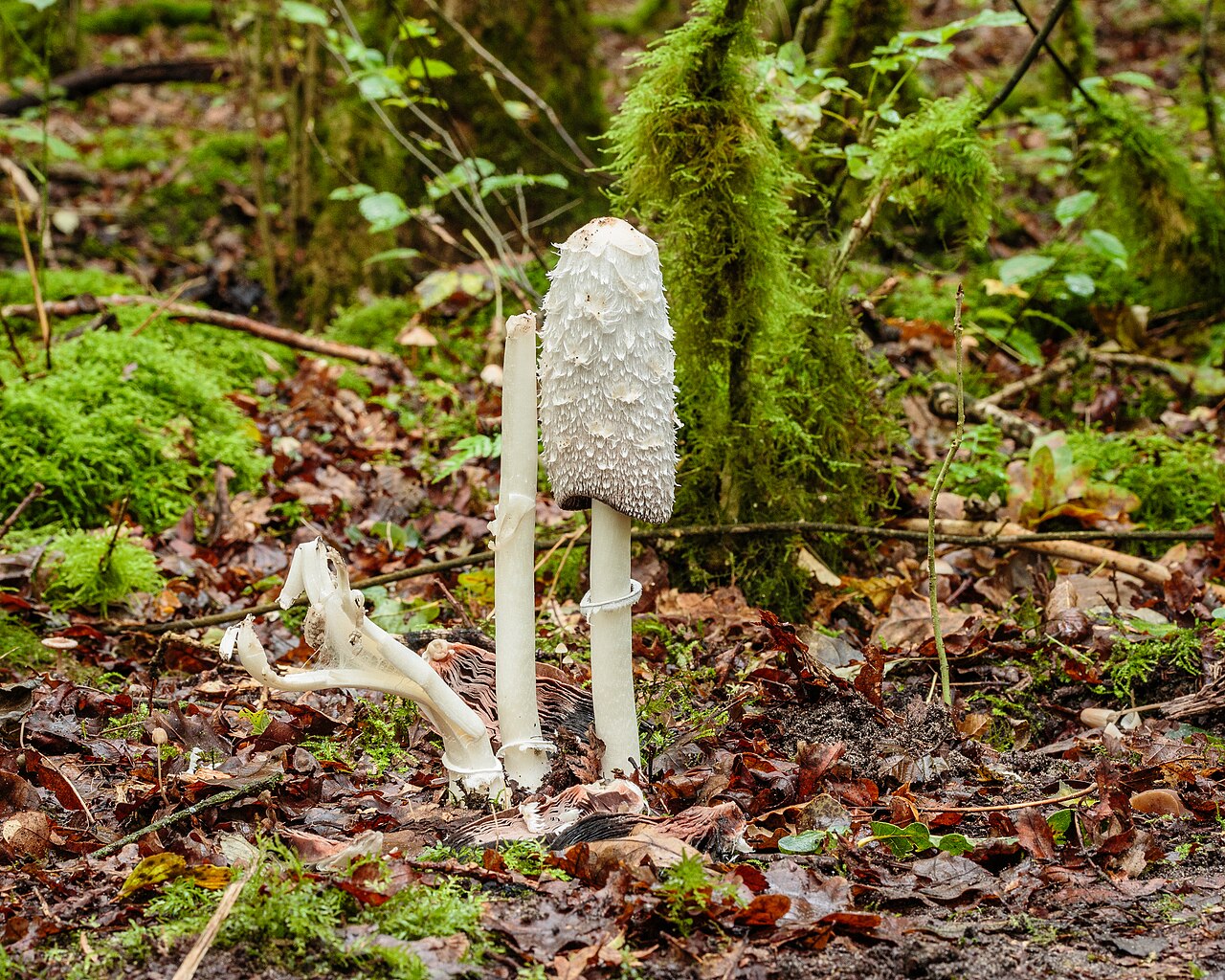
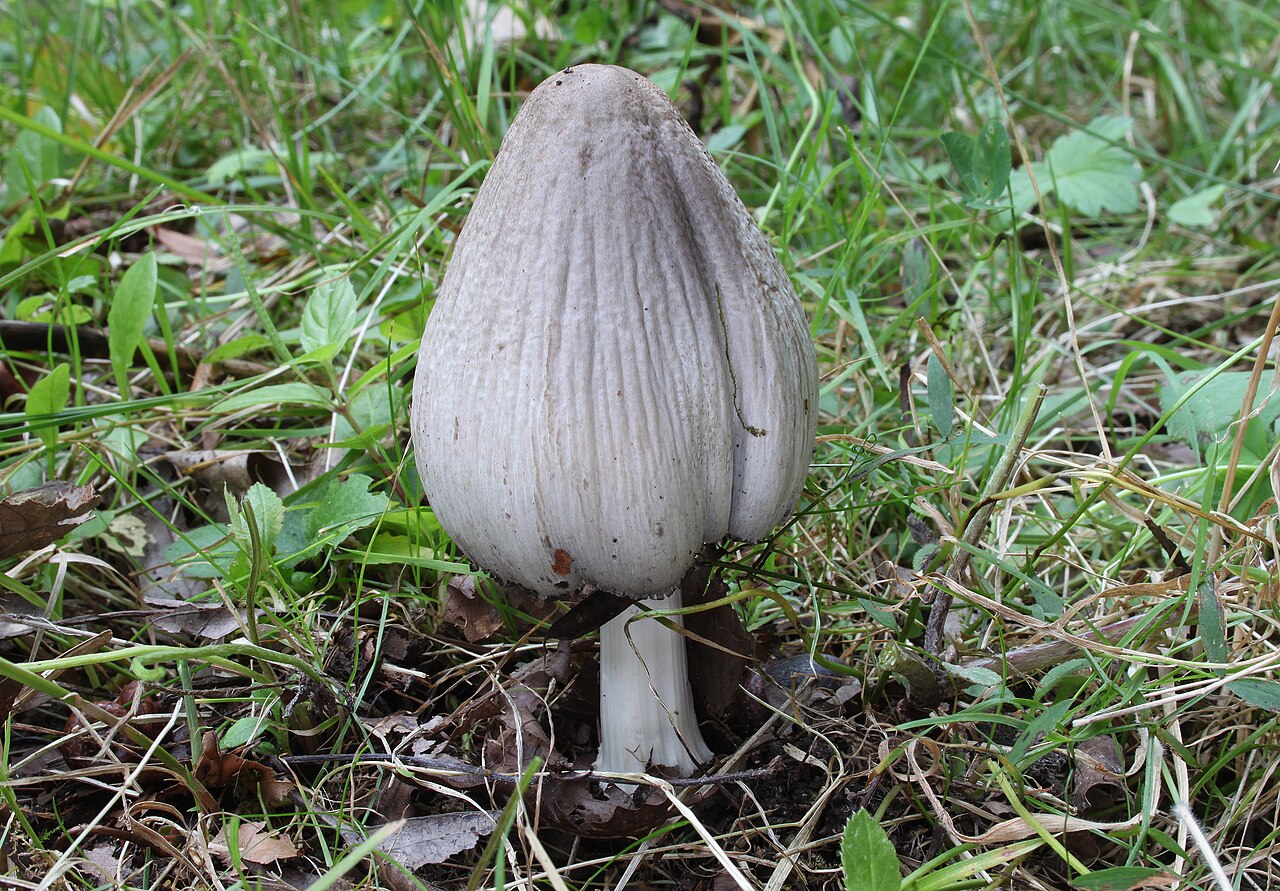
A tall, white, shaggy cylinder that grows on lawns and roadsides and dissolves into black ink within hours of picking, so it must be cooked the same day. The related common ink cap (Coprinopsis atramentaria) contains coprine, which causes flushing, a racing heart and nausea if alcohol is drunk within a few days of eating it.
The Deadly Ones: Death Cap and Destroying Angel
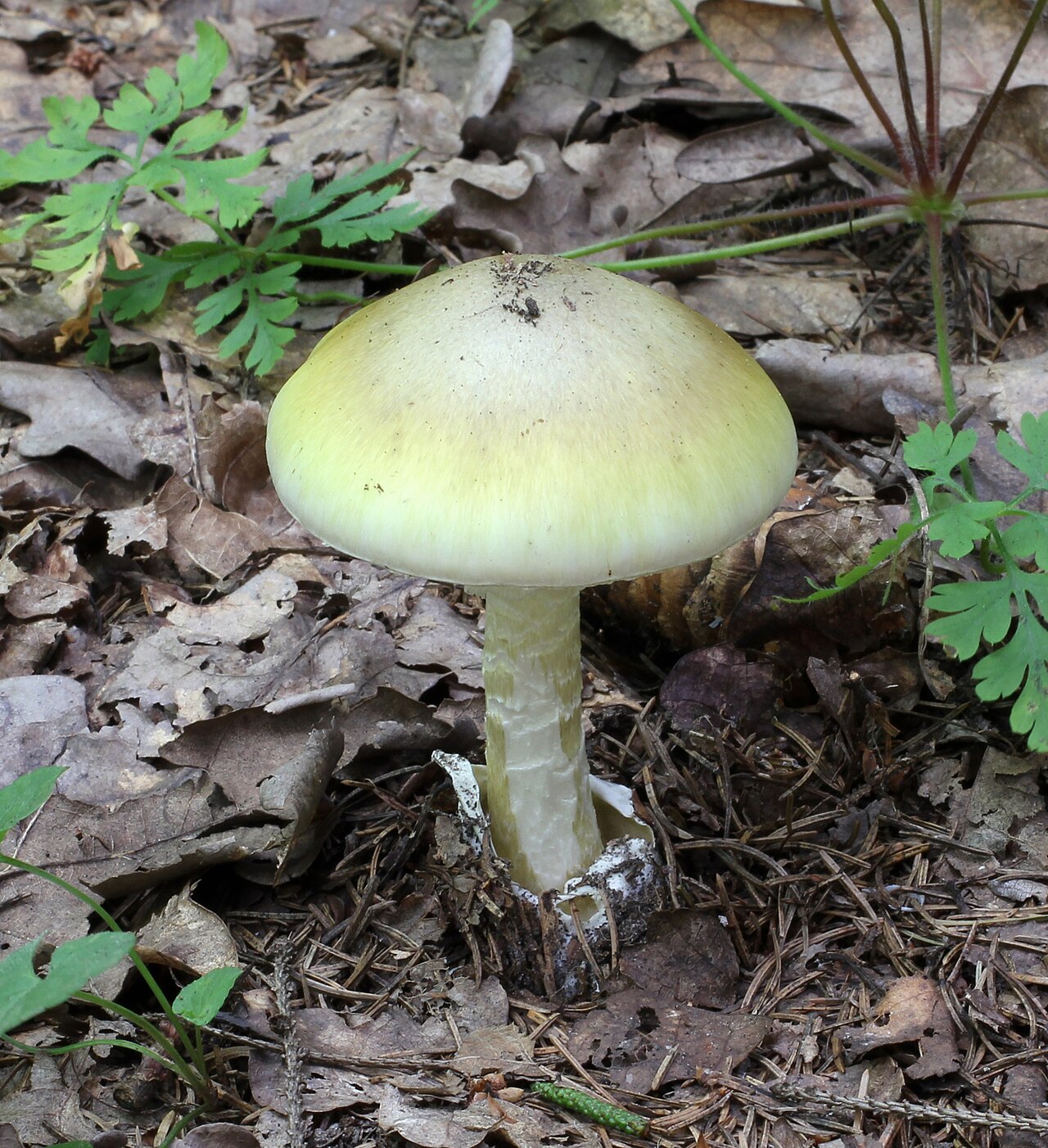
The death cap (Amanita phalloides) causes most fatal mushroom poisonings worldwide. It has a greenish to yellowish cap, white gills, a skirt like ring on the stem and a cup shaped sac (the volva) at the base, which is often hidden in soil. Destroying angels, such as Amanita virosa and Amanita bisporigera, are pure white species with the same toxins.
Amatoxins are dangerous for three reasons. They are not destroyed by cooking, drying or freezing. Symptoms are delayed, usually starting 6 to 12 hours after the meal, long after the mushrooms could be removed from the stomach. And after a day or two of vomiting and diarrhea, patients often feel better for a while, even as the toxin keeps destroying the liver.
How to Tell if a Mushroom Is Edible
There is no universal rule. Every edible mushroom has to be identified to species, using all of its features together. These popular “tests” are myths and have killed people:
- A silver spoon or coin turning black.
- Animals, slugs or squirrels eating the mushroom. Many animals tolerate toxins that kill people.
- A pleasant smell or taste. Survivors describe death caps as tasty.
- The cap peeling easily.
- Cooking, boiling or soaking to remove the poison.
What experienced identifiers actually check:
- The whole mushroom, dug up carefully so the base, including any volva, is intact.
- Gills, ridges, pores or spines under the cap, and how they attach to the stem.
- A spore print: the cap is left gills down on white and dark paper for several hours, and the color of the spore deposit is noted. Spore color separates many lookalikes. Spores and other fine features can also be checked under a microscope, as shown in our guide on how to use a microscope.
- Habitat: growing on wood or soil, the type of tree nearby, the season and the region.
- Smell, color changes when cut or bruised, and any ring on the stem.
Even with a confident identification, eat only a small amount of a new species the first time, always cook wild mushrooms, and keep one uncooked specimen in the fridge so a poison center can identify it if anyone becomes ill.
Case Study: Who Gets Poisoned by Mushrooms?
To see how often mushroom poisoning actually happens, I charted data from the largest US study, by Brandenburg and Ward (2018) in Mycologia. They analyzed every mushroom exposure reported to the National Poison Data System from 1999 to 2016.
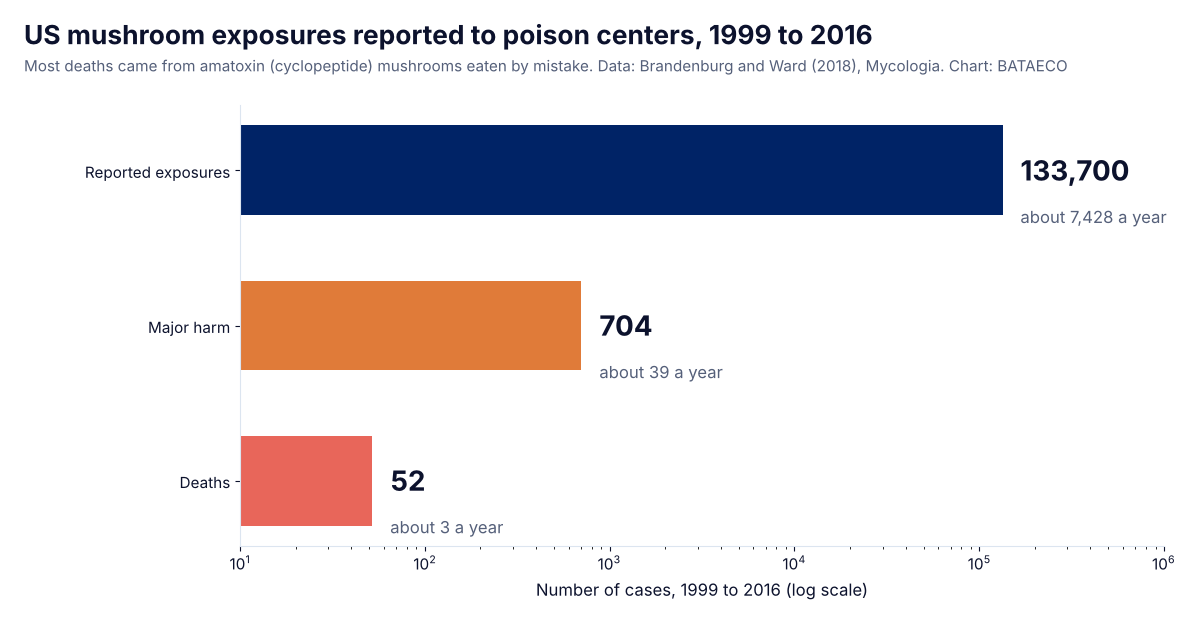
- 133,700 exposures in 18 years, about 7,428 a year, most of them by eating.
- 704 cases caused major harm, about 39 a year. I calculated that this is roughly 0.5% of all reported exposures.
- 52 people died, about 3 a year, or 1 in every 2,570 reported exposures by my calculation. Most deaths were caused by amatoxin (cyclopeptide) mushrooms eaten unintentionally by older adults, and the authors concluded that misidentifying a toxic species as an edible one was the most common cause.
A CDC analysis of US health care data adds the hospital side: an estimated 1,328 emergency department visits and 100 hospital stays for accidental poisonous mushroom ingestion in 2016 alone. One real outbreak shows how quickly things go wrong. In December 2016, after heavy rains, 14 people in Northern California were poisoned by death caps. Some had picked the mushrooms themselves, five ate mushrooms handed to them by a stranger, and three patients needed liver transplants, including an 18 month old child who was left with permanent neurological damage.
My take as a biologist: the numbers say two things at once. Most mushroom exposures are minor, often a toddler tasting something on the lawn. But the deaths are not random: they cluster in adults who were confident they had picked an edible species. That is exactly the pattern of a lookalike problem. The people most at risk are not careless; they recognized a mushroom as “something they knew”, sometimes a species that is safe in their home country, and stopped checking. The giant puffball cut test, the hollow morel and the white spore print exist because a single glance is never enough. A limit of this data: poison center reports undercount, because many mild cases are never reported.
Are Edible Mushrooms Good for You?
Yes. Edible mushrooms are low in calories and fat and provide fiber, B vitamins such as riboflavin and niacin, potassium and selenium. They are also one of the few non animal foods that can supply vitamin D: mushrooms contain ergosterol, which turns into vitamin D2 when they are exposed to ultraviolet light, so UV treated mushrooms are sold as a vitamin D source.
The Safest Way to Start
The easiest way to enjoy unusual edible mushrooms without risk is to grow them. Oyster, lion’s mane and shiitake grow kits produce a crop on a kitchen counter in a few weeks. If you want to learn wild mushrooms, join a local mycological society, go on guided forays and use a good regional field guide alongside an expert, never instead of one.
As an Amazon Associate, BATAECO earns from qualifying purchases.
Frequently Asked Questions
What is the most common edible mushroom?
The button mushroom (Agaricus bisporus), which is also sold as cremini and portobello. It is the most widely grown and eaten mushroom in the world.
What are the best tasting edible mushrooms?
Chefs and foragers most often name morels, porcini, chanterelles, hen of the woods and lion’s mane, along with cultivated shiitake and oyster mushrooms.
Can you eat mushrooms that grow in your yard?
Only if an expert identifies them in person. Lawns can host both edible species and deadly ones, including Amanita and Galerina species, and yard mushrooms are a common cause of poison center calls involving young children.
How soon do symptoms of mushroom poisoning appear?
Mild stomach poisoning usually starts within a few hours. Amatoxin poisoning from death caps typically starts 6 to 12 hours or more after eating, which is why delayed vomiting and diarrhea after a wild mushroom meal is a medical emergency.
Does cooking make poisonous mushrooms safe?
No. Cooking makes some edible species safer and easier to digest, but it does not destroy amatoxins or most other dangerous mushroom toxins.
Sources
- Gold, J. A. W. et al. (2021). Health care utilization and outcomes associated with accidental poisonous mushroom ingestions, United States, 2016 to 2018. MMWR 70(10): 337 to 341. CDC
- Brandenburg, W. E. and Ward, K. J. (2018). Mushroom poisoning epidemiology in the United States. Mycologia 110(4): 637 to 641. doi.org/10.1080/00275514.2018.1479561
- Vo, K. T. et al. (2017). Amanita phalloides mushroom poisonings, Northern California, December 2016. MMWR 66(21): 549 to 553. CDC

Erzsebet (Eli) Frey is a biologist with a BSc in Biology and an MSc in Ecology from the University of Belgrade. She has field and lab experience across Asia, the Middle East, Europe and South America and uses Python and machine learning on biological data. Based in Serbia, she writes BATAECO and also runs Simply Ecologist and Eco&Stylish.