
Mushroom identification means working out the species of a mushroom from a combination of features: where it grows, the shape and color of the cap and stem, what is under the cap (gills, pores, teeth or ridges), whether it has a ring or a cup at the base, its smell, and the color of its spores. No single feature is enough, and there is no simple test for whether a mushroom is edible. This guide walks through the parts of a mushroom, a step by step identification method, how to make a spore print, and what a scientific study found when it tested popular mushroom identification apps on real poisoning cases.
Safety first: identifying mushrooms is a rewarding skill, but never eat a wild mushroom based on a guide, an app or a photo alone. Have it confirmed in person by an experienced local expert, which is also the advice of the US Centers for Disease Control and Prevention after reviewing hospital data on mushroom poisonings.
Parts of a Mushroom
The mushroom you see is only the fruiting body, the reproductive structure of a fungus. The fungus itself is the mycelium, a network of fine threads (hyphae) living in soil, wood or roots. Knowing the parts of the fruiting body gives you the vocabulary every field guide uses.
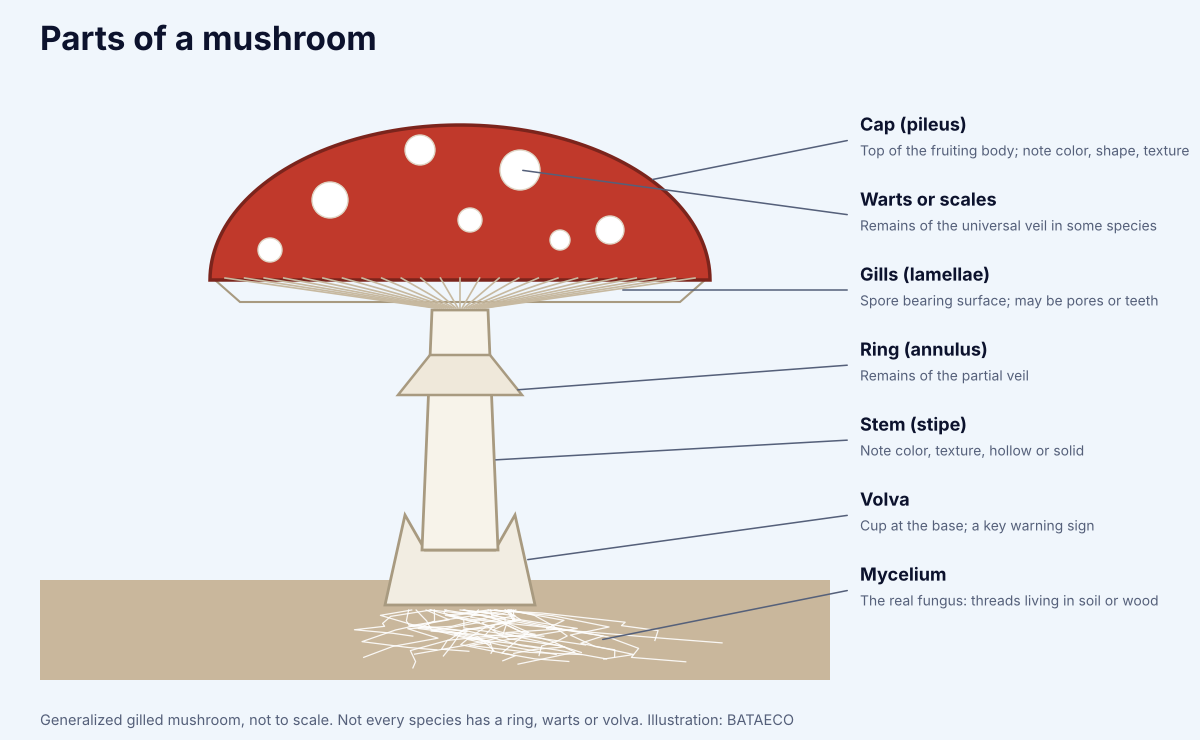
- Cap (pileus): its size, shape, color, surface (smooth, sticky, scaly, hairy) and margin all matter.
- Spore bearing surface: gills (lamellae), pores, teeth (spines) or ridges under the cap. How gills attach to the stem (free, attached or running down it) is an important feature.
- Stem (stipe): central, off center or absent; hollow or solid; smooth, scaly or netted.
- Ring (annulus): a skirt on the stem left by the partial veil that covered the young gills.
- Volva: a cup or sac at the base of the stem, the remains of a universal veil that enclosed the whole young mushroom. It is often buried, and it is a key feature of deadly Amanita species.
How to Identify Mushrooms, Step by Step
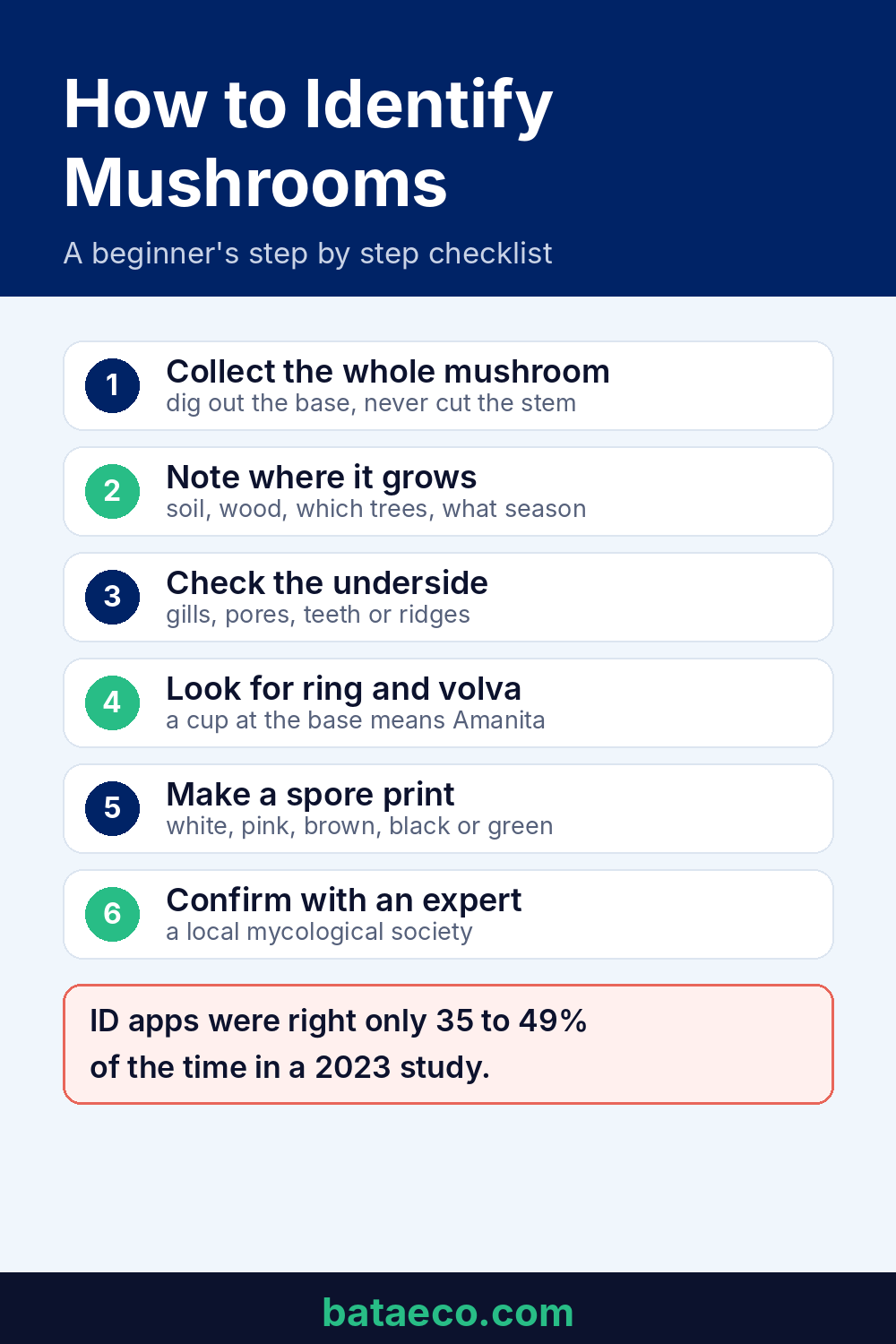
- Collect the whole mushroom. Dig gently around the base rather than cutting the stem, so you do not miss a volva or a bulb. Collect several individuals at different ages if you can.
- Record the habitat. Is it growing on soil, on wood, on dung or on another mushroom? Which trees are nearby? What is the date, region and elevation? Many fungi partner with particular trees.
- Photograph it in place, then photograph the top, the underside, the stem base and a lengthwise cut.
- Examine the underside. Gills, pores, teeth or ridges place a mushroom in very different groups.
- Look for a ring and a volva.
- Note color changes and smell. Some mushrooms bruise blue, red or brown when cut, ooze milk, or smell of anise, flour, radish or bleach.
- Make a spore print (see below).
- Work through a regional key or field guide, checking every feature against the description, not just the photo.
- Confirm with an expert, such as a local mycological society, before you trust the result.
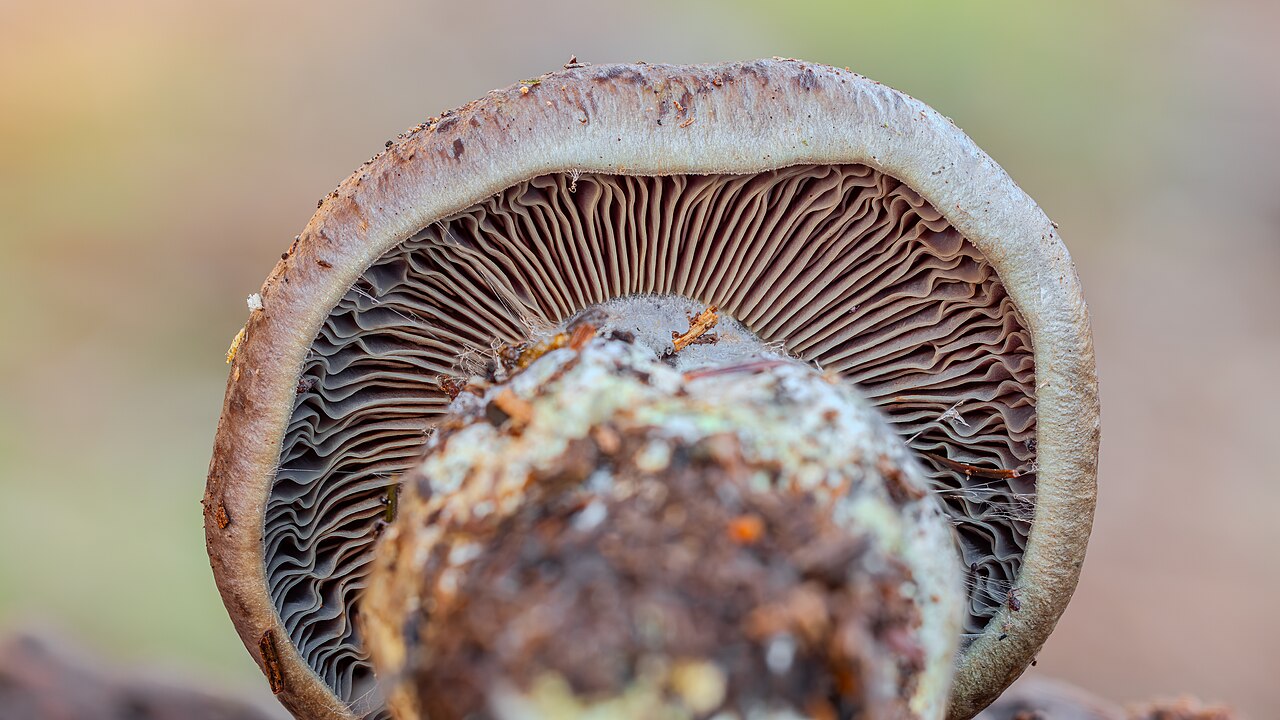
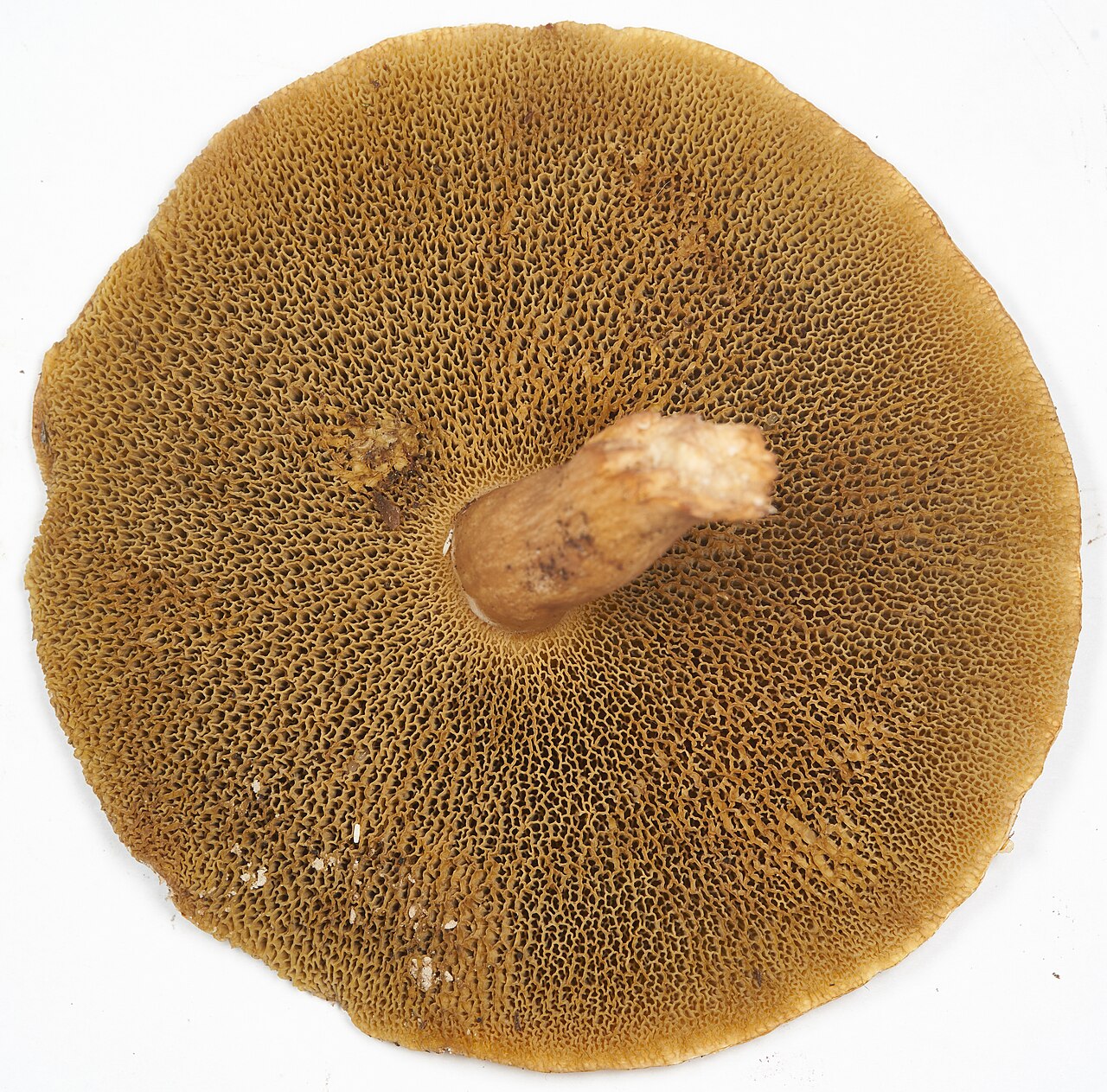
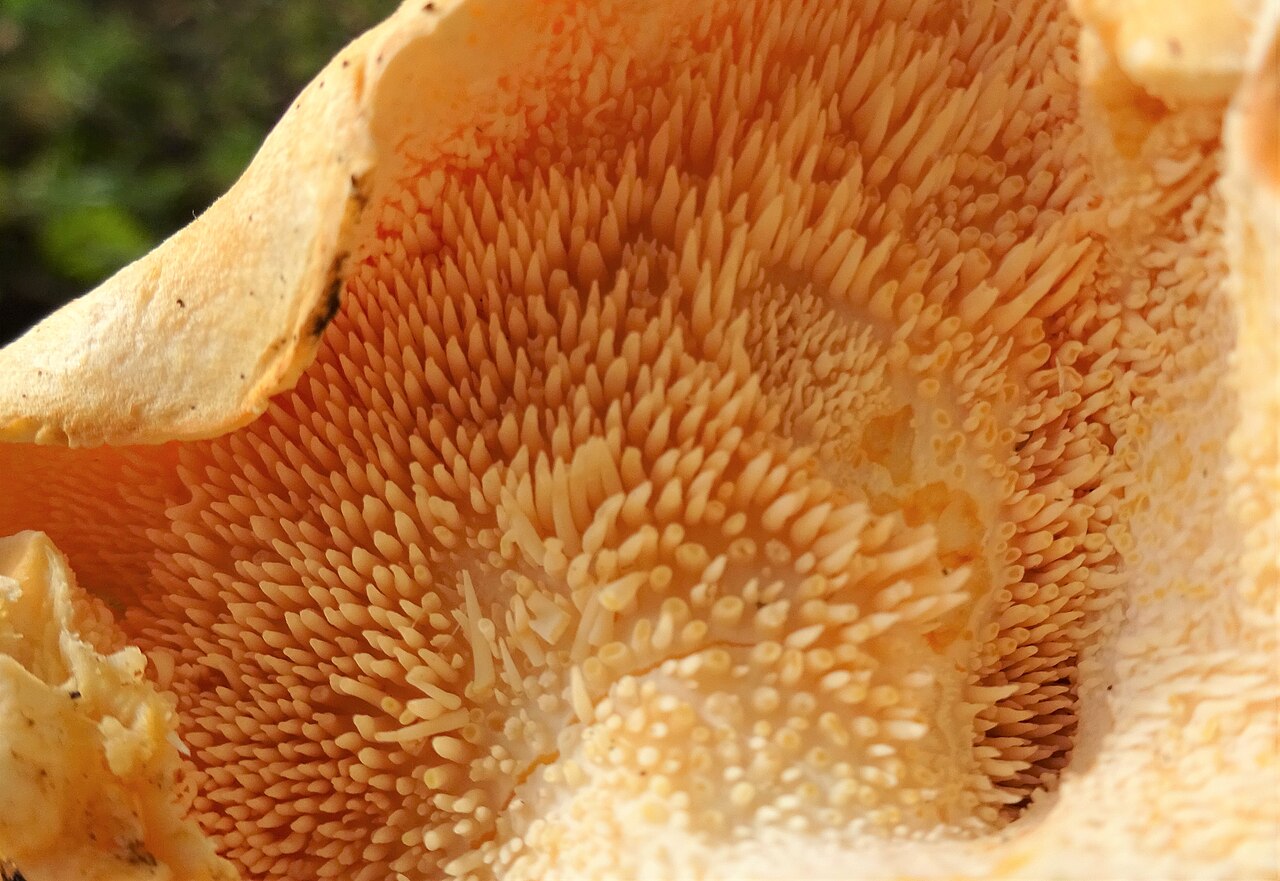
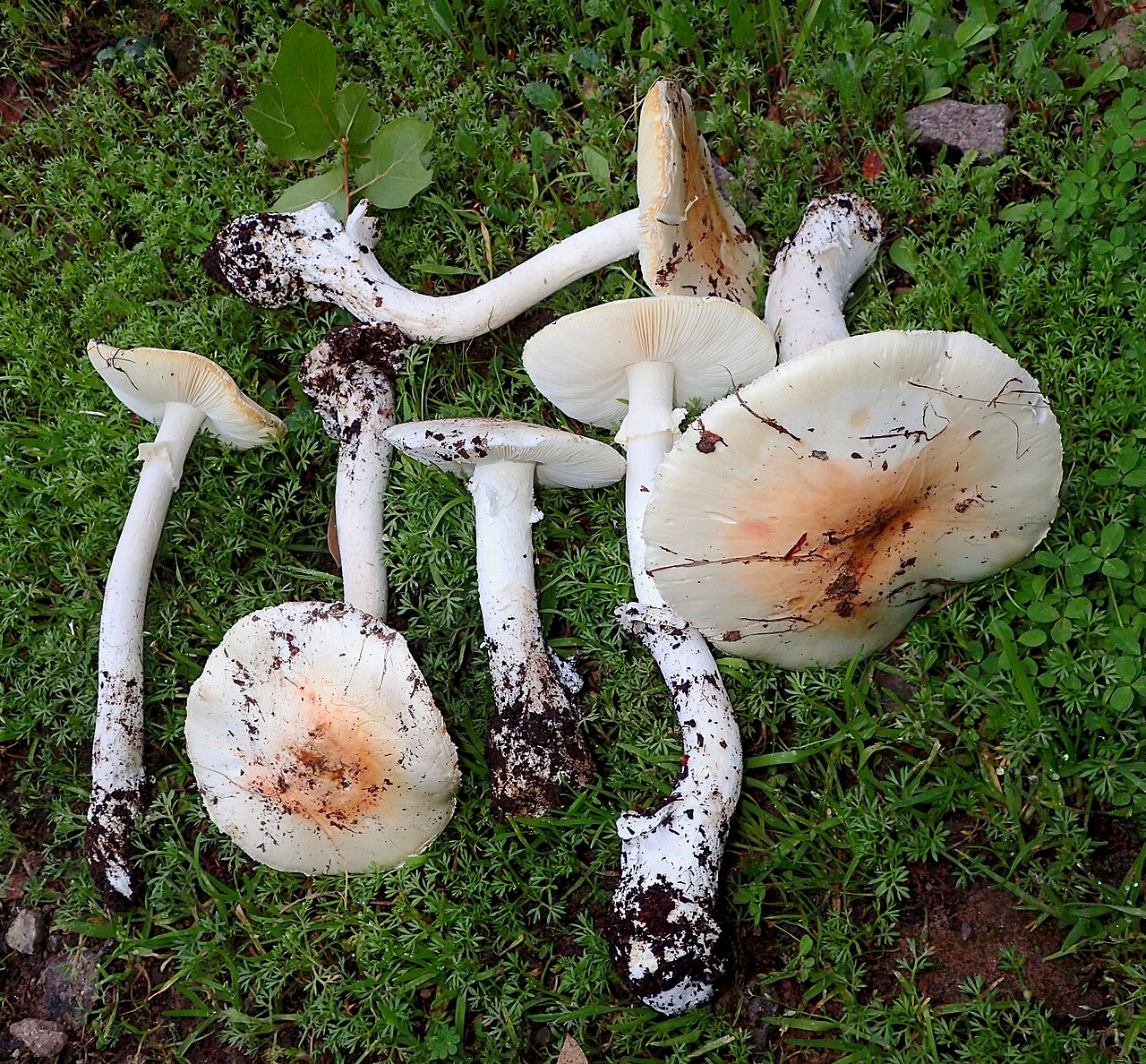
Different groups of mushrooms also have very different lookalike risks, as shown in our guide to edible mushrooms and their toxic lookalikes.
How to Make a Spore Print
A spore print shows the color of a mushroom’s spores in mass, which often differs from the color of the gills. It is one of the most useful identification features.
- Cut off the stem so the cap can lie flat.
- Place the cap gills or pores down on paper that is half white and half black, or on a piece of glass, so both light and dark spores show.
- Cover it with a cup or bowl to stop air currents from blowing the spores away. A drop of water on the cap helps if the mushroom is dry.
- Wait 2 to 24 hours, then lift the cap carefully and note the color in daylight.
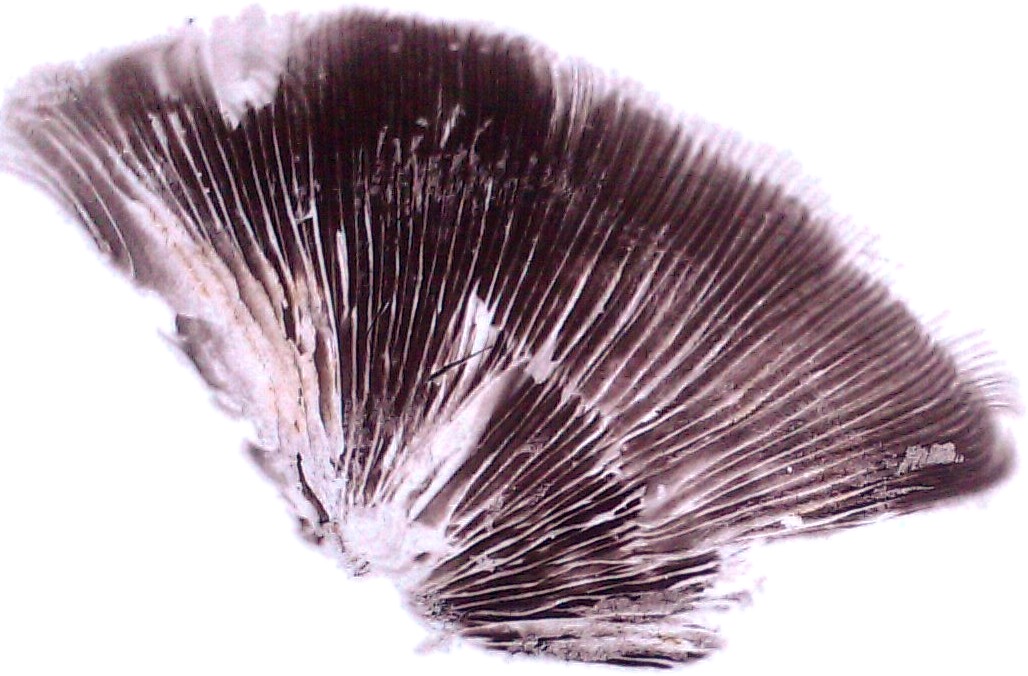
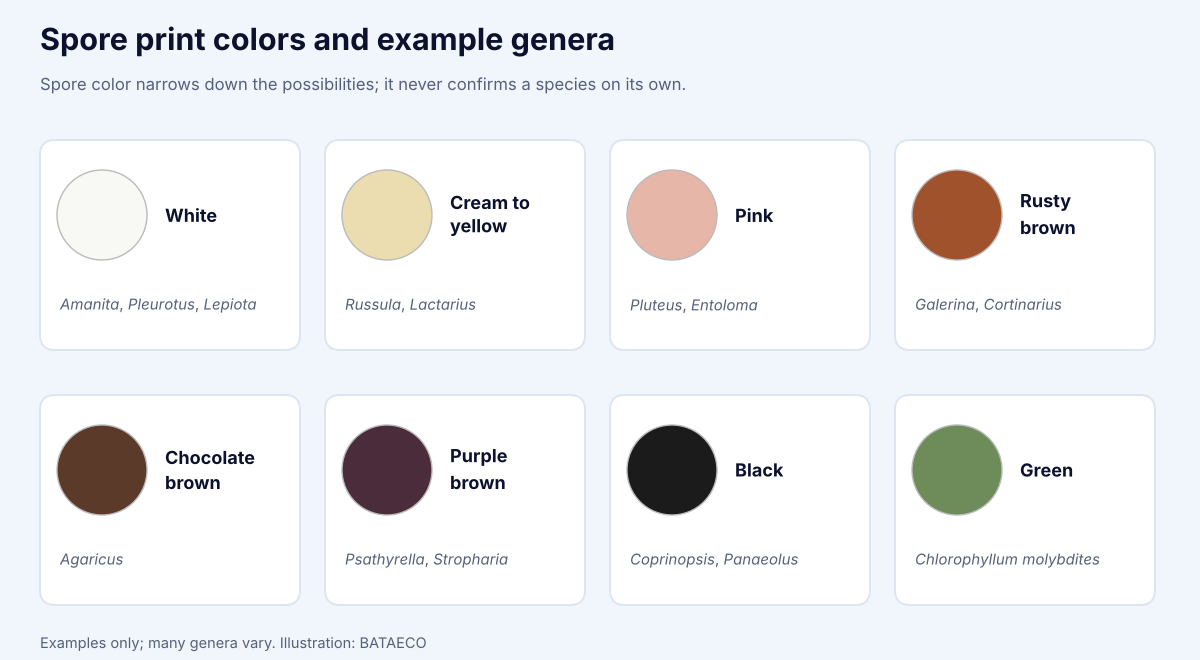
Spores themselves can be examined under a microscope, where their size, shape and ornamentation separate many similar species. Our guide on how to use a microscope covers the basics.
Case Study: Can a Mushroom Identification App Be Trusted?
Phone apps that name a mushroom from a photo are hugely popular. A study published in Clinical Toxicology in 2023 tested three of them on a realistic challenge: 78 photographs of mushrooms that had actually been sent to the Victorian Poisons Information Centre and the Royal Botanic Gardens Victoria in Australia in 2020 and 2021, each identified by an expert mycologist. Three researchers tested each app independently. I charted the results.
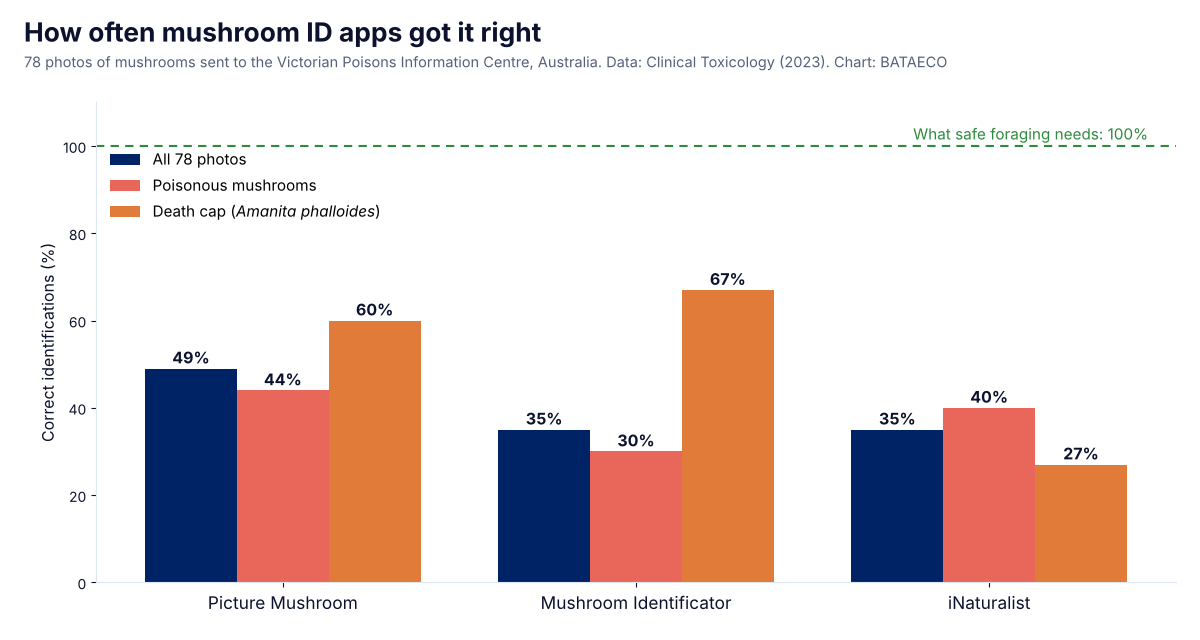
- The best app was right less than half the time. Picture Mushroom identified 49% of all photos correctly; Mushroom Identificator and iNaturalist each identified 35%.
- Poisonous mushrooms were not easier. Accuracy for poisonous species was 44%, 30% and 40%.
- The death cap was missed often. The apps recognized Amanita phalloides in 60%, 67% and 27% of attempts, and the death cap was misidentified as something else twice by Picture Mushroom and once by iNaturalist.
My take as a biologist: these results are not a surprise once you know what identification depends on. An app sees a photo of a cap from above. It cannot smell the mushroom, see a buried volva, check a spore print, know which tree it grew under, or look at spores under a microscope, and those are exactly the features that separate a death cap from an edible lookalike. Apps are genuinely useful for learning names and narrowing down a group, and on iNaturalist the real value is the community of human identifiers who check the suggestion. But a coin flip is not a safety standard. One limit of the study: it used photos submitted to a poison center, which are often blurry or incomplete, so apps may do better with good photos. That is also how most people use them in real life, though.
Common Identification Mistakes
- Matching photos instead of features: many species look alike in pictures; descriptions and measurements matter more.
- Cutting the stem: this leaves the volva in the ground.
- Ignoring habitat: a mushroom on wood and one on soil can look identical but belong to different genera.
- Trusting folk tests: silver spoons, peeling caps and animals nibbling a mushroom say nothing about safety.
- Using a guide from another region: species differ between continents; a safe mushroom in one country can have a deadly twin in another.
- Stopping at the first match: always ask what else it could be.
As an Amazon Associate, BATAECO earns from qualifying purchases.
Frequently Asked Questions
Can you identify a mushroom from a photo?
Sometimes, for distinctive species, but often not. Key features such as the spore print, smell, buried volva and microscopic details do not show in a photo, which is why experts treat photo identifications as tentative.
What is the best mushroom identification app?
In a 2023 study, Picture Mushroom performed best but was correct only 49% of the time. iNaturalist is most useful for its community of human identifiers. No app is reliable enough to decide whether a mushroom is safe to eat.
How do you tell if a mushroom is poisonous?
Only by identifying it to species. There is no universal sign of a poisonous mushroom, and many deadly species look plain, smell pleasant and taste mild.
What does the color of a spore print tell you?
It narrows a mushroom down to certain groups. For example, deadly Amanita species have white spores, Galerina rusty brown and field mushrooms (Agaricus) chocolate brown.
Where can I get a mushroom identified?
Join a local mycological society or club, many of which run identification sessions and forays. For suspected poisoning in the United States, call Poison Help at 1 800 222 1222.
Sources
- Gold, J. A. W. et al. (2021). Health care utilization and outcomes associated with accidental poisonous mushroom ingestions, United States, 2016 to 2018. MMWR 70(10). CDC
- A comparison of the accuracy of mushroom identification applications using digital photographs (2023). Clinical Toxicology. doi.org/10.1080/15563650.2022.2162917
- North American Mycological Association, find a local mycological club.

Erzsebet (Eli) Frey is a biologist with a BSc in Biology and an MSc in Ecology from the University of Belgrade. She has field and lab experience across Asia, the Middle East, Europe and South America and uses Python and machine learning on biological data. Based in Serbia, she writes BATAECO and also runs Simply Ecologist and Eco&Stylish.