

Chanterelle mushrooms are wild, edible, golden to orange funnel shaped fungi of the genus Cantharellus that grow from the soil in partnership with trees and have blunt, forked ridges instead of true gills. They smell faintly of apricots, are prized by chefs, and cannot be farmed commercially, so every chanterelle you buy was picked in a forest. Their most important lookalike, the poisonous jack o’lantern mushroom, fruits at the same time of year. This guide explains how to identify chanterelles, the main types, where and when they grow on each side of North America, and what more than 15,000 citizen science records show about the overlap with their lookalikes.
Safety first: this article is for learning. Never eat a wild mushroom unless an experienced local expert has confirmed it in person.
How to Identify Chanterelles
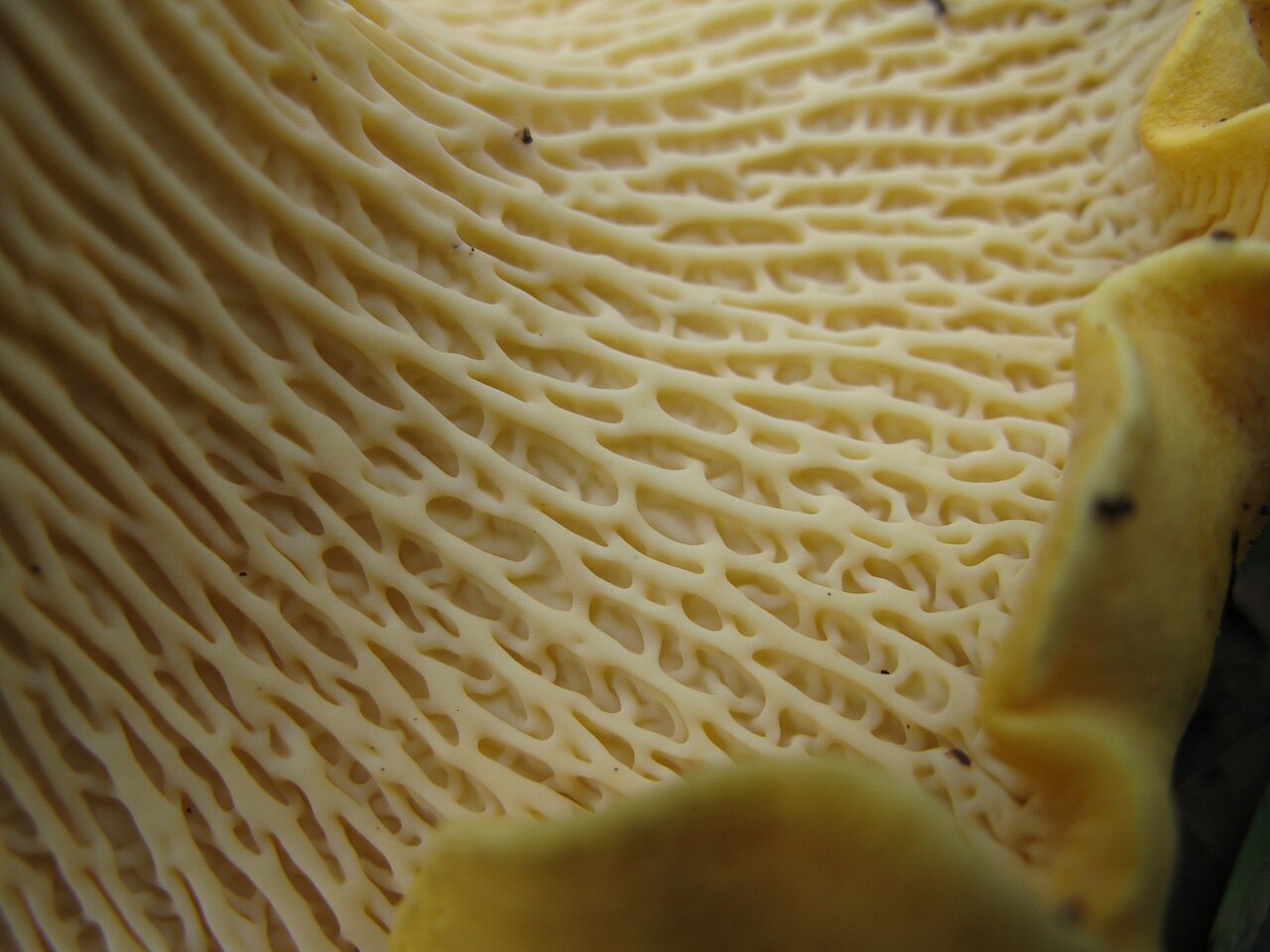
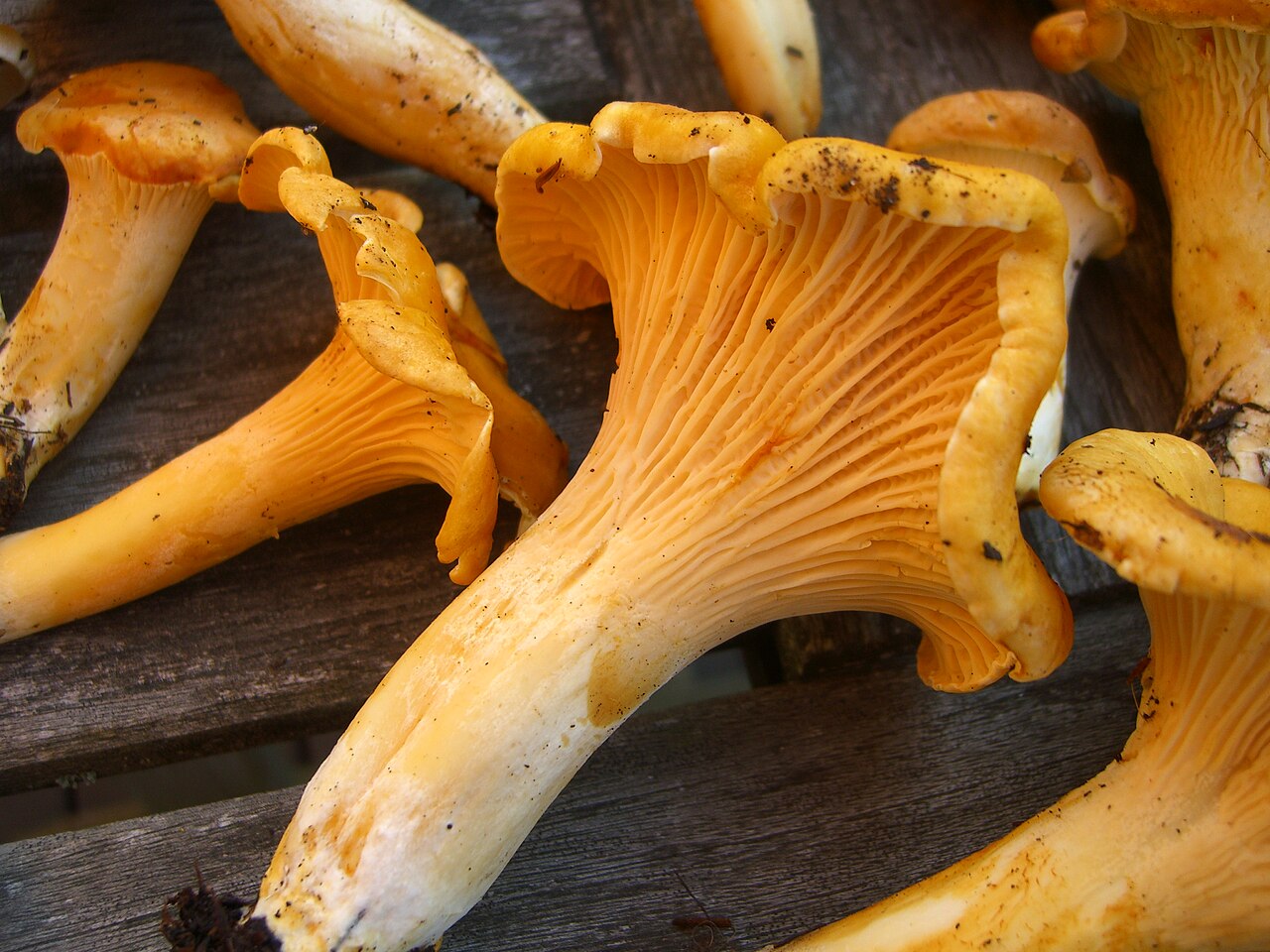
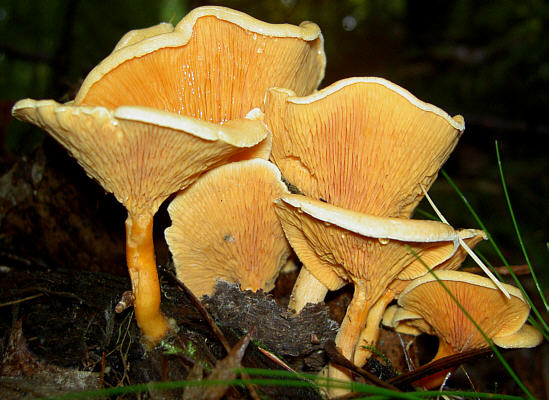
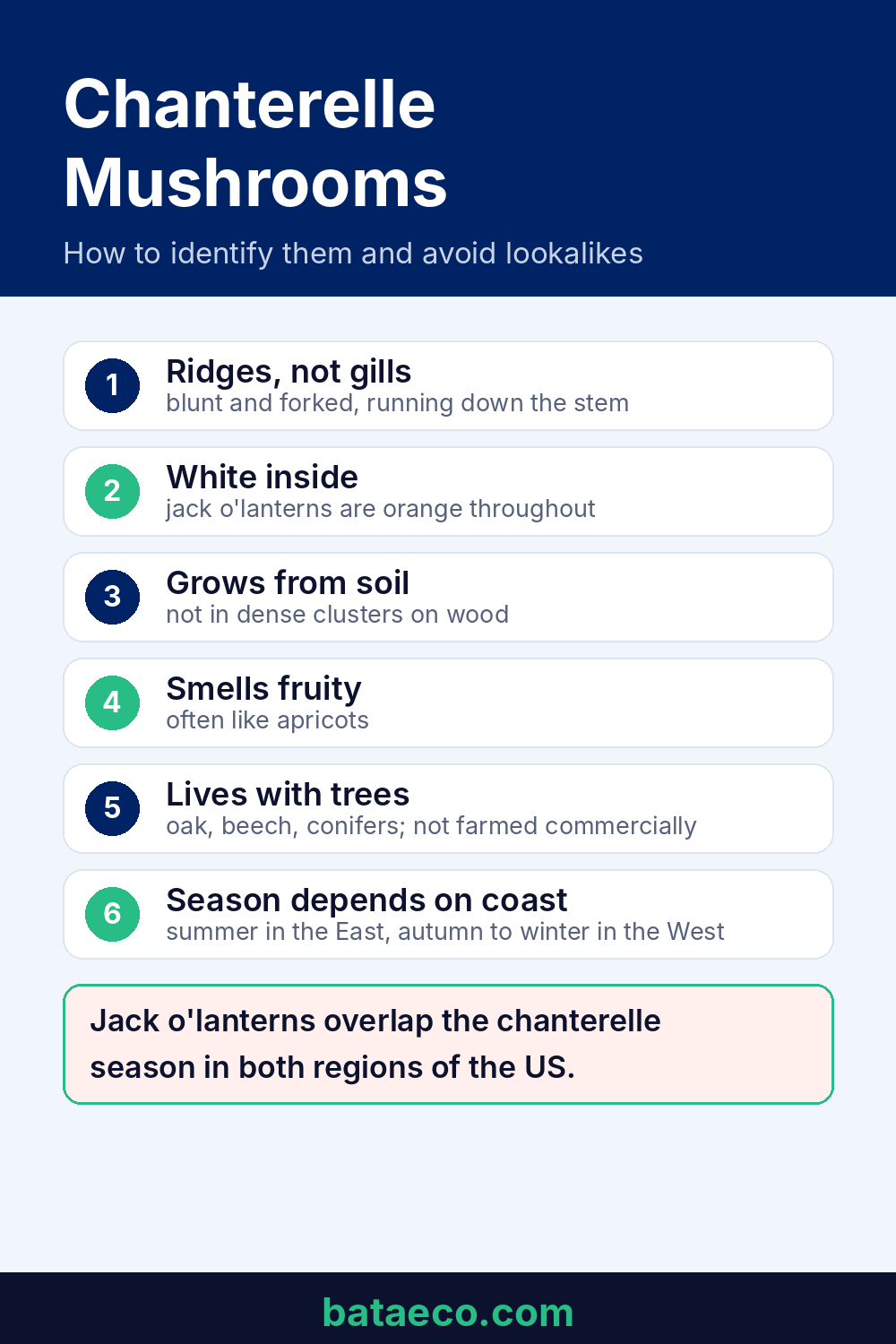
- Ridges, not gills: the underside has blunt, shallow, forked ridges with cross veins, running down the stem. They look like melted wax folds, not the thin, sharp blades of a true gill. Some species are almost smooth underneath.
- Shape: a cap that becomes funnel or trumpet shaped with a wavy edge, merging smoothly into the stem.
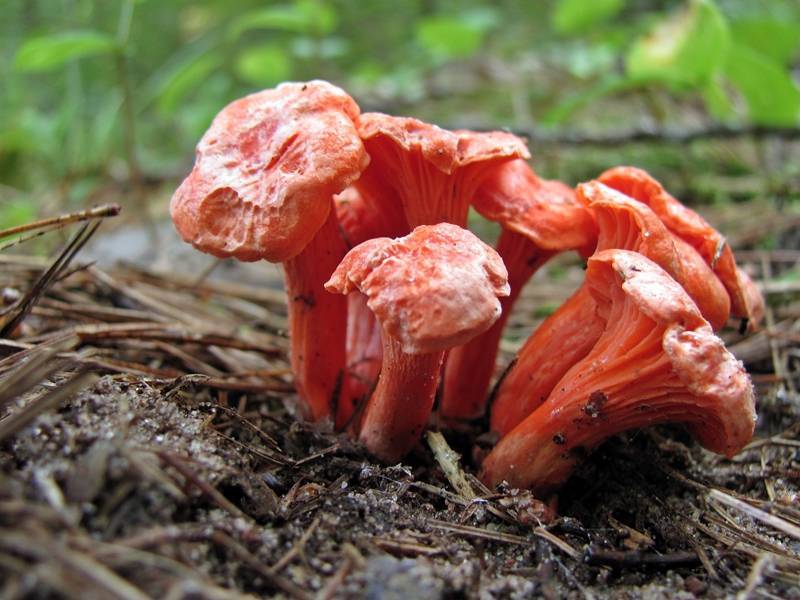
- Color: egg yolk yellow to orange in golden chanterelles, red in cinnabar chanterelles, gray black in black trumpets.
- Flesh: tear one in half from top to bottom. The inside is white to pale yellow, solid and fibrous, a bit like string cheese.
- Growth: single or scattered on the ground, never in dense clusters on wood.
- Smell: fruity, often compared to apricots.
The chanterelle family (Cantharellaceae) is only distantly related to the gilled orange mushrooms that resemble it, so similar colors mean nothing. To see why such superficial similarity matters, read our guide to edible mushrooms and their toxic lookalikes.
Types of Chanterelles
For a long time, all golden chanterelles were called Cantharellus cibarius. DNA studies have shown that C. cibarius in the strict sense is European, and that North America has its own species. The main types foragers meet:
- Pacific golden chanterelle (Cantharellus formosus): the most commercially harvested chanterelle in the Pacific Northwest, growing under Douglas fir and western hemlock. It is the state mushroom of Oregon.
- California golden chanterelle (Cantharellus californicus): grows under oaks in California and can weigh close to a kilogram, making it one of the largest chanterelles in the world.
- Eastern golden chanterelles (Cantharellus flavus, Cantharellus phasmatis and relatives): summer species of eastern hardwood forests, often under oak and beech.
- Cinnabar chanterelle (Cantharellus cinnabarinus): small and bright red pink, common in eastern oak forests in summer.
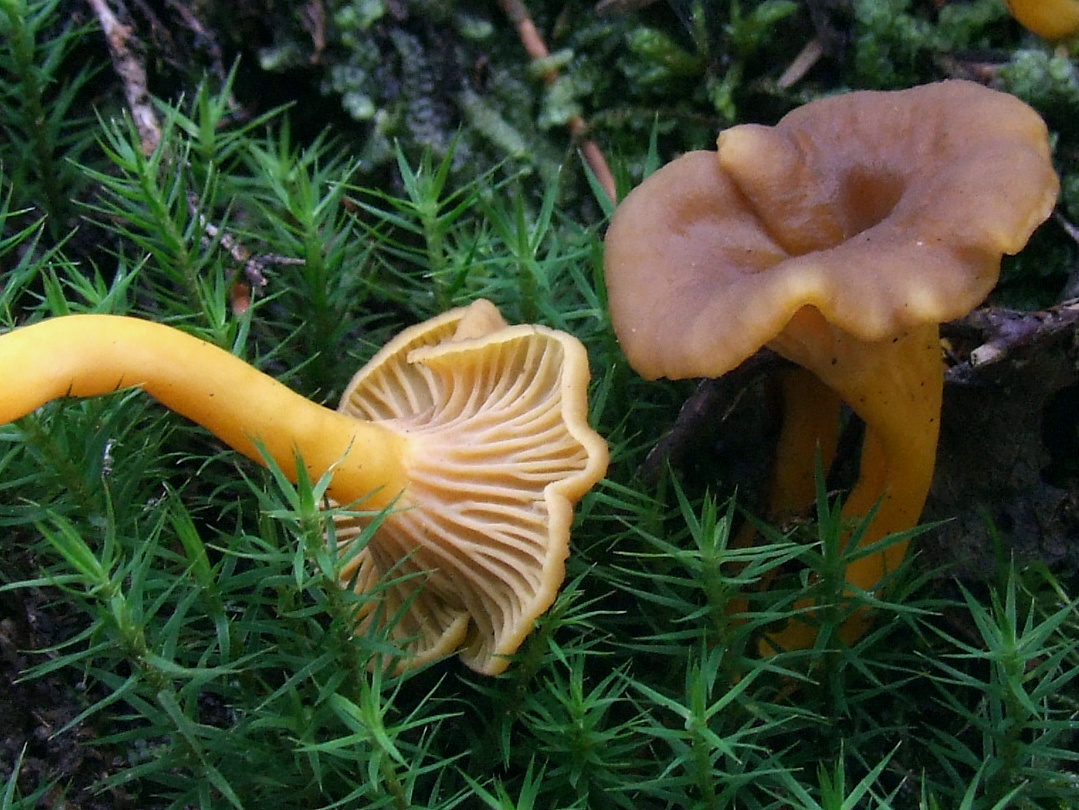
- Yellowfoot or winter chanterelle (Craterellus tubaeformis): a brown cap, hollow yellow stem and gray ridges, fruiting late in the season in mossy conifer forests.
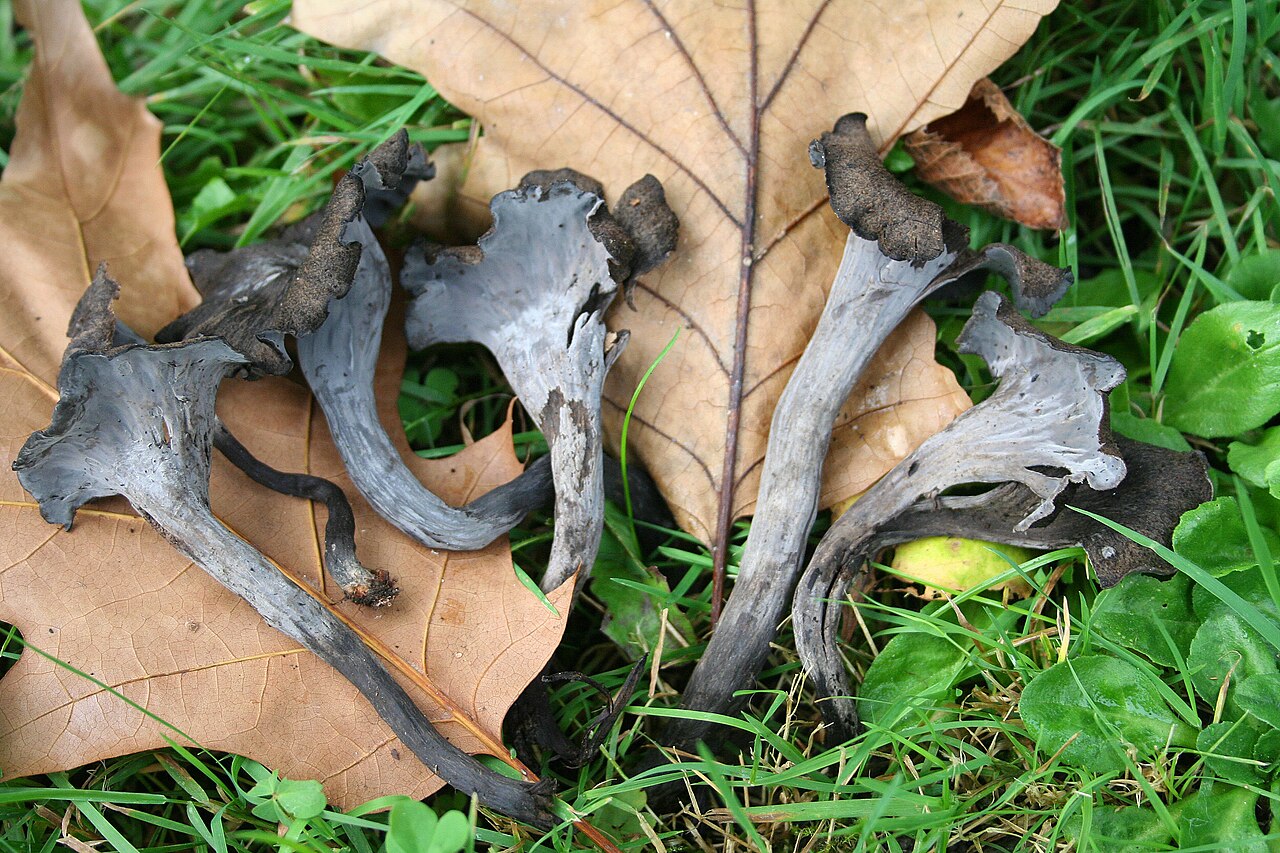
- Black trumpet (Craterellus cornucopioides and Craterellus fallax): thin, gray black funnels with an almost smooth underside, hard to spot in leaf litter but highly prized.
Chanterelle Lookalikes
Jack o’lantern mushrooms (Omphalotus spp.)
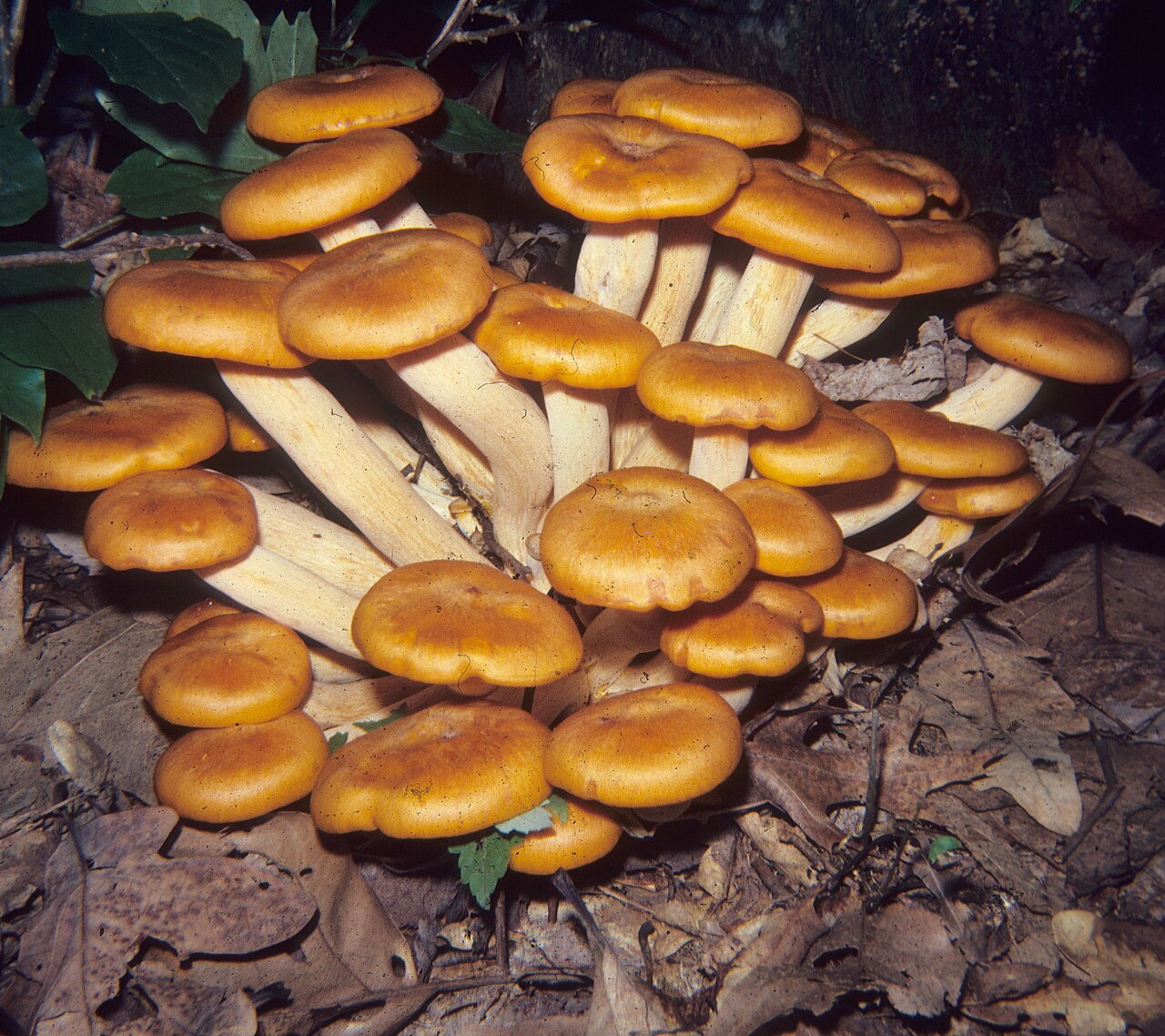
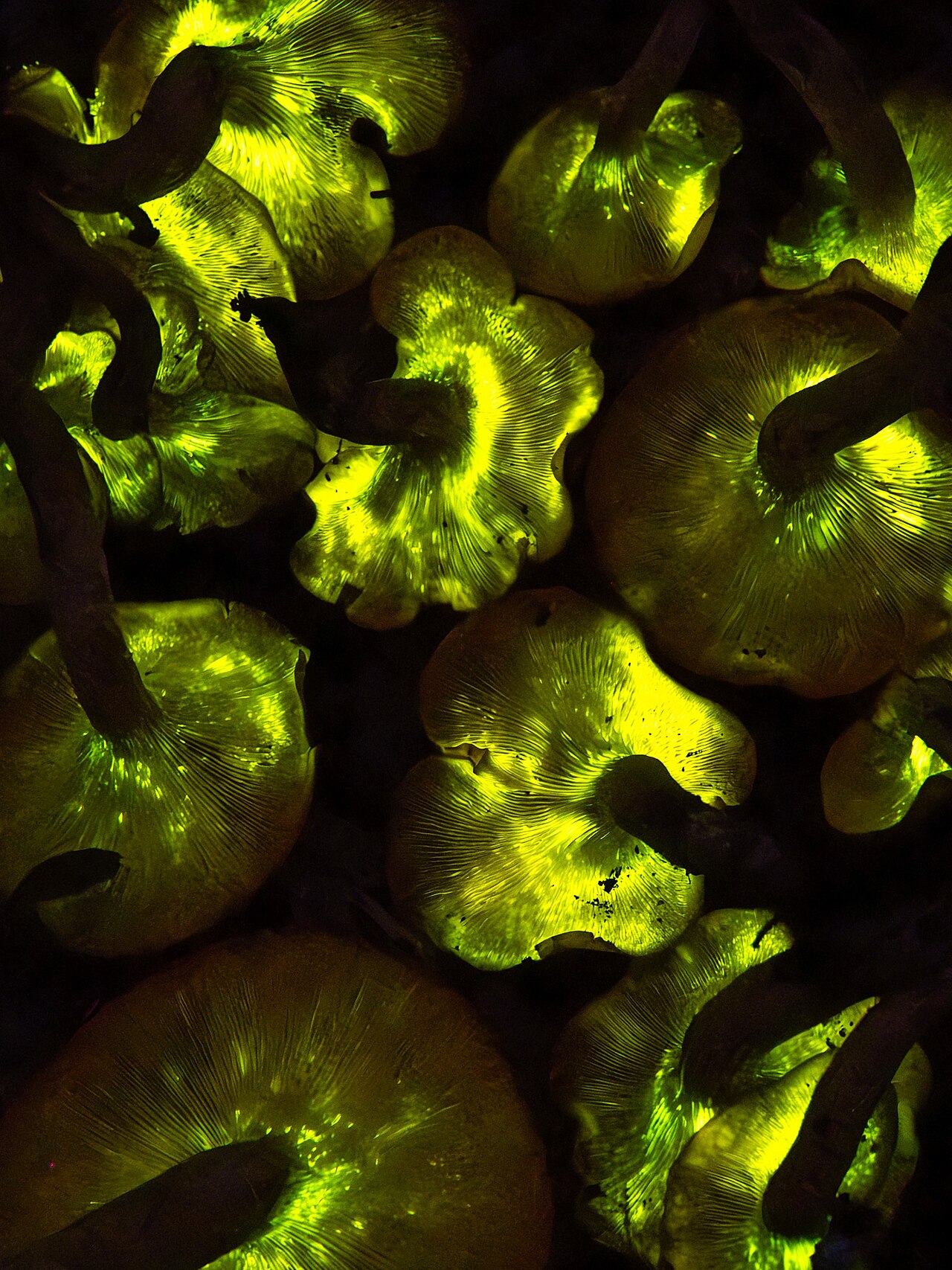
The most dangerous lookalike. Jack o’lanterns, such as Omphalotus illudens in the East and Omphalotus olivascens in California, are bright orange, but they have true, sharp, crowded gills, grow in dense clusters from wood or buried roots, and are orange all the way through when cut. They contain illudins, toxins that cause severe vomiting and diarrhea. Their gills can glow faintly green in the dark, a light produced by the same luciferin and luciferase type of chemistry used by other glowing fungi.
False chanterelle (Hygrophoropsis aurantiaca)
Orange, with thin, crowded, repeatedly forked true gills and soft orange flesh. It grows on soil or rotting conifer wood. It is not deadly, but it can upset the stomach and is not worth eating.
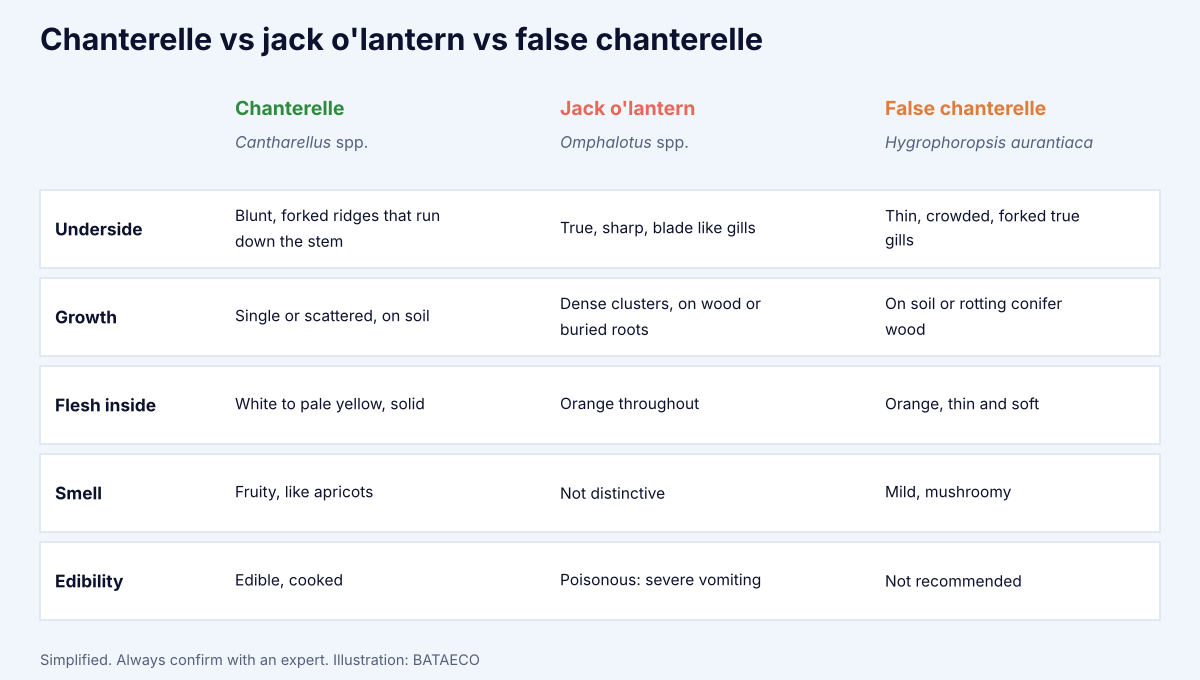
Chanterelle vs Jack o’Lantern: Side by Side
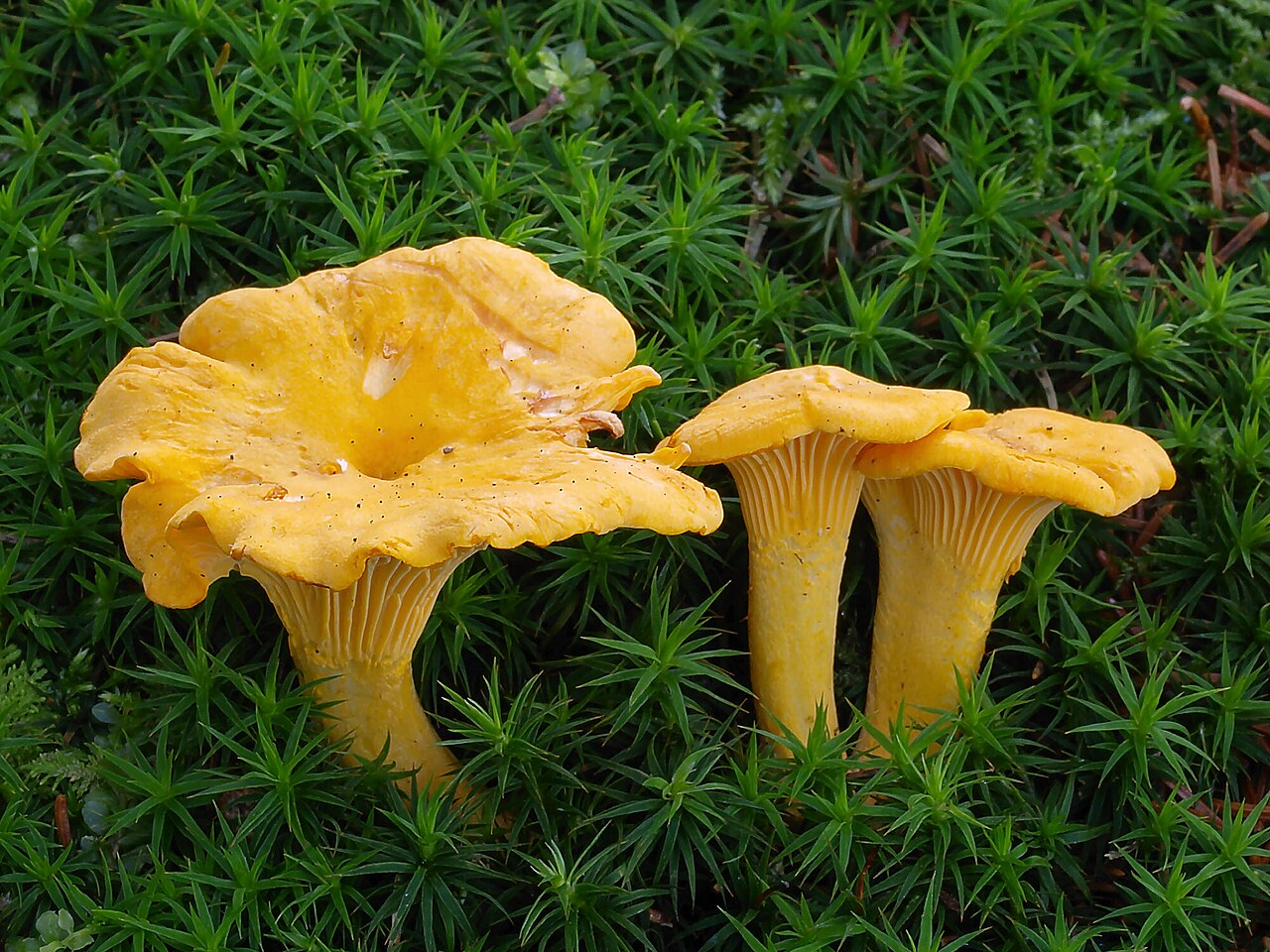
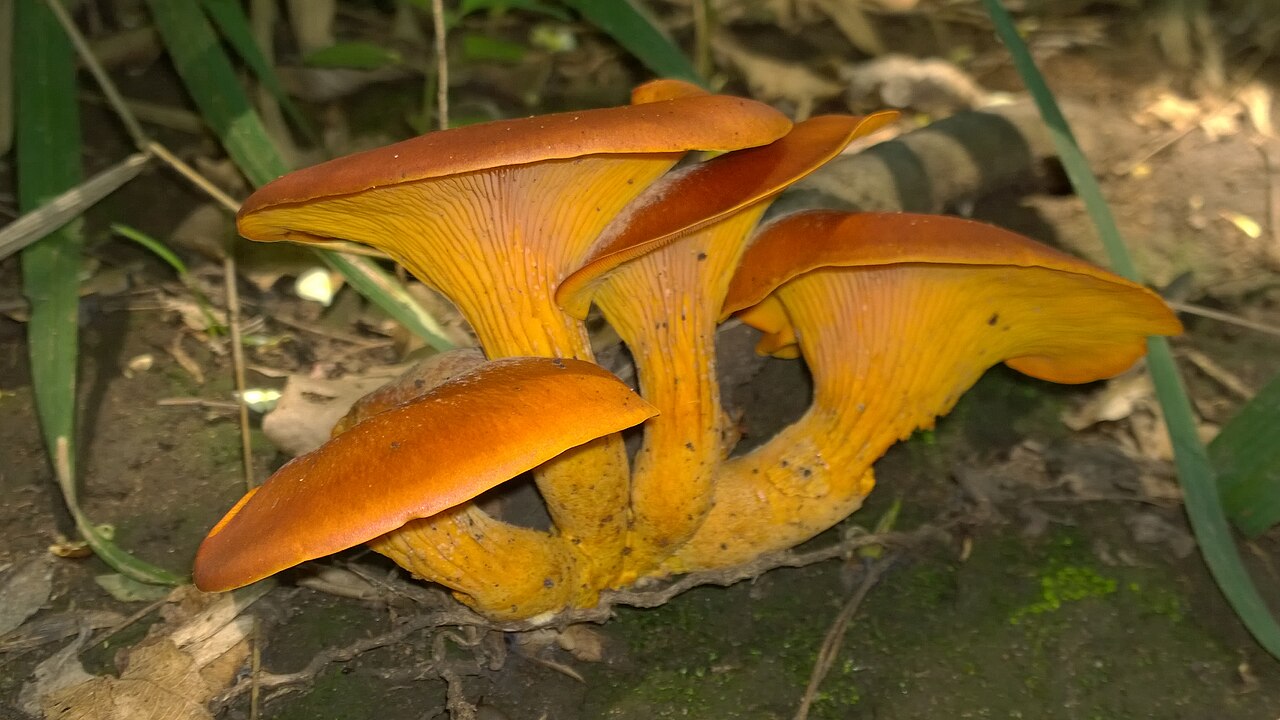
When you have a possible chanterelle in hand, run through these five checks. A mushroom must pass all of them:
- Turn it over. Chanterelle ridges are blunt, shallow and forked, with cross veins between them. Jack o’lantern gills are thin, sharp, crowded and evenly spaced, like the pages of a book.
- Look at how it grows. Chanterelles come up singly or scattered from the soil. Jack o’lanterns grow in tight clusters, many stems joined at the base, from stumps, trunks or buried roots.
- Tear it open. Chanterelle flesh is white to pale yellow inside. Jack o’lantern flesh is orange all the way through.
- Check the stem. Chanterelle stems taper smoothly into the cap. Jack o’lantern stems are often long, tough and fused with their neighbors.
- Consider the size of the find. A large, perfect orange bouquet on a stump is far more likely to be jack o’lanterns than chanterelles.
Where Do Chanterelles Grow?
Chanterelles are ectomycorrhizal: their underground threads wrap around the fine roots of living trees, trading water and minerals for sugars. That is why they grow only near trees and why they cannot simply be grown on sawdust like oyster mushrooms. In 1997, Swedish researchers reported the first chanterelles fruiting on pine seedlings in a greenhouse, but no one has turned it into a commercial crop.
- Eastern North America: moist hardwood forests and river bottoms under oak, beech, hickory and maple, often in moss or along trails and stream banks.
- Pacific Northwest: second growth Douglas fir and western hemlock forests.
- California: under live oaks.
- Europe: under pine, spruce, beech and birch, especially on acidic soils.
The Missouri Department of Conservation notes that chanterelles return to the same spots each year, and that dry years produce fewer mushrooms.
Case Study: When Do Chanterelles and Their Lookalikes Fruit?
To find out when chanterelles appear on each side of the continent, and how much their season overlaps with their lookalikes, I downloaded the monthly counts of research grade iNaturalist observations for Cantharellus, Omphalotus (jack o’lanterns) and Hygrophoropsis aurantiaca (false chanterelle) in two regions: the eastern United States and the Pacific Coast.
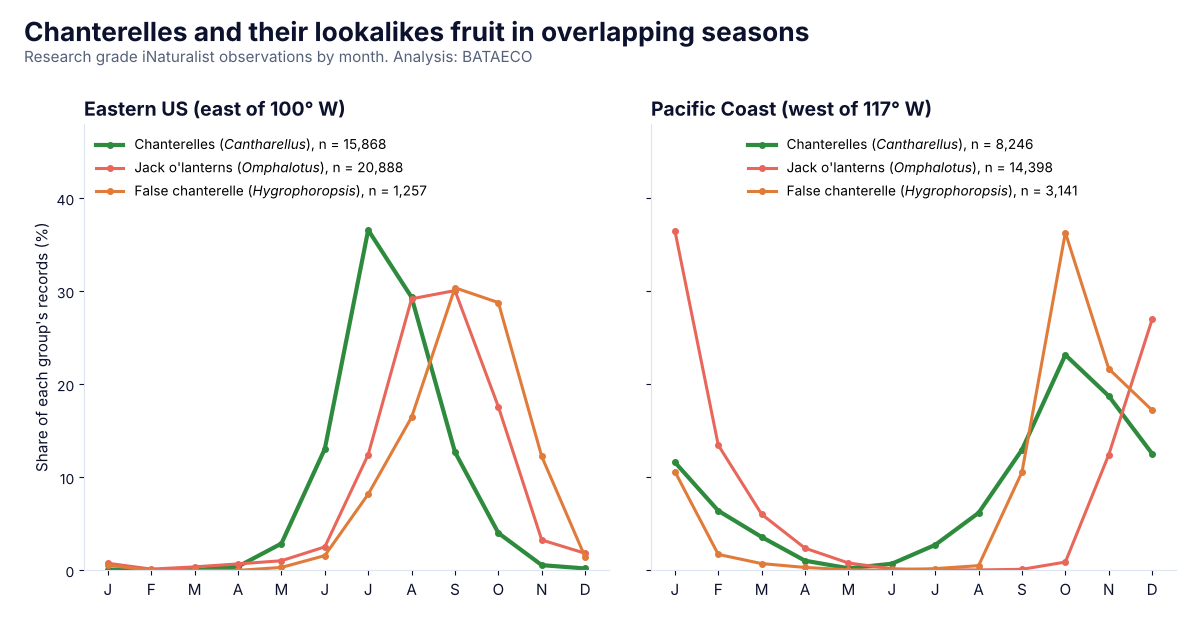
- Opposite seasons on opposite coasts: in the East (15,868 chanterelle records), chanterelles peak in July, and June to August hold 79% of records. On the Pacific Coast (8,246 records), they peak in October and keep fruiting through the wet winter until January.
- Jack o’lanterns follow close behind in the East: they peak in September, but August is already their second biggest month. I calculated that the eastern chanterelle and jack o’lantern seasons overlap by 63%, and 44% of eastern jack o’lantern records fall in the three main chanterelle months.
- In the West the false chanterelle is the closer twin: its season overlaps 79% with Pacific chanterelles, both peaking in October, while western jack o’lanterns peak later, in January.
My take as a biologist: the coastal flip makes ecological sense. Chanterelles need moist soil and mild temperatures. The East gets summer thunderstorms, so chanterelles fruit in summer; the Pacific Coast has dry summers and wet winters, so they wait for the autumn rains. The overlap numbers carry the safety lesson: there is no “safe month” when only chanterelles are out. A forager in Ohio in August or in Oregon in October will find the lookalike in the same woods, often on the same day, so the ridges, the growth habit and the white flesh must be checked every time. A limit of this data: iNaturalist records reflect where and when people go out looking, and lookalikes may be photographed more or less often than chanterelles.
Chanterelle Nutrition
Per 100 g raw, chanterelles provide 32 calories, 3.8 g of fiber, 506 mg of potassium, 3.5 mg of iron and 5.3 µg of vitamin D, according to USDA FoodData Central. Among the nine mushrooms I compared in our oyster mushroom guide, chanterelles had the most fiber and potassium.
How to Clean and Cook Chanterelles
Brush off soil and needles, trim the base and tear large ones lengthwise, which also confirms the white interior. Many cooks dry sauté them in a hot pan first to release their water, then add butter. Always cook chanterelles; raw wild mushrooms are harder to digest. Dried chanterelles turn tough, so sautéing and freezing preserves them better.
As an Amazon Associate, BATAECO earns from qualifying purchases.
Frequently Asked Questions
Do chanterelles have poisonous lookalikes?
Yes. The jack o’lantern (Omphalotus spp.) is poisonous and causes severe vomiting. The false chanterelle (Hygrophoropsis aurantiaca) is mildly toxic for some people.
How can I tell a chanterelle from a false chanterelle?
Chanterelles have blunt, shallow ridges and white, solid flesh. False chanterelles have thin, crowded true gills that fork repeatedly and soft orange flesh.
Why are chanterelles so expensive?
They live in partnership with living trees and cannot be farmed commercially, so all chanterelles are hand picked in the wild during a limited season.
When is chanterelle season?
Summer in eastern North America, peaking in July, and autumn to winter on the Pacific Coast, peaking in October.
Do chanterelles have health benefits?
They are low in calories and a good source of fiber, potassium, iron and vitamin D. Claims about medicinal effects come mostly from lab studies.
Sources
- Missouri Department of Conservation, Chanterelles field guide.
- iNaturalist, Chanterelles (genus Cantharellus), research grade observations accessed November 2026.
- USDA Agricultural Research Service, FoodData Central.

Erzsebet (Eli) Frey is a biologist with a BSc in Biology and an MSc in Ecology from the University of Belgrade. She has field and lab experience across Asia, the Middle East, Europe and South America and uses Python and machine learning on biological data. Based in Serbia, she writes BATAECO and also runs Simply Ecologist and Eco&Stylish.