
The difference between an antigen and an antibody is simple: an antigen is the target, and an antibody is the defender. An antigen is any molecule, usually part of a virus, bacterium, pollen grain or toxin, that the immune system recognizes as a sign of something to respond to. An antibody is a Y shaped protein made by your B cells that locks onto one specific antigen to neutralize it or mark it for destruction. This guide explains antigen vs antibody in detail, how they bind, the five types of antibodies, and what antigen and antibody tests really measure, with real accuracy data from COVID-19 tests.
What Is an Antigen?
An antigen (short for antibody generator) is any substance that can be recognized by antibodies or by immune cells. Most antigens are proteins or polysaccharides (sugar chains), but lipids and nucleic acids can also act as antigens. Examples include:
- Parts of pathogens: the spike protein on the surface of a coronavirus, or molecules in a bacterial cell wall.
- Toxins: such as tetanus or diphtheria toxin.
- Allergens: proteins in pollen, dust mites, peanuts or pet dander.
- Your own molecules: the A and B antigens on red blood cells, or tumor antigens on cancer cells. In autoimmune diseases, the immune system mistakenly attacks self antigens.
An antigen is usually much larger than the part an antibody actually touches. That small region is called the epitope. A single virus carries many different antigens, and each antigen can have several epitopes, so one infection triggers a whole family of different antibodies.
What Is an Antibody?
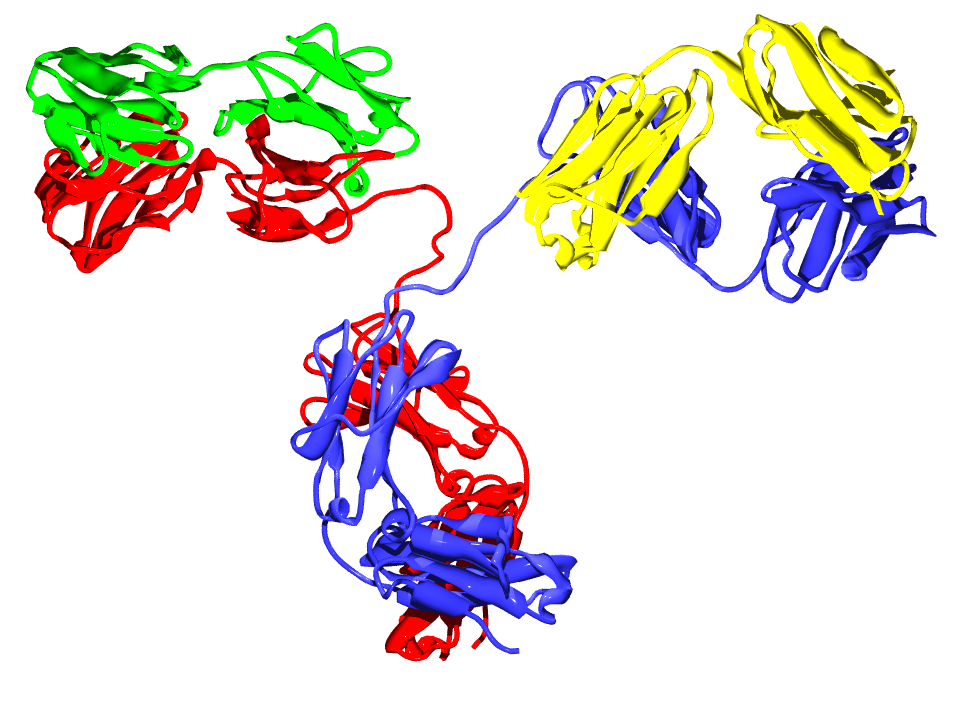
An antibody, also called an immunoglobulin (Ig), is a Y shaped glycoprotein made by B cells and by plasma cells, the antibody factories that B cells turn into after they are activated. Each antibody is built from four protein chains: two identical heavy chains and two identical light chains. The tips of the two arms form the binding site, called the paratope, which fits one epitope like a key fits a lock.
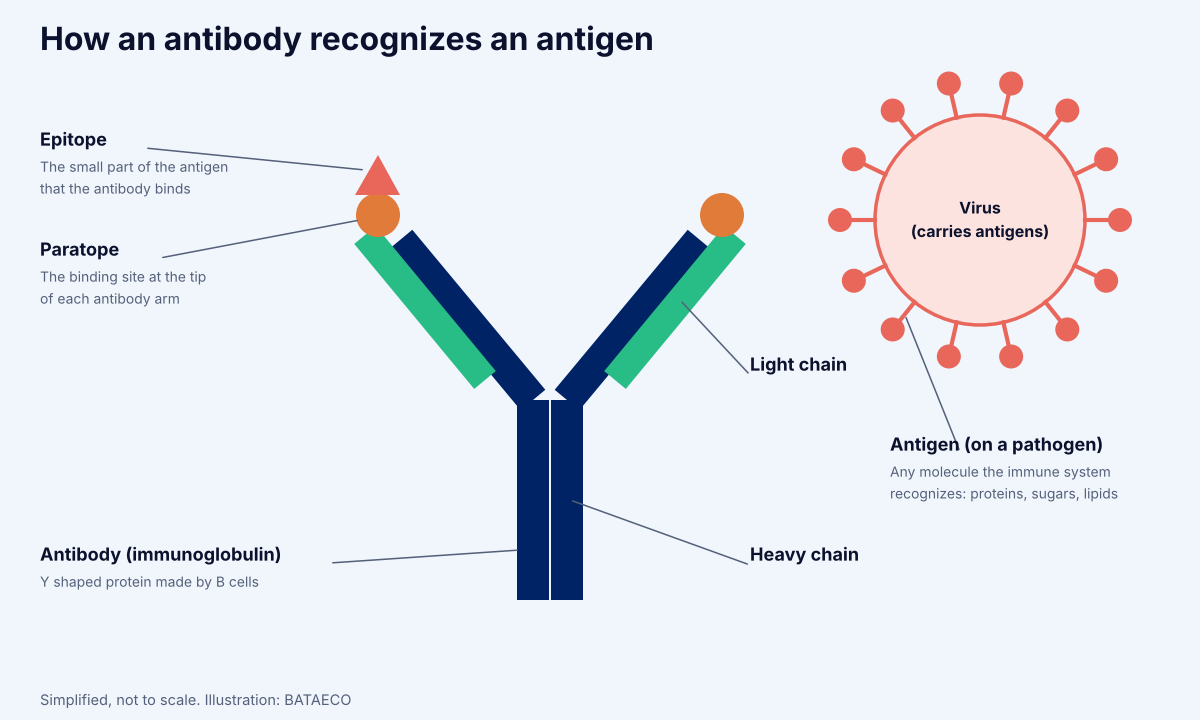
Each B cell makes antibodies with only one paratope, but the body as a whole contains B cells able to make billions of different antibodies, thanks to gene rearrangement in developing B cells. When an antigen matches one of them, that B cell multiplies into a clone. This clonal principle is also how scientists produce identical antibodies in the lab, as explained in our guide to how monoclonal antibodies are produced.
Antigen vs Antibody: Key Differences
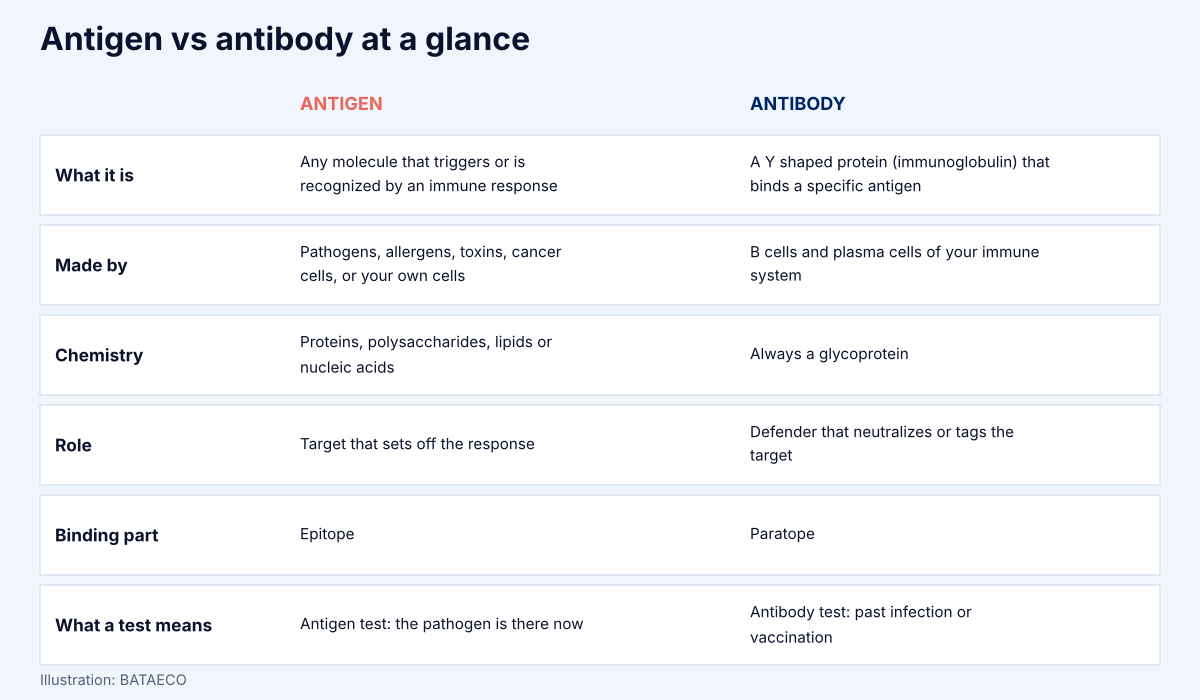
- Role: antigens trigger or are the target of an immune response; antibodies are part of the response.
- Origin: antigens usually come from outside the body; antibodies are always made by your own immune system.
- Chemistry: antigens can be almost any type of biological molecule; antibodies are always proteins.
- Binding site: the epitope is on the antigen; the paratope is on the antibody.
- Specificity: one antibody recognizes one epitope, while one antigen can be recognized by many different antibodies.
The Five Types of Antibodies
- IgG: the most abundant antibody in blood and the main long term protection after infection or vaccination. It is the only class that crosses the placenta to protect a baby.
- IgM: a large five unit antibody, the first class produced in a new infection, which is why its presence suggests a recent infection.
- IgA: found in mucus, saliva, tears and breast milk, guarding the surfaces of the gut and airways.
- IgE: present in tiny amounts; it triggers allergic reactions and helps fight parasitic worms.
- IgD: found mainly on the surface of immature B cells, where it acts as a receptor.
How Antibodies Protect You
Antibodies rarely destroy a pathogen on their own. Instead they work in several ways: neutralization (blocking the parts a virus or toxin uses to enter cells), agglutination (clumping bacteria together), opsonization (coating microbes so that immune cells such as macrophages can recognize and eat them) and complement activation (switching on blood proteins that punch holes in bacterial membranes). Many of the bacteria they target are described in our guide to the basics of microbiology.
Antigen Tests vs Antibody Tests
The same distinction explains two very different medical tests:
- An antigen test looks for the pathogen itself, usually a protein from its surface. A positive result means the infection is present right now. Rapid COVID-19 tests and many strep throat tests are antigen tests.
- An antibody test (serology) looks for your immune response in the blood. A positive result means you were infected or vaccinated at some point, but antibodies take days to weeks to appear.
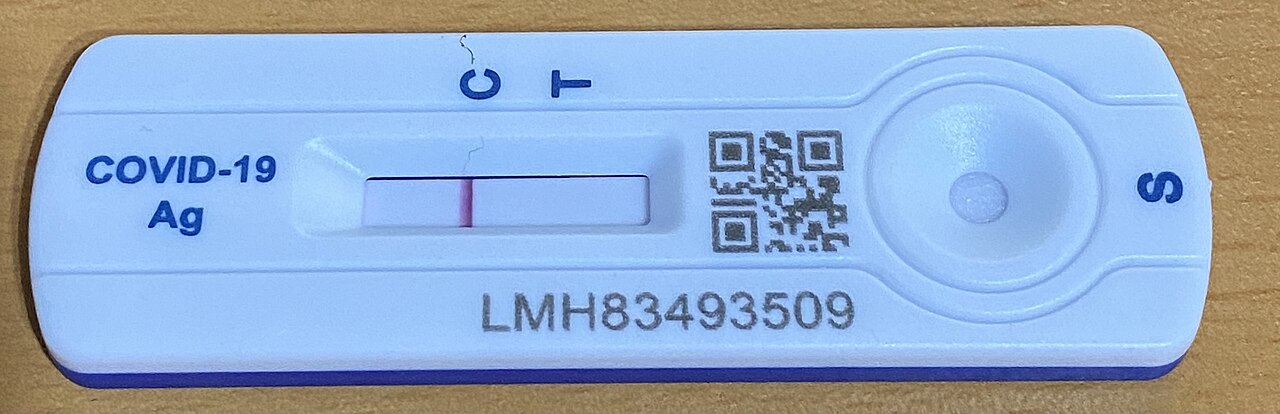
Case Study: Antigen and Antibody Tests Over Time
The COVID-19 pandemic produced the largest body of evidence ever collected on antigen and antibody tests. Two Cochrane systematic reviews pooled hundreds of studies. Dinnes and colleagues (2022) analyzed 152 evaluations of rapid antigen tests, and Fox and colleagues (2022) analyzed 178 studies of antibody tests. I plotted their results by week since symptoms began.
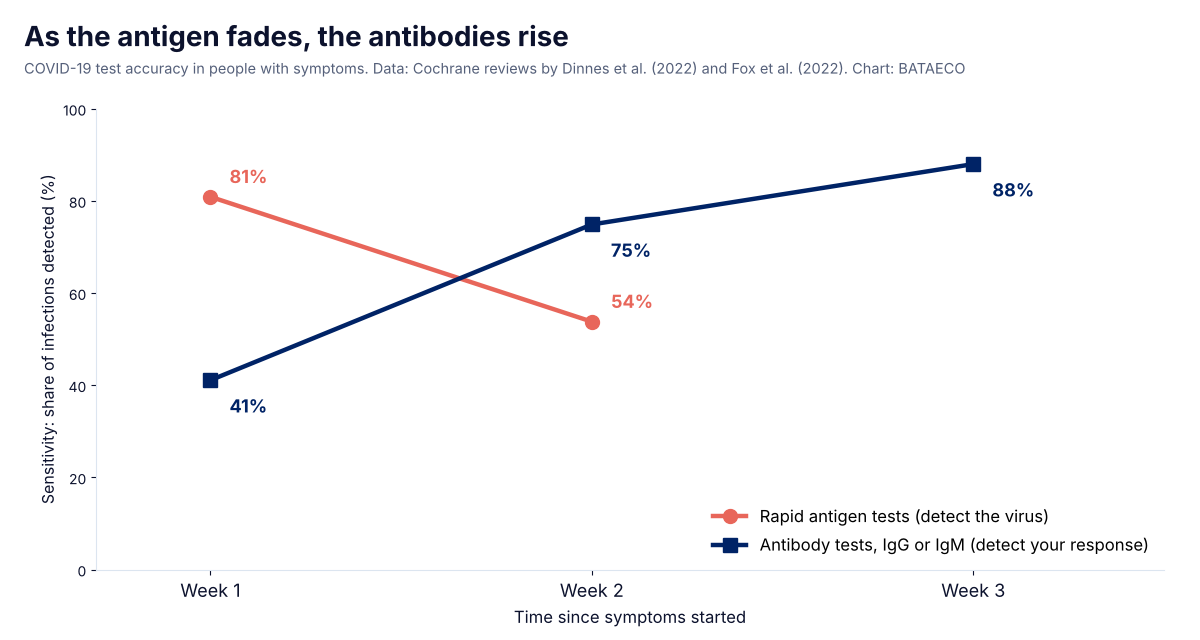
- In week 1, antigen tests win. Rapid antigen tests detected 80.9% of infections in the first week of symptoms, while antibody tests (IgG or IgM) detected only 41.1%.
- In week 2, the lines cross. Antigen test sensitivity fell to 53.8% as the amount of virus dropped, while antibody tests rose to 74.9%.
- By week 3, antibodies are the better marker: antibody tests detected 88.0% of infections.
- Both tests rarely give false positives when used appropriately: rapid antigen tests had an average specificity of 99.1% in people with symptoms, and antibody tests produced roughly 1% false positives overall.
My take as a biologist: this chart is the antigen vs antibody story in one picture. The antigen is the invader, so it is most abundant early, when the virus is multiplying, and fades as the body clears it. Antibodies are the response, so they lag behind: B cells need roughly one to two weeks to be activated, multiply and switch on mass production, starting with IgM and then IgG. That is why an antibody test is useless for diagnosing an infection that began yesterday, and why a negative antigen test late in an illness does not mean you were never infected. Choosing the right test depends on the question: “Am I infected now?” needs an antigen (or PCR) test; “Was I infected or did my vaccine work?” needs an antibody test. One limit: these numbers come from COVID-19 tests, and every disease and test brand behaves a little differently.
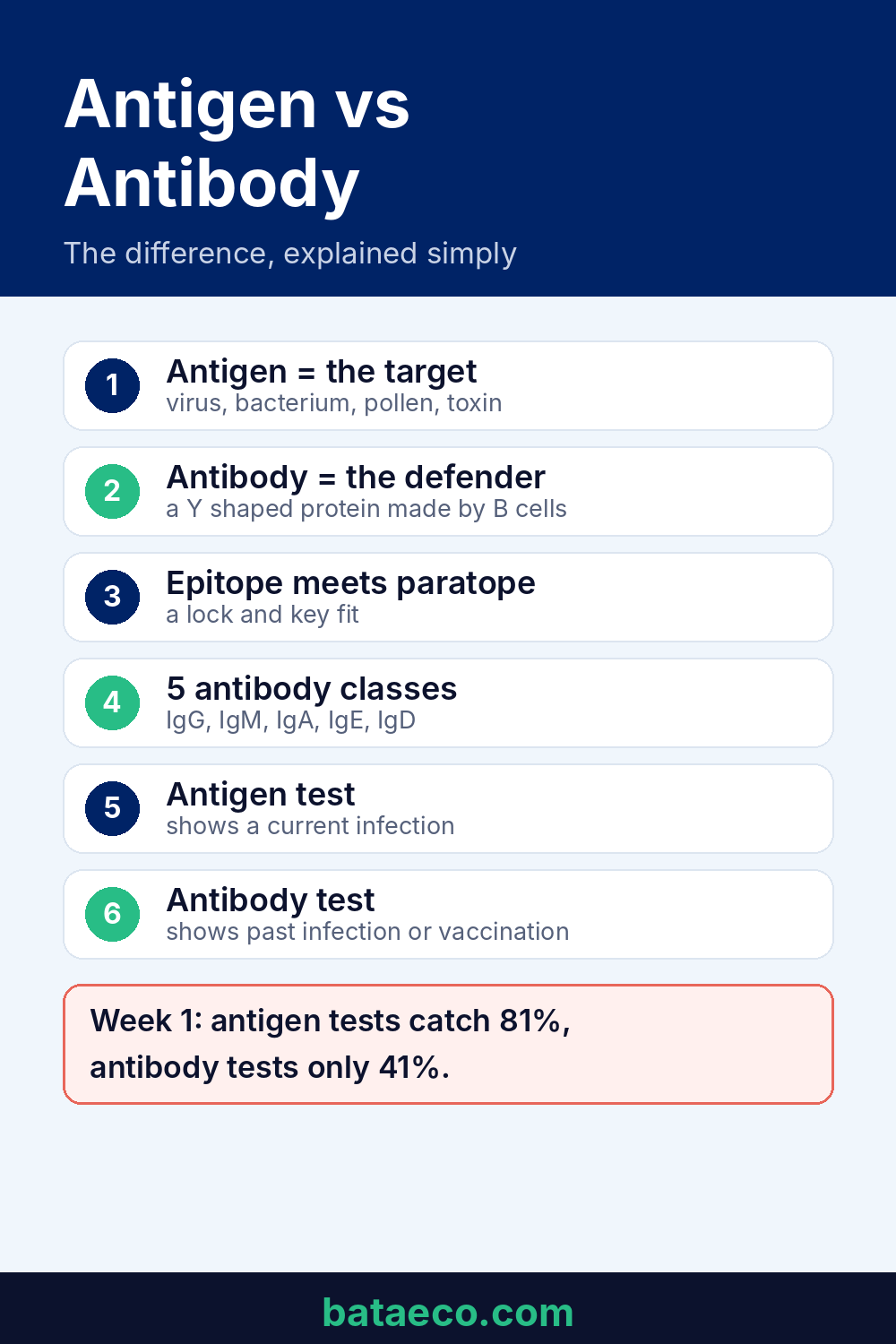
Antigens and Antibodies in Vaccines and Blood Types
Vaccines work by showing the immune system a harmless antigen, such as an inactivated virus, a purified protein or mRNA instructions for making one, so that B cells produce antibodies and memory cells without the danger of the disease. Blood types are another everyday example: people with type A blood carry A antigens on their red cells and anti B antibodies in their plasma, which is why mismatched transfusions cause dangerous clumping.
As an Amazon Associate, BATAECO earns from qualifying purchases.
Frequently Asked Questions
What is the main difference between an antigen and an antibody?
An antigen is the molecule that is recognized, usually from a pathogen; an antibody is the Y shaped protein your immune system makes to bind that antigen.
Are COVID tests antigen or antibody tests?
Home rapid tests are antigen tests that detect viral proteins and show a current infection. Antibody tests use blood and show past infection or vaccination.
What are the five types of antibodies?
IgG, IgM, IgA, IgE and IgD. They differ in structure, location and function.
Can an antigen be part of your own body?
Yes. Blood group molecules, tissue proteins and tumor proteins are self antigens. Normally the immune system tolerates them; in autoimmune disease it attacks them.
What is an epitope?
The specific small region of an antigen that an antibody’s binding site (the paratope) recognizes and attaches to.
Sources
- Dinnes, J. et al. (2022). Rapid, point of care antigen tests for diagnosis of SARS-CoV-2 infection. Cochrane Database of Systematic Reviews. doi.org/10.1002/14651858.CD013705.pub3
- Fox, T. et al. (2022). Antibody tests for identification of current and past infection with SARS-CoV-2. Cochrane Database of Systematic Reviews. doi.org/10.1002/14651858.CD013652.pub2
- US National Library of Medicine, MedlinePlus, Antibody.

Erzsebet (Eli) Frey is a biologist with a BSc in Biology and an MSc in Ecology from the University of Belgrade. She has field and lab experience across Asia, the Middle East, Europe and South America and uses Python and machine learning on biological data. Based in Serbia, she writes BATAECO and also runs Simply Ecologist and Eco&Stylish.