

How to grow mushrooms at home, in short: you mix mushroom spawn (living fungal mycelium grown on grain) into a pasteurized substrate such as straw, sawdust or coffee grounds, keep it warm and dark until the mycelium has colonized it, then give it fresh air, light and high humidity so it produces mushrooms. Oyster mushrooms are the easiest species for beginners and can be harvested about four to six weeks after you start. This guide explains the seven stages of mushroom cultivation, which species and substrates to choose, common problems, and what a scientific study found when it compared oyster mushroom yields on four different substrates.
How Mushrooms Grow
A mushroom is the fruiting body of a fungus. The fungus itself is the mycelium, a network of fine white threads that digests its food from the outside by releasing enzymes. When you grow mushrooms, you are really farming mycelium: you give it a food source with no competitors, let it take over completely, then change the conditions so it switches from growing to reproducing.
Most cultivated mushrooms are decomposers that break down wood and plant fibers. That is why they grow on straw, sawdust and other farm waste, while species that live in partnership with tree roots, such as chanterelles and porcini, are almost impossible to farm.
The Easiest Mushrooms to Grow
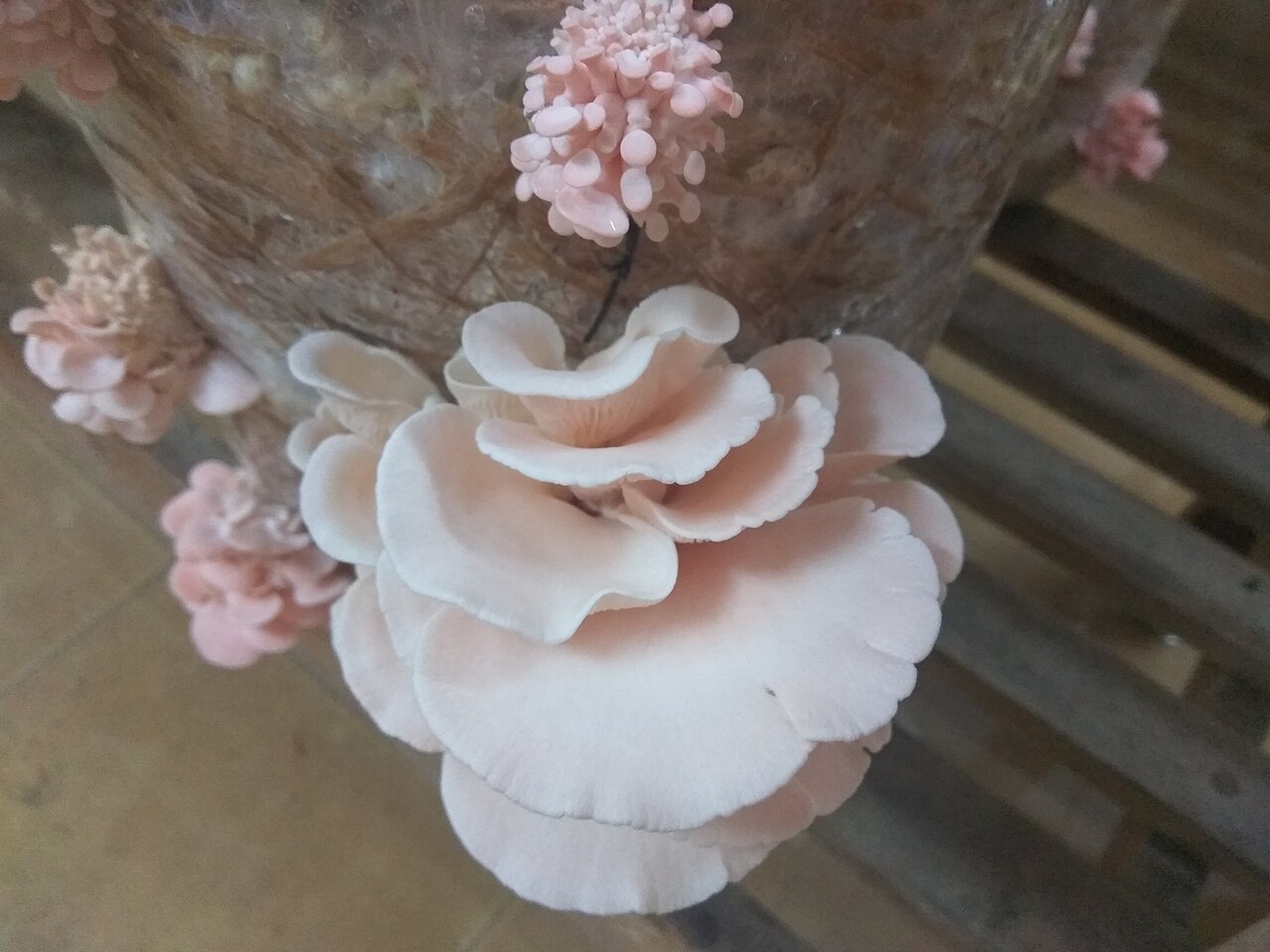
- Oyster mushrooms (Pleurotus spp.): fast, forgiving and productive on straw, sawdust or coffee grounds. Pearl, blue, pink and golden oysters are all good choices. Read more in our guide to the oyster mushroom.
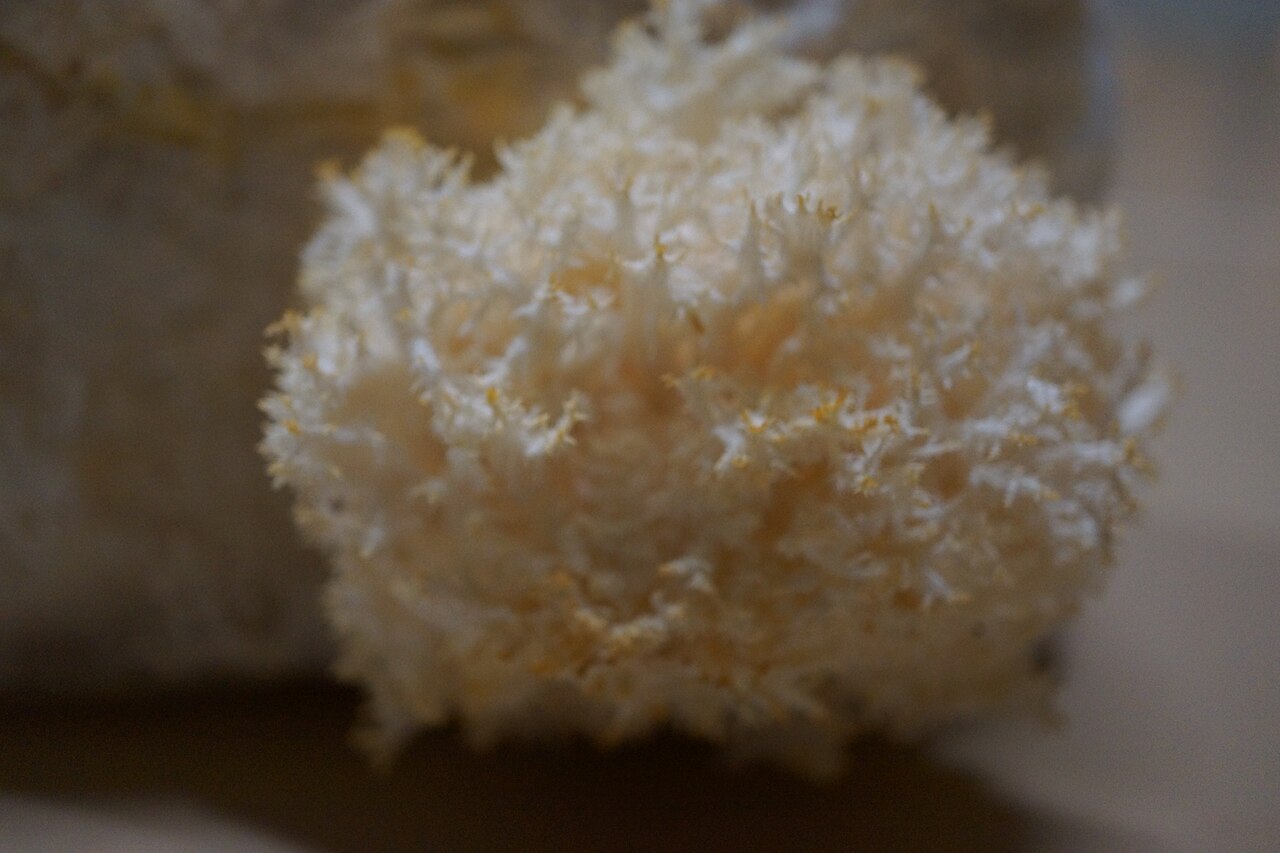
- Lion’s mane (Hericium erinaceus): grows well on supplemented hardwood sawdust blocks.
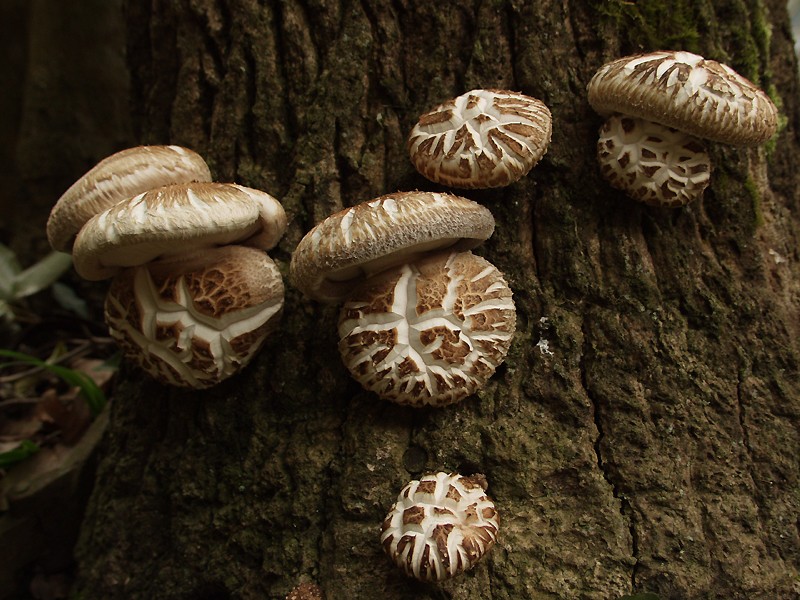
- Shiitake (Lentinula edodes): grown on hardwood logs outdoors or on sawdust blocks indoors. Logs often take 6 to 18 months to start fruiting but then produce for years.
- Wine cap (Stropharia rugosoannulata): an outdoor species for garden beds of wood chips.
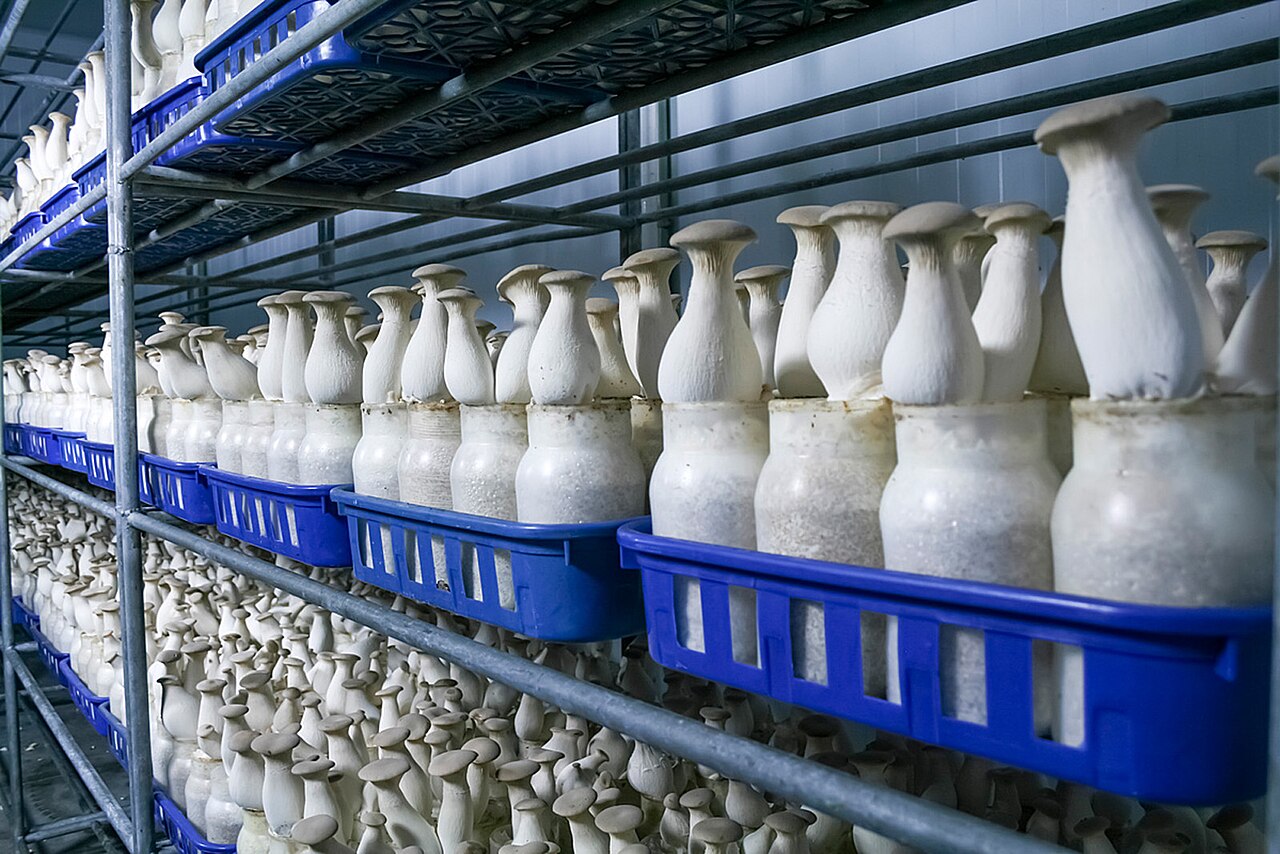
- King oyster (Pleurotus eryngii): grown commercially in bottles; trickier at home.
How to Grow Mushrooms: The 7 Stages
1. Get spawn
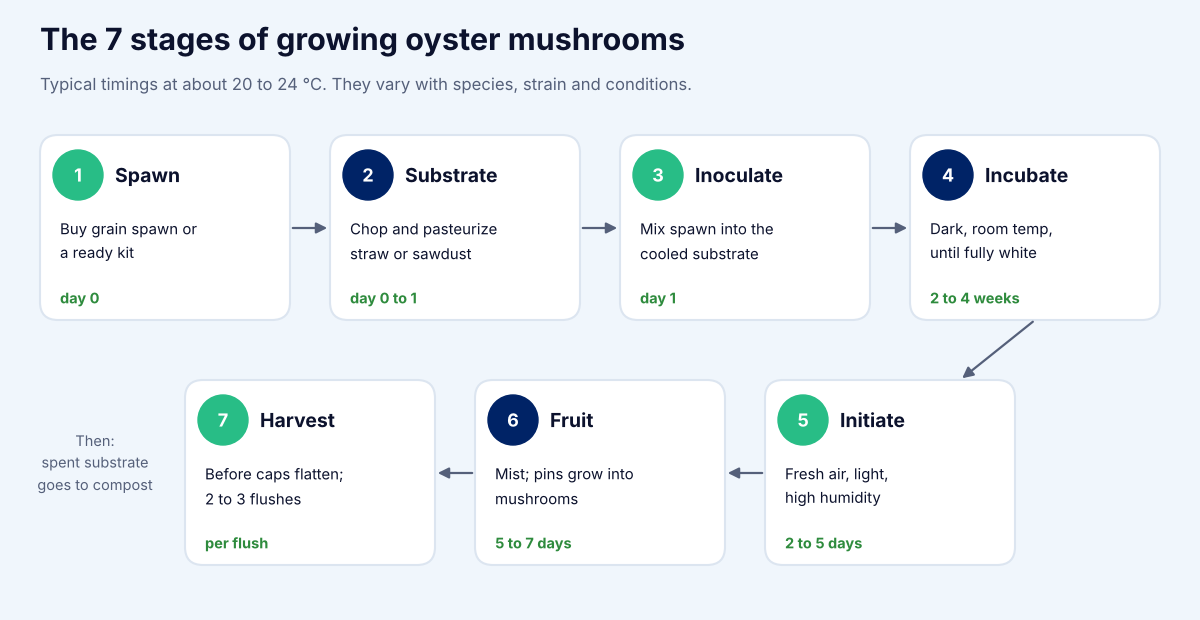
Spawn is grain or sawdust fully colonized by the mycelium of one strain. Beginners should buy spawn from a reputable supplier rather than starting from spores, which requires sterile lab technique and produces unpredictable genetics. A ready to fruit kit skips stages 2 to 4 entirely.
2. Prepare the substrate
Chopped wheat straw, hardwood sawdust, cardboard or fresh coffee grounds are common choices. The substrate must be moist (about as wet as a wrung out sponge) and treated to reduce competing molds and bacteria. Straw is usually pasteurized by soaking it in hot water at about 65 to 80 °C for an hour, then draining and cooling it. Sawdust supplemented with bran needs full sterilization in a pressure cooker because the extra nutrients also feed contaminants.
3. Inoculate
Work on a clean surface with clean hands. Mix the spawn evenly into the cooled substrate, usually at about 5 to 10% of the substrate’s wet weight, and pack it into bags or buckets with a few small holes for air exchange.
4. Incubate
Keep the bags somewhere dark at room temperature. Over two to four weeks the mycelium spreads until the substrate is completely white and firm. Green, black or orange patches mean contamination by molds.
5. Initiate fruiting
Mushrooms form in response to a change: more fresh air (lower carbon dioxide), indirect light, high humidity and, for some species, a drop in temperature. Cut slits in the bag and move it to a bright spot out of direct sun, or into a simple fruiting chamber.
6. Fruit
Mist the surface several times a day to keep it moist without puddles. Tiny pins appear and grow into full mushrooms in about five to seven days.
7. Harvest
Pick oyster mushrooms when the cap edges are still slightly curled down, before they flatten and release clouds of spores. Twist or cut the whole cluster at the base. Soak or rest the block and it will usually produce a second and third flush, each smaller than the last.
The clean technique behind spawn production is the same as in a microbiology lab, as explained in our guide to microbial growth media preparation.
Case Study: Which Substrate Gives the Biggest Harvest?
Growers measure productivity as biological efficiency (BE): the fresh weight of mushrooms harvested divided by the dry weight of the substrate, times 100. A BE of 100% means 1 kg of fresh mushrooms from 1 kg of dry substrate. A study by Girmay and colleagues (2016) at Wondo Genet College of Forestry in Ethiopia grew oyster mushrooms (Pleurotus ostreatus) on four locally available wastes under the same conditions. I charted their results and converted them into grams of mushrooms per kilogram of dry substrate.
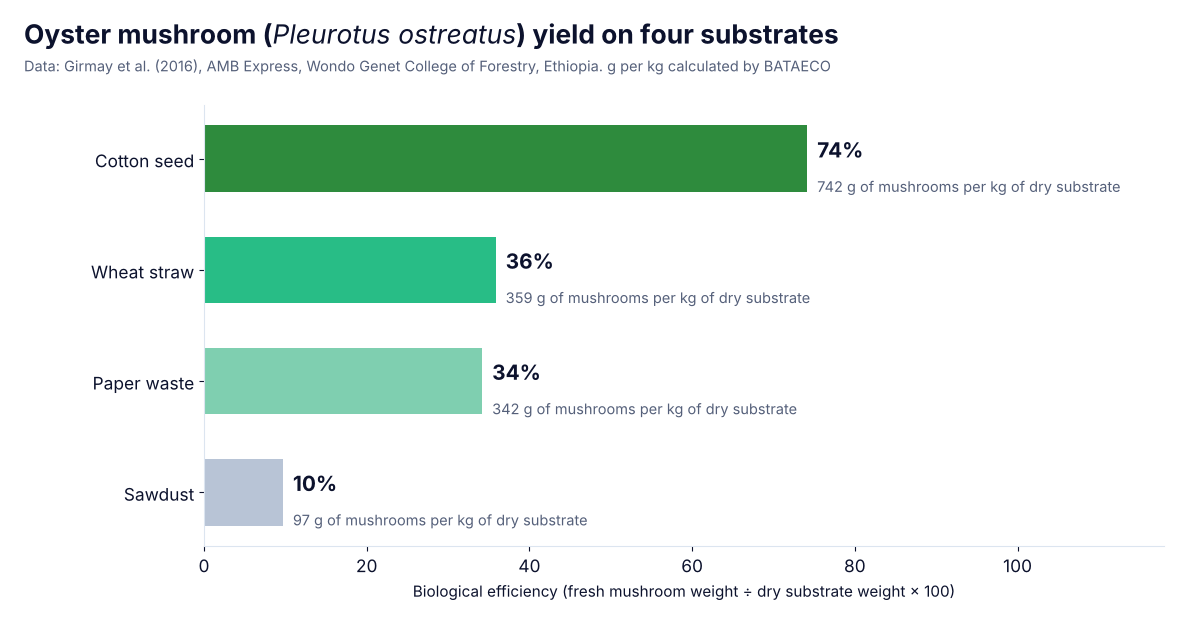
- Cotton seed was the clear winner, with a BE of 74%, about 742 g of fresh mushrooms per kilogram of dry substrate.
- Wheat straw and paper waste were similar, at 36% and 34%, about 359 g and 342 g per kilogram.
- Sawdust performed worst, at under 10%, only about 97 g per kilogram, roughly one seventh of cotton seed.
My take as a biologist: the ranking follows nitrogen. Mycelium needs nitrogen to build proteins and enzymes, and cotton seed is far richer in nitrogen than straw, paper or wood. Sawdust is mostly lignin and cellulose with very little nitrogen, which is why commercial growers always supplement it with bran or soy hulls. The same logic explains why coffee grounds, which contain a few percent nitrogen, work well for oysters. The practical lesson for home growers: if your harvest is small, the substrate’s nutrition is the first thing to change. But be careful: richer substrates also feed molds, so supplemented substrates need sterilization, not just pasteurization. One limit of this study is that it compared a single batch of each substrate in one lab; BE values for oysters on straw elsewhere are often higher, so treat the numbers as a comparison, not a guarantee.
Common Problems and Fixes
- Green or black mold: usually Trichoderma or other molds from poor pasteurization or dirty handling. Discard the bag outdoors and improve hygiene.
- Long, thin stems and tiny caps: too much carbon dioxide. Increase fresh air.
- Dry, cracked caps: humidity too low. Mist more often or use a humidity tent.
- No pins after colonization: conditions have not changed enough. Add light, fresh air and a slight temperature drop.
- Sour smell or slimy substrate: bacterial contamination, often from substrate that was too wet.
One health note: oyster mushrooms release huge numbers of spores, and growing them in a closed room has been linked to allergic reactions in some growers. Harvest before the caps flatten and keep fruiting bags out of bedrooms.
Mushroom Growing Kits
A kit is a block of substrate that has already been inoculated and colonized, so you only need to cut it open, mist it and wait. Kits are the best way to learn what healthy mycelium and the fruiting stage look like before you make your own substrate.
As an Amazon Associate, BATAECO earns from qualifying purchases.
Frequently Asked Questions
What is the easiest mushroom to grow at home?
Oyster mushrooms. They colonize substrate quickly, tolerate beginner mistakes and fruit on cheap materials like straw and coffee grounds.
How long does it take to grow mushrooms?
For oyster mushrooms, about four to six weeks from inoculation to the first harvest: two to four weeks of incubation plus one to two weeks of fruiting. Shiitake logs can take more than a year.
Can you grow mushrooms from store bought mushrooms?
Sometimes. Pieces of the stem base of oyster mushrooms can colonize damp cardboard, but results are unreliable and contamination is common. Buying spawn is far more successful.
Do mushrooms need light to grow?
Mushrooms do not photosynthesize, but many species, including oysters, need some indirect light to trigger fruiting and form normal caps. The incubation stage can be completely dark.
What is mushroom substrate?
The material the mycelium feeds on, such as straw, hardwood sawdust, coffee grounds, cardboard or compost, chosen to match the species.
Sources
- Cornell Small Farms Program, Methods of Commercial Mushroom Cultivation in the Northeastern United States.
- Girmay, Z., Gorems, W., Birhanu, G. and Zewdie, S. (2016). Growth and yield performance of Pleurotus ostreatus (oyster mushroom) on different substrates. AMB Express 6. doi.org/10.1186/s13568-016-0265-1

Erzsebet (Eli) Frey is a biologist with a BSc in Biology and an MSc in Ecology from the University of Belgrade. She has field and lab experience across Asia, the Middle East, Europe and South America and uses Python and machine learning on biological data. Based in Serbia, she writes BATAECO and also runs Simply Ecologist and Eco&Stylish.