
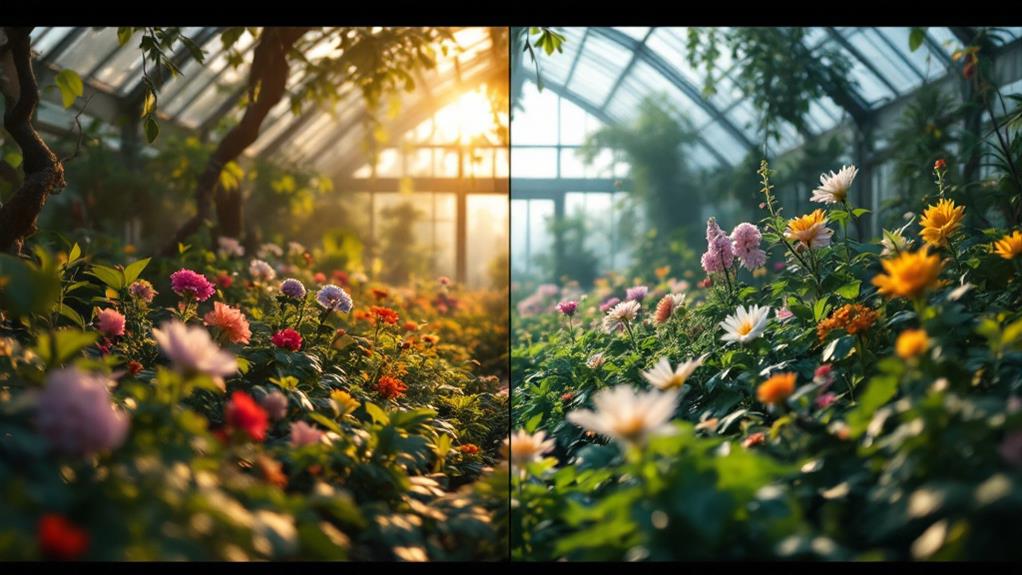
Photoperiodism in plants is their response to day length changes, influencing growth and flowering. You'll find three main types: short-day, long-day, and day-neutral plants. Phytochromes, light-sensitive proteins, play an essential role in detecting these changes. This mechanism helps plants adapt to seasonal shifts, timing their flowering for ideal reproduction. Farmers and gardeners use this knowledge to control crop production and flowering times. Environmental factors like temperature and nutrients can affect a plant's photoperiodic response. Hormones like gibberellin and florigen regulate these processes. Understanding photoperiodism reveals nature's intricate ways of ensuring plant survival and success.
What Is Photoperiodism?
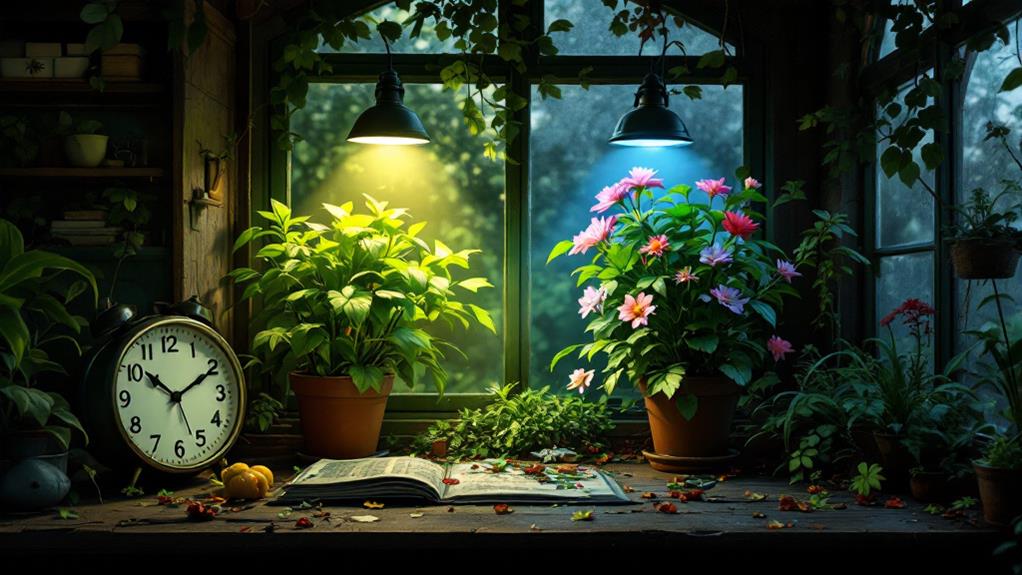
Understanding photoperiodism is essential to grasping how plants respond to light. It's the physiological reaction of plants to the length of day and night cycles, which influences their growth, flowering, and development. This process allows plants to adapt to seasonal changes and coordinate their life cycles with environmental conditions.
You'll find that photoperiodism affects various plant processes, including seed germination, leaf growth, and the formation of storage organs. However, it's most significantly associated with flowering. Plants are categorized based on their flowering response to day length:
- Short-day plants flower when nights are longer than a critical length.
- Long-day plants flower when nights are shorter than a critical length.
- Day-neutral plants flower regardless of day length.
The critical night length varies among species, but it's typically around 12 hours. It's essential to recognize that it's actually the length of the dark period that triggers the response, not the light period.
Plants detect light through specialized pigments called phytochromes. These photoreceptors exist in two interconvertible forms: Pr (inactive) and Pfr (active). Red light converts Pr to Pfr, while far-red light or darkness converts Pfr back to Pr. The ratio of these forms helps plants measure night length and regulate their responses.
Understanding photoperiodism has practical applications in agriculture and horticulture. You can manipulate flowering times by controlling light exposure, allowing for year-round production of certain crops and ornamental plants. This knowledge is vital for optimizing plant growth and productivity in various settings, from greenhouses to vertical farms.
Types of Photoperiodic Responses
Having explored the concept of photoperiodism, let's examine the specific ways plants respond to day length. Plants exhibit three main types of photoperiodic responses: short-day, long-day, and day-neutral.
Short-day plants flower when the night length exceeds a significant duration. You'll find examples like chrysanthemums, poinsettias, and soybeans in this category. These plants typically bloom in fall or winter when days are shorter. To induce flowering in short-day plants, you'd need to provide them with uninterrupted darkness for a specific period each day.
Long-day plants, on the other hand, flower when the night length falls below a significant duration. Examples include spinach, lettuce, and many cereal grains. These plants usually bloom in late spring or summer when days are longer. To encourage flowering in long-day plants, you'd need to extend the daylight hours or interrupt the dark period with brief light exposure.
Day-neutral plants don't rely on day length for flowering. Instead, they respond to other environmental cues or reach a certain age or size before blooming. Tomatoes, cucumbers, and sunflowers fall into this category. You can induce flowering in day-neutral plants regardless of the day length.
It's important to note that some plants exhibit more complex responses. For instance, some require a specific sequence of long and short days to flower. Understanding these photoperiodic responses is vital for successful cultivation, especially in controlled environments like greenhouses or indoor gardens. By manipulating light exposure, you can influence plant growth and flowering to suit your needs.
The Role of Phytochromes
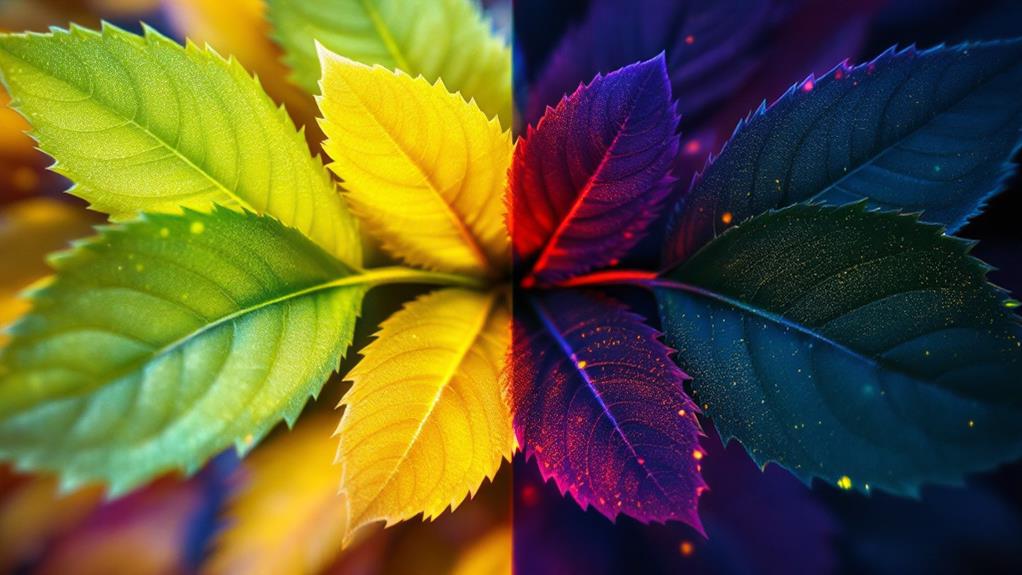
At the heart of photoperiodism lies a group of light-sensitive proteins called phytochromes. These remarkable molecules act as the plant's light detectors, allowing it to sense and respond to changes in day length. You'll find phytochromes in all plant tissues, but they're particularly abundant in leaves and seedlings.
Phytochromes exist in two interconvertible forms: Pr and Pfr. Pr absorbs red light, while Pfr absorbs far-red light. When Pr absorbs red light, it converts to Pfr, and when Pfr absorbs far-red light, it reverts to Pr. This reversible conversion is essential for the plant's ability to measure day length.
During the day, red light from sunlight converts Pr to Pfr. As night falls, Pfr slowly converts back to Pr in darkness. The ratio of Pr to Pfr at any given time provides the plant with information about the length of the day and night.
You'll notice that phytochromes play a significant role in various photoperiodic responses. They're involved in seed germination, stem elongation, leaf expansion, and most importantly, flowering. In short-day plants, a high Pfr level inhibits flowering, while in long-day plants, it promotes flowering.
Phytochromes also interact with the plant's circadian clock, helping to synchronize internal rhythms with external light-dark cycles. This interaction guarantees that photoperiodic responses occur at the appropriate time of year, allowing plants to optimize their growth and reproduction based on seasonal changes in day length.
Flowering and Seasonal Adaptation
Phytochromes' influence extends far beyond light detection, playing a key role in one of the most significant processes in a plant's life cycle: flowering. As you explore the world of plants, you'll notice that different species flower at various times throughout the year. This timing isn't random; it's a carefully orchestrated response to changes in day length, known as photoperiodism.
Plants are classified as short-day, long-day, or day-neutral based on their flowering response to light duration. Short-day plants, like chrysanthemums, flower when nights exceed a vital length. Long-day plants, such as spinach, bloom when nights are shorter than a specific threshold. Day-neutral plants, like tomatoes, flower regardless of day length.
You'll find that photoperiodism isn't just about flowering; it's essential for seasonal adaptation. Plants use these light cues to time various developmental processes, ensuring they occur at the most favorable time of year. For example, many trees shed their leaves in autumn as days shorten, preparing for winter dormancy.
The ability to respond to photoperiod gives plants a competitive edge. By synchronizing their growth and reproduction with seasonal changes, they can maximize their chances of survival and successful reproduction. This adaptation is particularly important in regions with distinct seasons, where timing can mean the difference between thriving and perishing.
Understanding photoperiodism has practical applications in agriculture and horticulture. You can manipulate light exposure to control flowering times, extending growing seasons or producing out-of-season crops. This knowledge is invaluable for greenhouse cultivation and ornamental plant production.
Photoperiodism in Agriculture
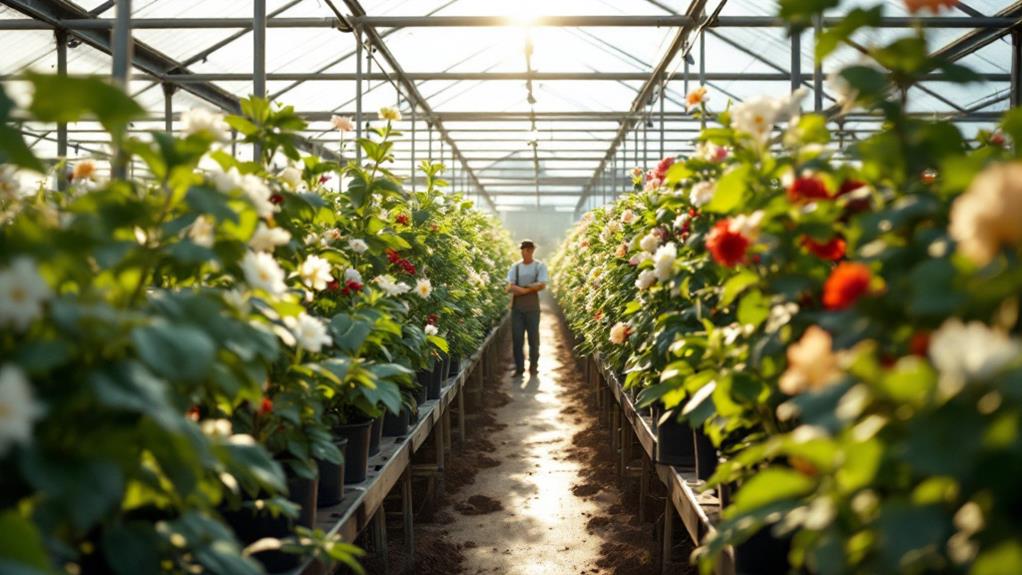
Farmers and agricultural scientists have long harnessed the power of photoperiodism to optimize crop production. By understanding how different plants respond to day length, you can manipulate planting times and growing conditions to achieve desired results.
You'll find that photoperiodism plays a significant role in determining when crops flower and produce fruit. For short-day plants like soybeans and rice, you'll need to guarantee they receive longer periods of darkness to trigger flowering. Conversely, long-day plants such as wheat and barley require extended light exposure to initiate their reproductive phase.
To maximize yields, you can use artificial lighting or shading techniques to control the photoperiod. This allows you to extend or shorten the growing season, enabling multiple harvests per year in some cases. You'll also be able to produce crops out of their natural season, meeting market demands year-round.
In greenhouse cultivation, you'll find that manipulating photoperiods can accelerate plant growth and development. By providing supplemental lighting or using blackout curtains, you can precisely control when plants flower, regardless of the natural day length outside.
Photoperiodism also influences plant architecture and biomass production. You can use this knowledge to control plant height, branching, and overall structure, which is particularly useful in ornamental horticulture and when growing crops for specific markets.
Understanding photoperiodism helps you predict and manage pest and disease outbreaks, as many insects and pathogens are also influenced by day length. By aligning your crop's growth stages with periods of lower pest pressure, you'll reduce the need for chemical interventions.
Environmental Factors Affecting Photoperiodism
Light isn't the only player in the photoperiodism game. While day length is essential, several other environmental factors can influence how plants respond to photoperiodic signals. Temperature, for instance, can notably impact a plant's sensitivity to day length. You'll find that some plants require specific temperature ranges to properly interpret photoperiodic cues. Cold temperatures might delay flowering in long-day plants, while warm temperatures could accelerate it in short-day plants.
Water availability is another key factor. Drought stress can alter a plant's response to photoperiod, often delaying flowering or even preventing it altogether. Conversely, adequate water supply can enhance photoperiodic responses, ensuring timely flowering and fruit production.
Nutrient availability also plays a role. Plants with sufficient nutrients are better equipped to respond to photoperiodic signals. Deficiencies in essential elements like nitrogen or phosphorus can disrupt the plant's ability to accurately measure day length or respond appropriately.
Light quality is equally important. The ratio of red to far-red light can influence photoperiodic responses. You'll notice that plants growing in shade, where far-red light is more prevalent, may flower earlier than those in full sun.
Atmospheric conditions, such as carbon dioxide levels and humidity, can also affect photoperiodism. Elevated CO2 levels might alter flowering time in some species, while high humidity can impact the efficiency of light reception.
Lastly, biotic factors like pest infestations or disease can indirectly affect photoperiodism by stressing the plant and altering its ability to respond to day length cues. Understanding these various environmental influences is essential for managing plant growth and development effectively.
Hormonal Regulation in Photoperiodism
At the heart of photoperiodism lies a complex interplay of plant hormones. You'll find that the key player in this hormonal orchestra is gibberellin. This growth-promoting hormone is essential for initiating flowering in long-day plants and inhibiting it in short-day plants. When exposed to the right day length, plants increase their gibberellin production, triggering the shift from vegetative to reproductive growth.
Another important hormone in photoperiodism is florigen, also known as flowering locus T protein (FT). It's produced in leaves and travels through the phloem to the shoot apical meristem, where it initiates flower development. The production of florigen is closely tied to light exposure and the plant's circadian rhythm.
You'll also encounter auxins in the photoperiodic response. These hormones play a role in stem elongation and are often increased in long-day plants exposed to extended light periods. Conversely, abscisic acid (ABA) acts as an antagonist to gibberellins and can inhibit flowering in some plants.
It's important to note that the balance between these hormones is significant. For example, cytokinins interact with gibberellins to promote flowering in some species. The ratio of these hormones can determine whether a plant remains vegetative or changes to flowering.
Understanding the hormonal regulation in photoperiodism can help you manipulate flowering times in crops and ornamental plants. By applying or inhibiting specific hormones, you can potentially override a plant's natural photoperiodic response, allowing for greater control over plant development and reproduction.
Evolutionary Significance of Photoperiodism
While hormonal regulation drives the mechanics of photoperiodism, its evolutionary roots run deep. You'll find that photoperiodism has played a vital role in plant survival and adaptation over millions of years. This mechanism allows plants to synchronize their growth and reproductive cycles with seasonal changes, ensuring ideal use of resources and maximizing their chances of successful reproduction.
As you explore the evolutionary significance of photoperiodism, you'll discover that it's a key factor in plant distribution and speciation. Plants have evolved to respond to specific day lengths, which vary depending on latitude and season. This adaptation has allowed them to colonize diverse habitats across the globe, from tropical regions to polar areas.
You'll notice that photoperiodism has also contributed to the development of various plant life strategies. Annual plants, for instance, use photoperiodic cues to time their flowering and seed production before the onset of unfavorable seasons. Perennial plants, on the other hand, use these cues to regulate dormancy and resume growth when conditions are favorable.
The evolution of photoperiodism has had far-reaching ecological consequences. It's influenced plant-pollinator interactions, as flowering times often coincide with the activity of specific pollinators. This synchronization has led to coevolution between plants and their pollinators, shaping the biodiversity we see today.
Understanding the evolutionary significance of photoperiodism isn't just academic; it has practical implications for agriculture, conservation, and predicting the impacts of climate change on plant communities. As day lengths shift due to global warming, you'll see changes in plant phenology that could disrupt ecosystems and food production.

Erzsebet Frey (Eli Frey) is an ecologist and online entrepreneur with a Master of Science in Ecology from the University of Belgrade. Originally from Serbia, she has lived in Sri Lanka since 2017. Eli has worked internationally in countries like Oman, Brazil, Germany, and Sri Lanka. In 2018, she expanded into SEO and blogging, completing courses from UC Davis and Edinburgh. Eli has founded multiple websites focused on biology, ecology, environmental science, sustainable and simple living, and outdoor activities. She enjoys creating nature and simple living videos on YouTube and participates in speleology, diving, and hiking.