
Morel mushrooms are edible wild fungi of the genus Morchella, known for their honeycomb cap of pits and ridges and for being completely hollow inside. They appear for a few weeks each spring, often near dying elm, ash and apple trees or in forests burned the year before, and they are hard to farm, which makes them some of the most expensive mushrooms you can buy. This guide explains how to identify true morels and their toxic lookalikes, where and when morels grow, why they must always be cooked, and what more than 12,000 citizen science records reveal about how the morel season moves north each spring.
Safety first: this article is for learning. Never eat a wild mushroom unless an experienced local expert has confirmed it in person, and always cook morels thoroughly.
What Are Morel Mushrooms?
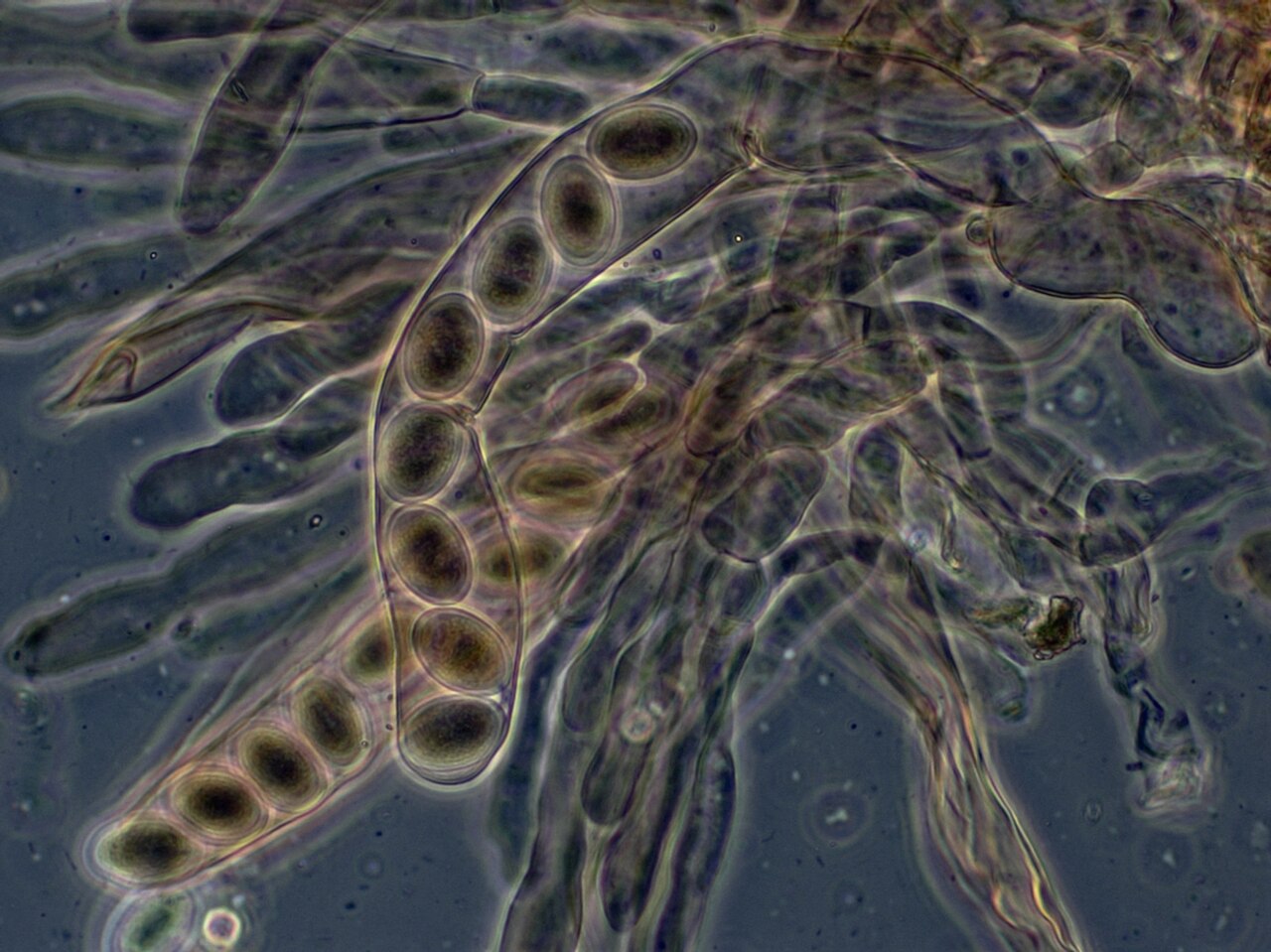
Morels are not typical mushrooms. They belong to the Ascomycota, the sac fungi, the same group as yeasts and cup fungi, rather than to the Basidiomycota that includes button and oyster mushrooms. Instead of gills, a morel produces its spores inside microscopic sacs called asci, each holding eight spores, which line the pits of the cap. When the spores are ripe, the asci shoot them into the air.
The genus Morchella contains dozens of species, and DNA studies since 2010 have shown that many old names covered several species each. In North America they fall into three practical groups:
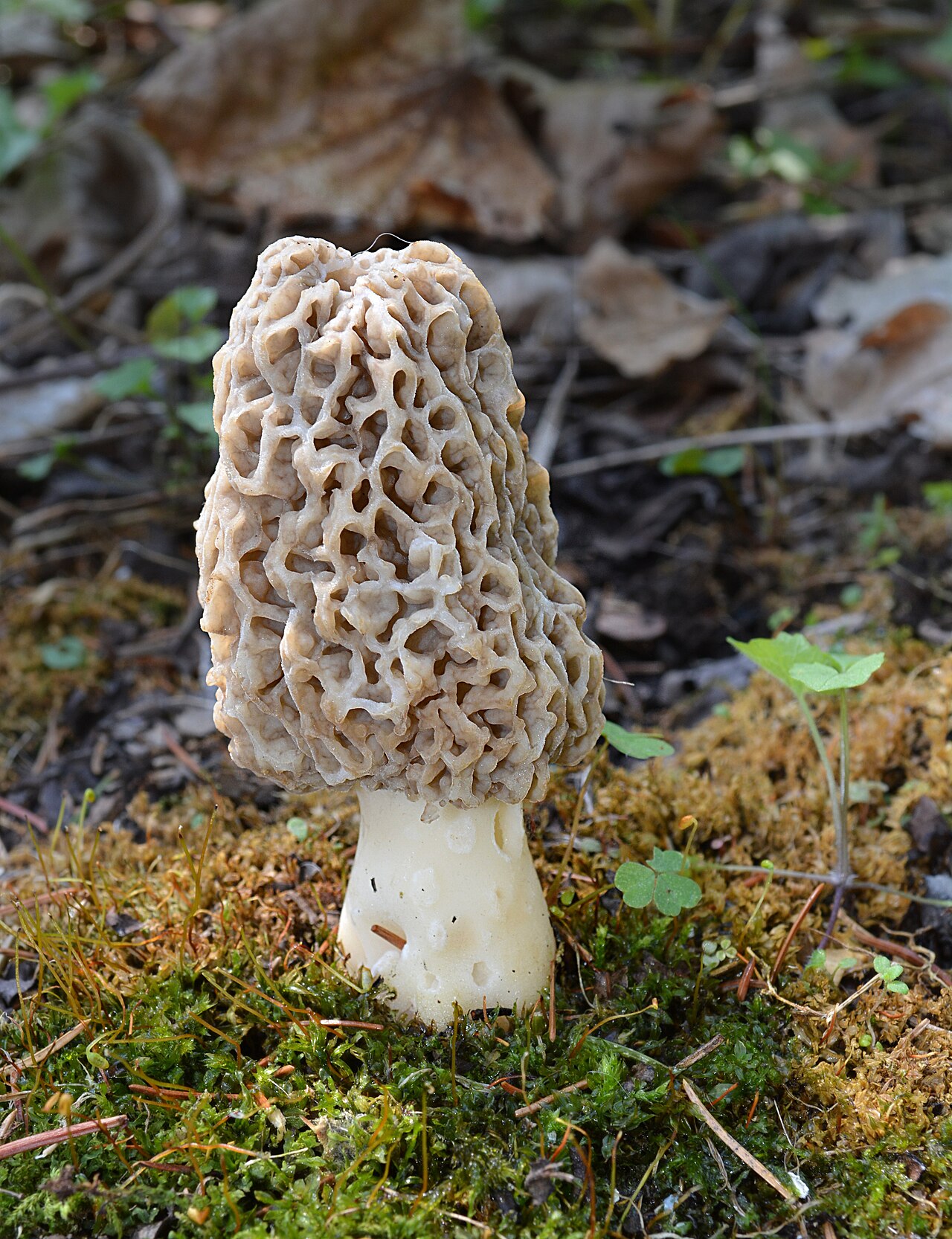
- Yellow morels (for example Morchella americana): pale yellow to gray caps with lighter ridges, the classic morel of eastern hardwood forests.
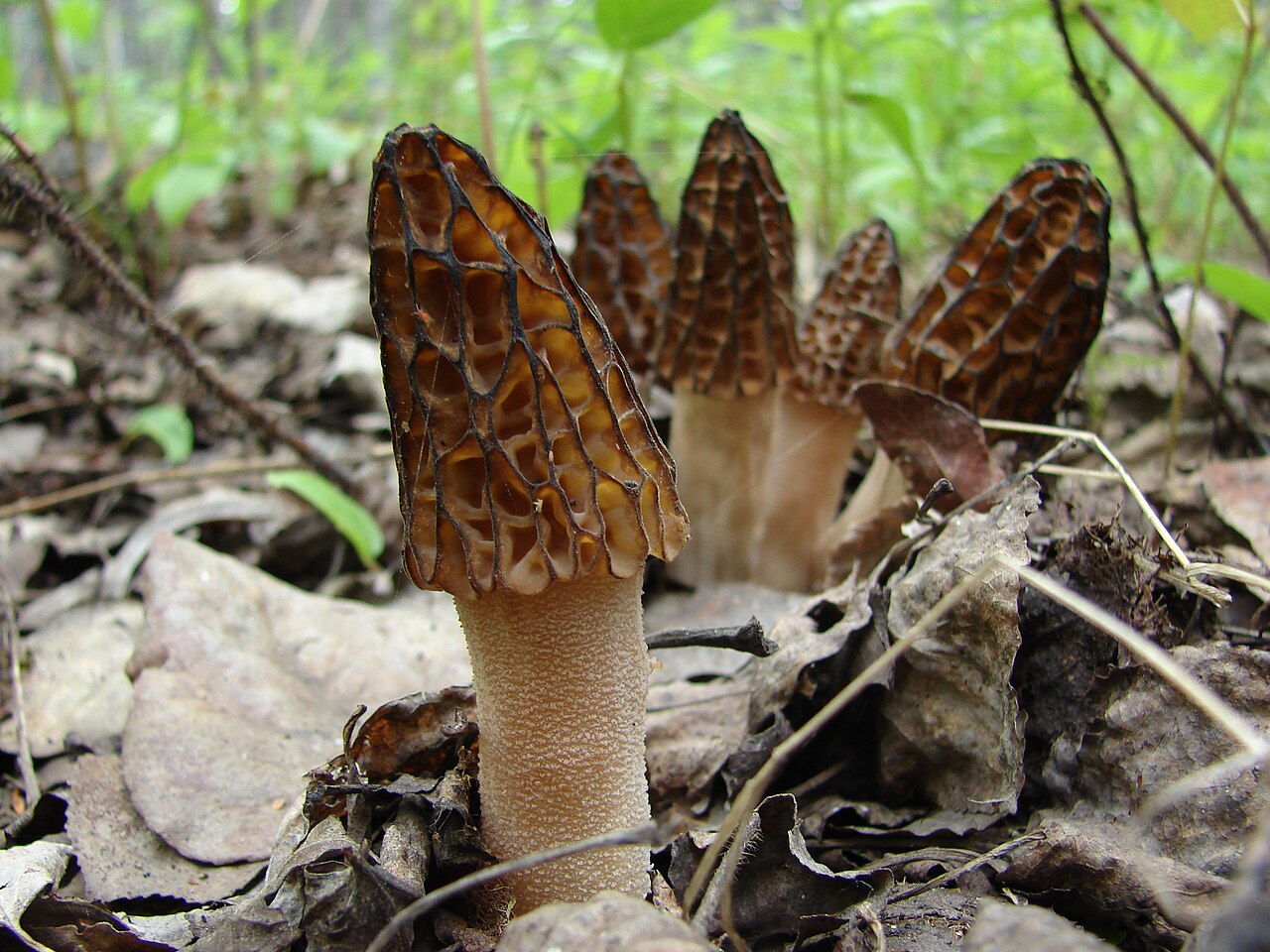
- Black morels (the Morchella elata group): darker, often more conical caps with ridges that turn brown to black. Many western black morels fruit in burned conifer forests.
- Half free morels (Morchella punctipes): a small cap attached about halfway down a long stem, still hollow inside and edible.
How to Identify a True Morel
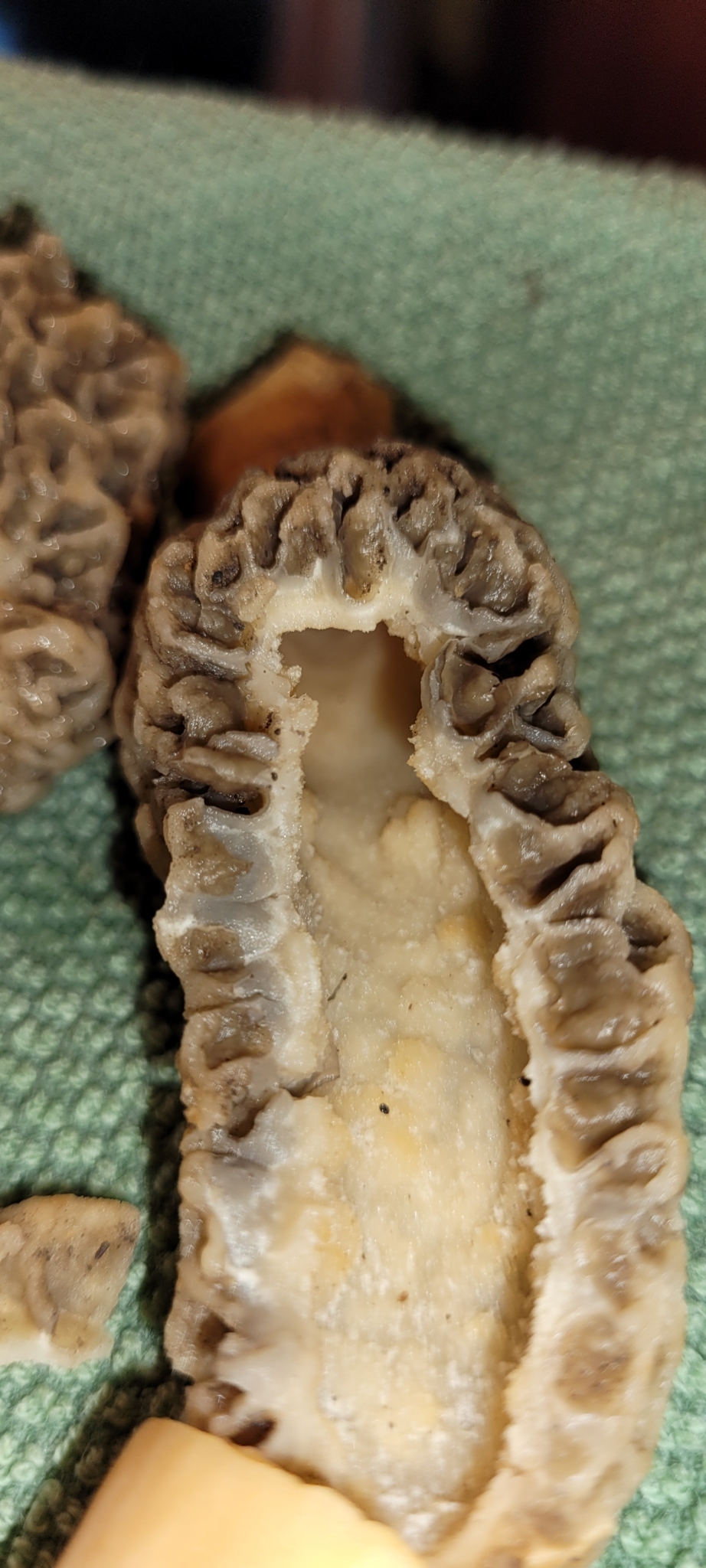
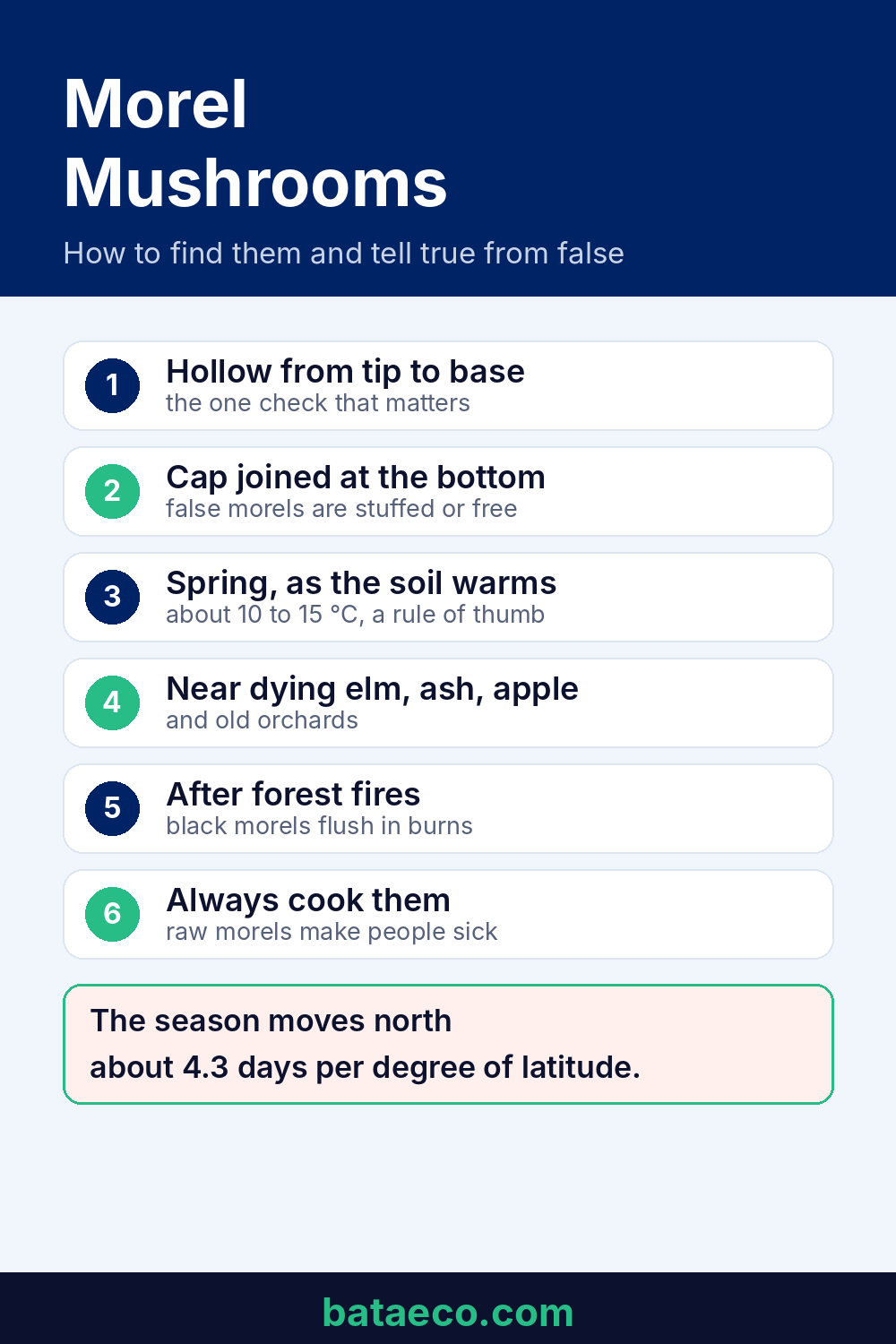
- Honeycomb cap: a network of pits and ridges, like a sponge, not brain like folds or lobes.
- Cap attached at the bottom: in yellow and black morels the cap joins the stem at its lower edge, so the cap and stem form one continuous piece. In half free morels it joins about halfway.
- Hollow from tip to base: slice the mushroom lengthwise. A true morel is a single hollow chamber from the top of the cap to the bottom of the stem, with no cotton like stuffing.
- Season and habitat: spring, on the ground, not on wood.
False Morels and Other Lookalikes
“False morel” is a name for several unrelated fungi that resemble morels and fruit at the same time.
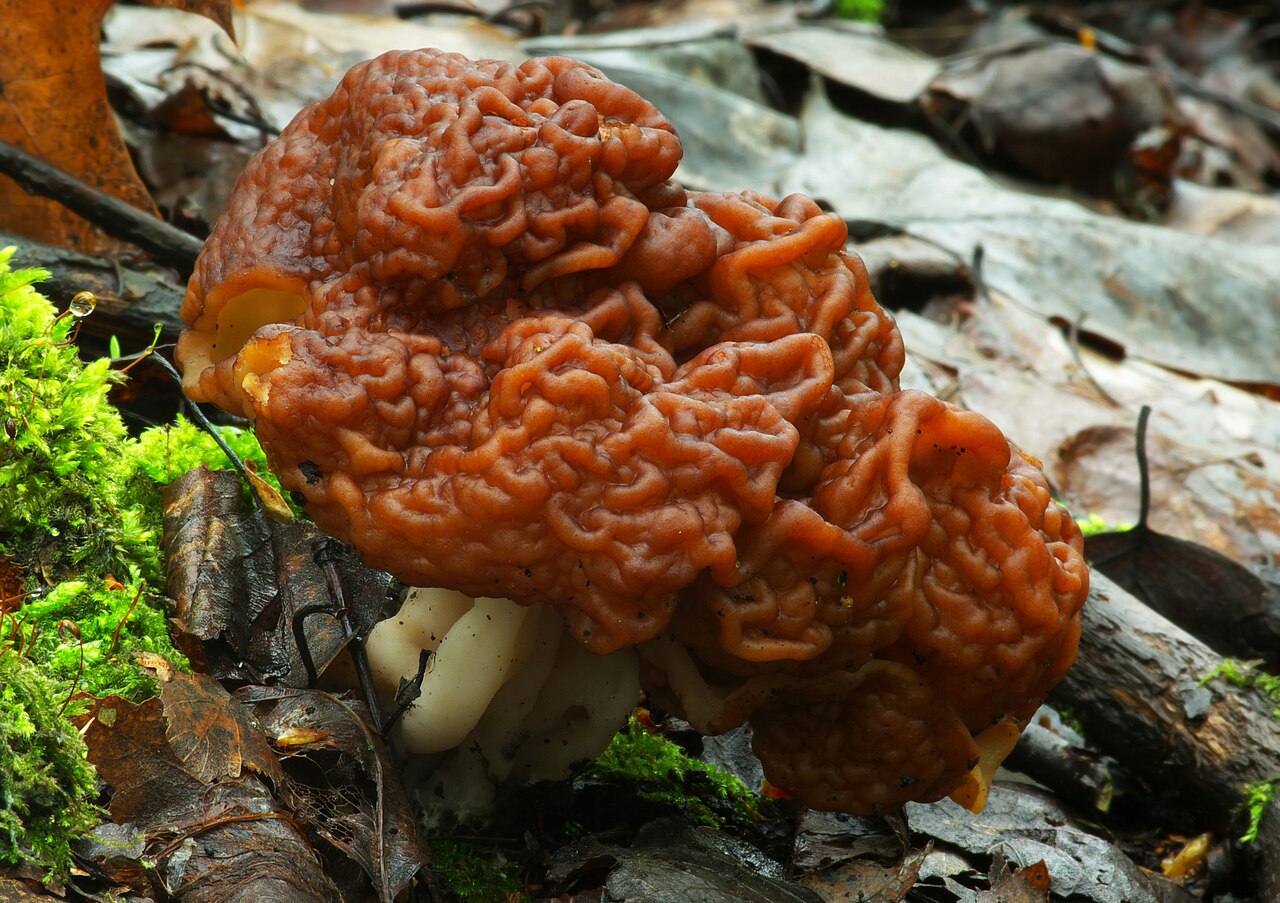
- Brain mushroom (Gyromitra esculenta) and its relatives: reddish brown, wrinkled, brain like caps with lobes rather than pits. Cut open, they are chambered or filled with cotton like tissue. They contain gyromitrin, which the body converts into monomethylhydrazine, a compound also used as rocket fuel. It damages the liver and nervous system and has caused deaths.
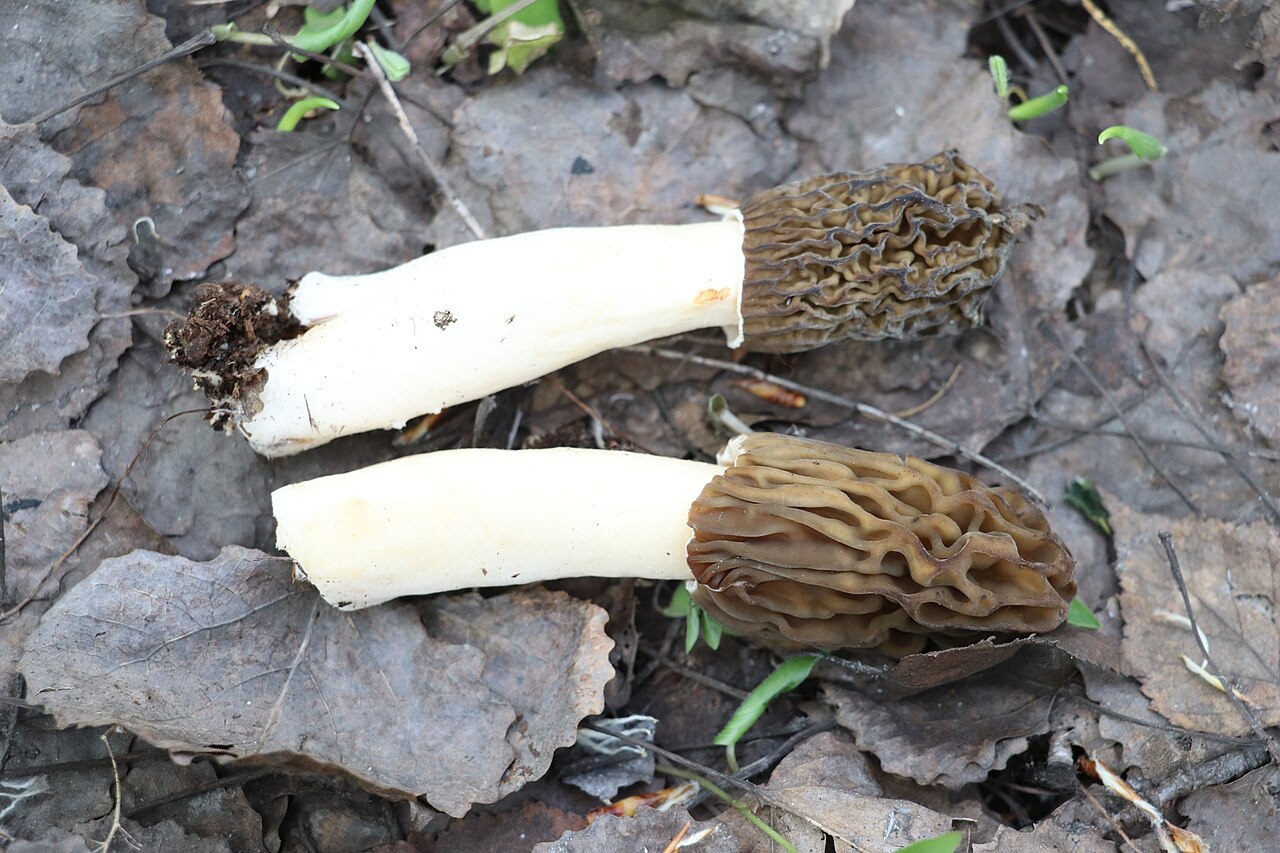
- Thimble morels (Verpa bohemica and Verpa conica): the cap hangs from the very top of the stem like a thimble, and the stem is filled with cotton like fibers. Verpa bohemica makes some people ill, especially in large amounts.
For other dangerous lookalike pairs, see our guide to edible mushrooms and their toxic lookalikes.
Where Do Morels Grow?
Morels live in the soil as a network of fungal threads and form close but complicated relationships with trees. Some species seem to partner with living roots, while others feed on dead and decaying wood and roots, and many switch between the two. That is why the best spots share a pattern:
- Around dying or recently dead hardwoods: elms killed by Dutch elm disease, ash killed by the emerald ash borer, old apple trees, cottonwood and tulip poplar. Many foragers believe a fruiting flush is triggered as the roots die.
- Old orchards: productive, but soils in orchards sprayed decades ago with lead arsenate can contain lead and arsenic, so they are best avoided for eating.
- Burned forests: in western North America, black morels can fruit in huge numbers in conifer forests the spring after a wildfire, then mostly disappear by the second or third year.
- Disturbed ground: river floodplains, logging roads and recently cleared areas.
Morels are not the only fungi with surprising diets. Oyster mushrooms supplement their meals by hunting tiny worms, as explained in our guide to the oyster mushroom.
When Is Morel Season?
Morels fruit in spring, usually when the soil warms to about 10 to 15 °C (50 to 60 °F), a widely used rule of thumb rather than a precise threshold. Rain in the preceding weeks matters too. In the United States, that means anywhere from March in the South to June in the far north and at high elevations. To see exactly how the season moves, I analyzed the records.
Case Study: How the Morel Season Moves North
I downloaded the weekly counts of all research grade Morchella observations on iNaturalist, a citizen science platform where photos are confirmed by other users, for the eastern United States (east of 100° W, where elevation changes are small). I split the 12,499 records into six bands of latitude and calculated the median week of observation in each band.
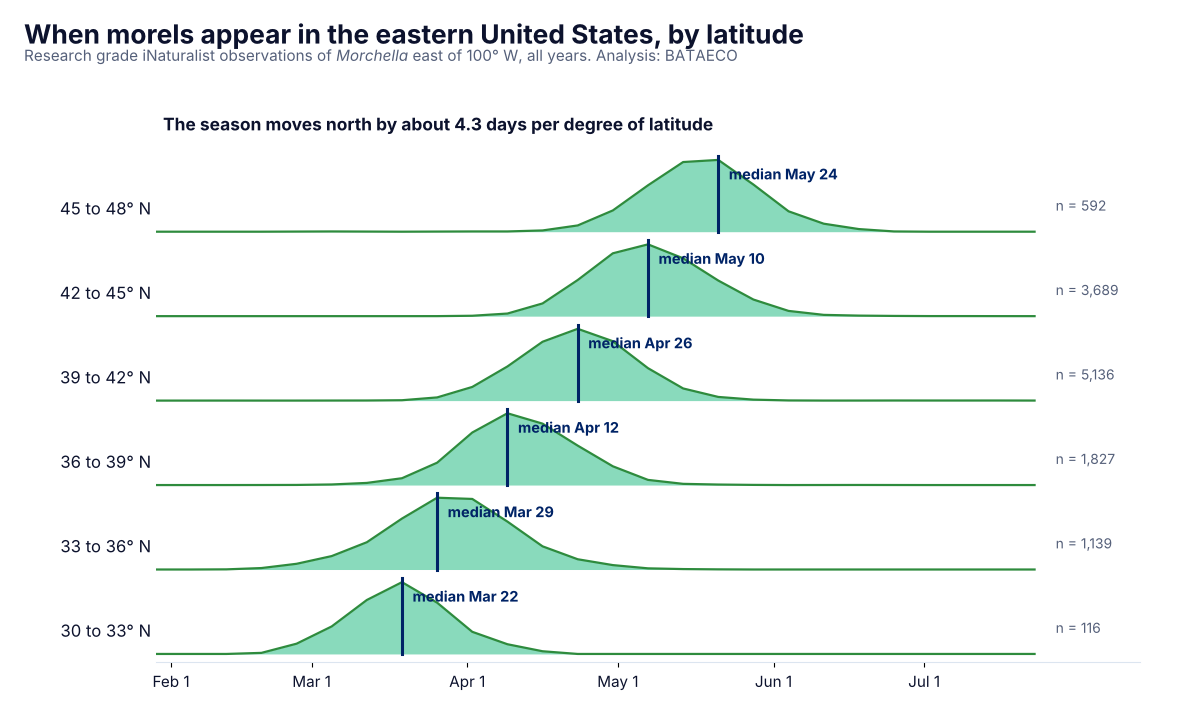
- The median date moves from about 22 March at 30 to 33° N (the Gulf Coast) to about 24 May at 45 to 48° N (the northern Great Lakes), a difference of about nine weeks.
- That is about 4.3 days later for every degree of latitude northward, with an almost perfect straight line through the six bands (r² = 0.99).
- Each band has a short window: in every band, 80% of the records fall within about four to six weeks.
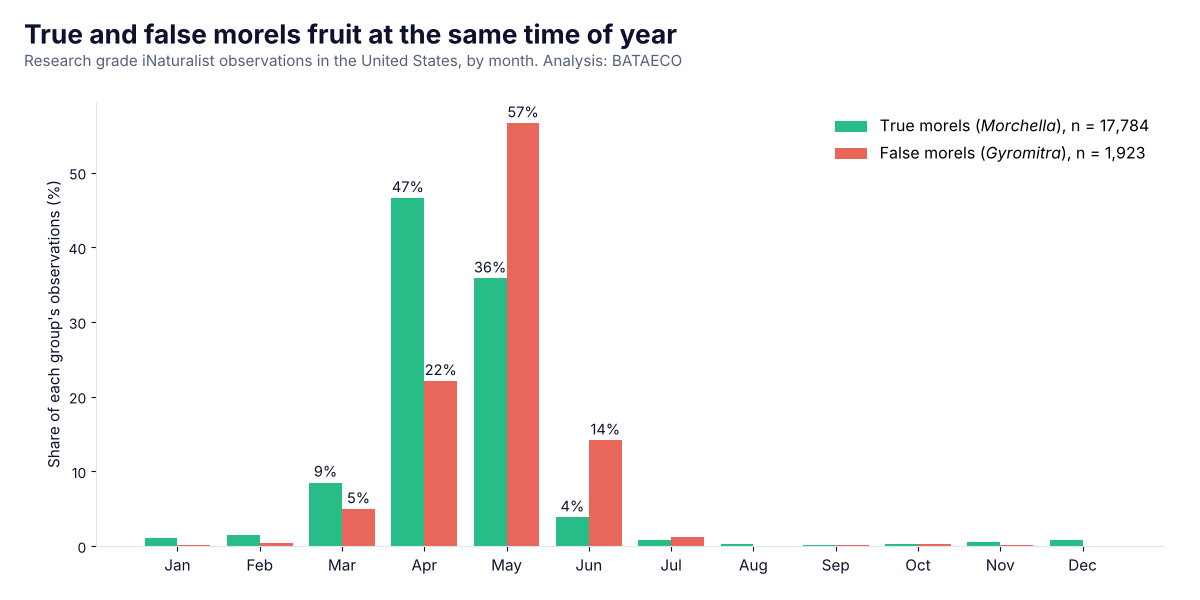
I also compared all United States records of true morels (Morchella, 17,784 records) with false morels (Gyromitra, 1,923 records). Of the true morel records, 82% were in April and May; for false morels it was 79%, with their peak about a month later, in May.
My take as a biologist: the 4.3 days per degree is remarkably close to Hopkins’ bioclimatic law, an old rule from 1918 that spring events arrive about four days later for each degree of latitude. It shows that morels are tracking the northward wave of warming soil, just like budding trees and arriving migrant birds. The practical lesson for foragers is that a date on a calendar means little; the soil does. The second chart carries the safety message: false morels are not a rare autumn oddity, they fruit in exactly the same weeks, so every morel needs the slice test. Two limits of this data: citizen science records follow people as much as mushrooms (more observers near cities and on weekends), and the analysis uses weekly bins, so the dates are approximate to within a few days.
Why You Must Cook Morels
Raw or undercooked morels can cause severe vomiting and diarrhea, even when they are true, correctly identified morels. In spring 2023, 51 people became ill after eating at a restaurant in Bozeman, Montana. Investigators found that a sushi roll containing morels was the likely source: the morels, cultivated Morchella sextelata imported from China, had been served raw or only partly cooked. Symptoms began a median of one hour after eating, three people were hospitalized and two died; both had serious underlying health conditions, and the report did not formally attribute their deaths to the morels. The CDC concluded that morels should always be cooked before eating.
Clean morels by brushing or rinsing them briefly, slice them in half to check for insects and confirm they are hollow, then sauté or simmer them until fully cooked. Some people react badly even to cooked morels, especially large servings, so a modest first portion is wise.
Morel Nutrition
According to USDA FoodData Central, 100 g of raw morels has just 31 calories, 3.1 g of protein and 2.8 g of fiber. Their standout nutrient is iron: 12.2 mg per 100 g, about two thirds of the daily value and the highest of the nine mushrooms in the USDA database that I compared in our oyster mushroom guide. They also provide some vitamin D (5.1 µg per 100 g).
Can You Grow Morels?
For a long time, morels were considered impossible to farm. Indoor cultivation was achieved in the United States in the 1980s, but it never became widespread. The real breakthrough came in China, where large scale outdoor field cultivation, mainly of black morel species such as Morchella importuna and Morchella sextelata, has expanded rapidly since about 2012. Yields remain unpredictable, because scientists still do not fully understand what triggers fruiting. Home growers can buy morel spawn kits for garden beds, but results vary widely.
As an Amazon Associate, BATAECO earns from qualifying purchases.
Frequently Asked Questions
Are all morel mushrooms safe to eat?
True morels (Morchella spp.) are edible only when thoroughly cooked, and even then some people react to them. False morels such as Gyromitra esculenta are poisonous.
Why are morel mushrooms so expensive?
Most morels are still picked by hand from the wild during a short spring season, they are fragile and perishable, and cultivation is difficult and unreliable.
How do you tell a true morel from a false morel?
Slice it lengthwise. A true morel is hollow from the tip of the cap to the base of the stem, and its cap is pitted like a honeycomb and attached to the stem. False morels have wrinkled, brain like caps and are stuffed or chambered inside, or have a cap attached only at the top.
When is morel season?
Spring. In the eastern United States the median date in iNaturalist records moves from late March near the Gulf Coast to late May near the Canadian border, about 4.3 days later for each degree north.
Where is the best place to find morels?
Near dying elm, ash, apple, cottonwood and tulip poplar trees, along river floodplains, and in western forests that burned the previous year.
Sources
- Demorest, H. et al. (2024). Outbreak linked to morel mushroom exposure, Montana, 2023. MMWR 73: 219 to 224. CDC
- iNaturalist, True morels (genus Morchella), research grade observations accessed November 2026.
- Liu, W. et al. (2023). Large scale field cultivation of Morchella and relevance of basic knowledge for its steady production. Journal of Fungi 9(8): 855. doi.org/10.3390/jof9080855
Erzsebet (Eli) Frey is a biologist with a BSc in Biology and an MSc in Ecology from the University of Belgrade. She has field and lab experience across Asia, the Middle East, Europe and South America and uses Python and machine learning on biological data. Based in Serbia, she writes BATAECO and also runs Simply Ecologist and Eco&Stylish.